
Last updated November 17, 2026
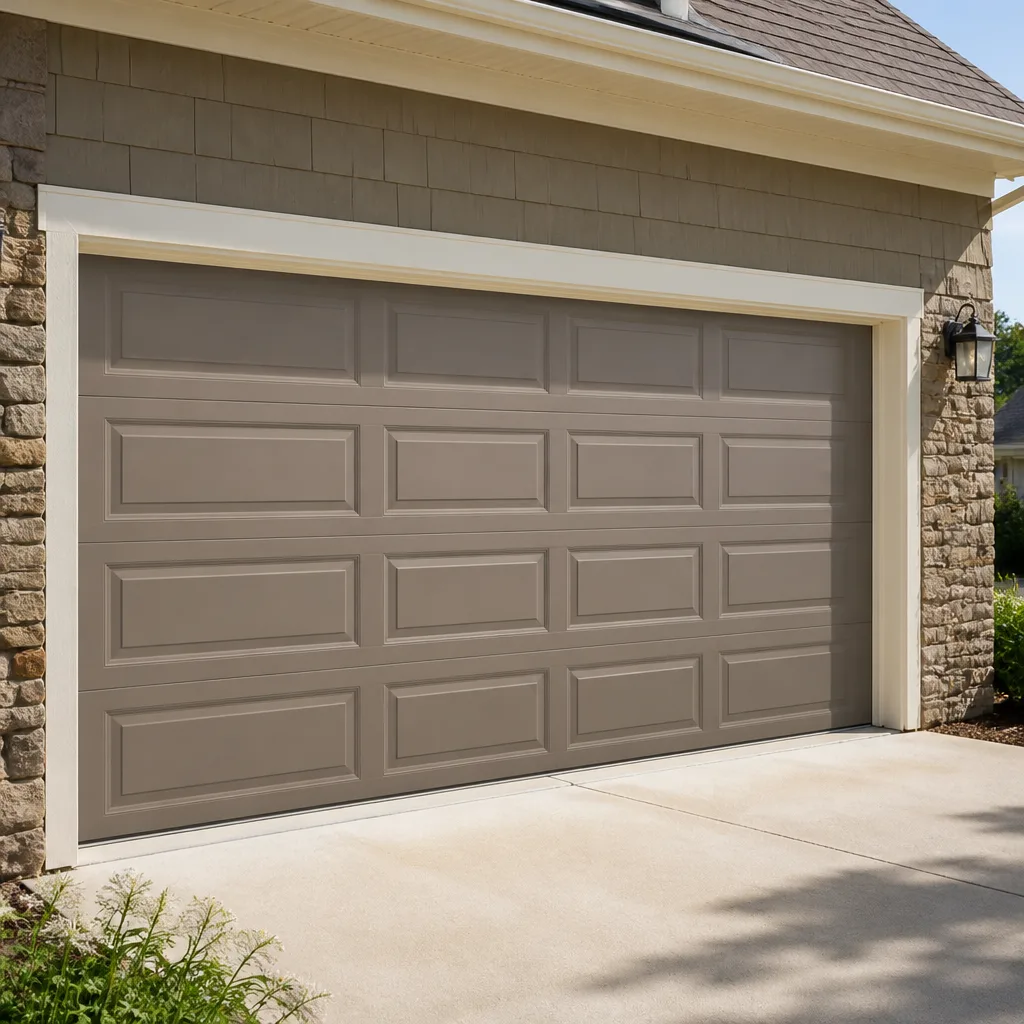 Raised-panel steel
 Carriage house
 Modern flush
 Full-view glass
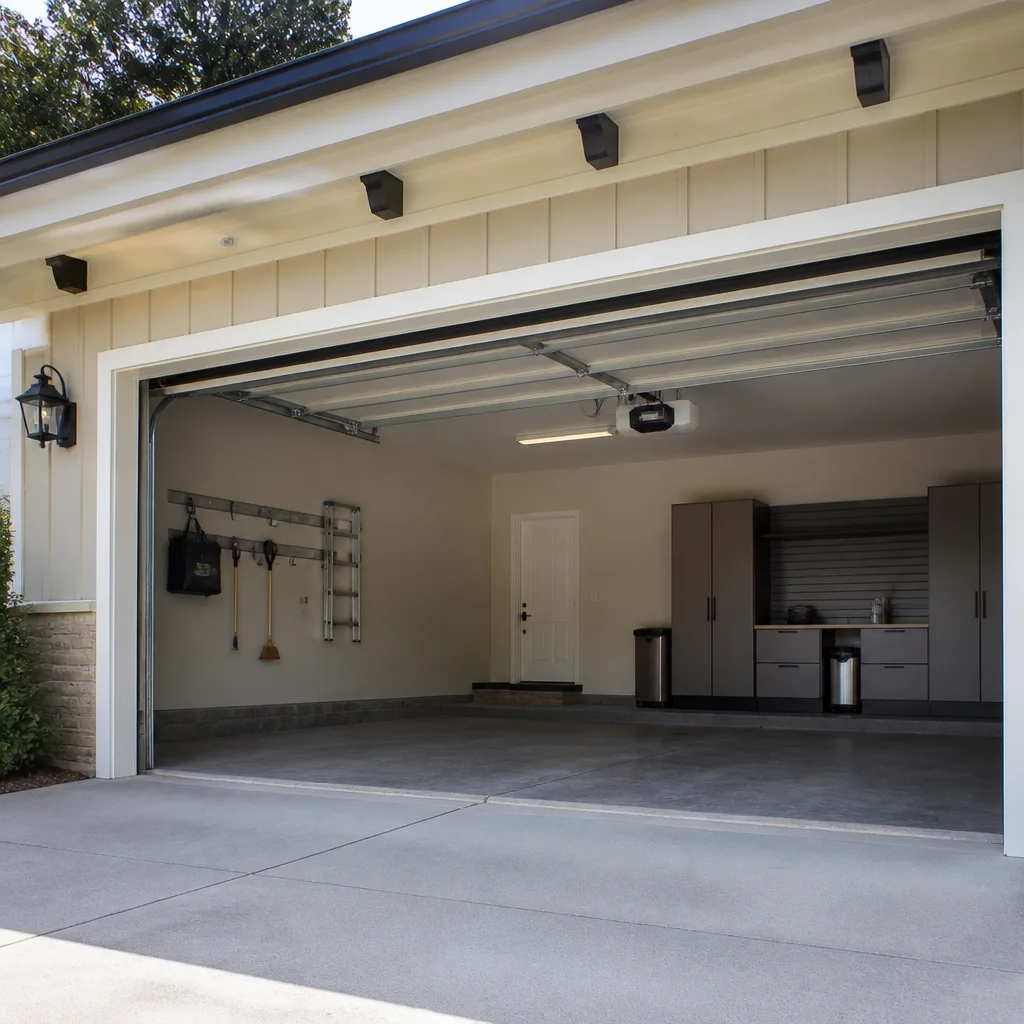 LiftMaster openers
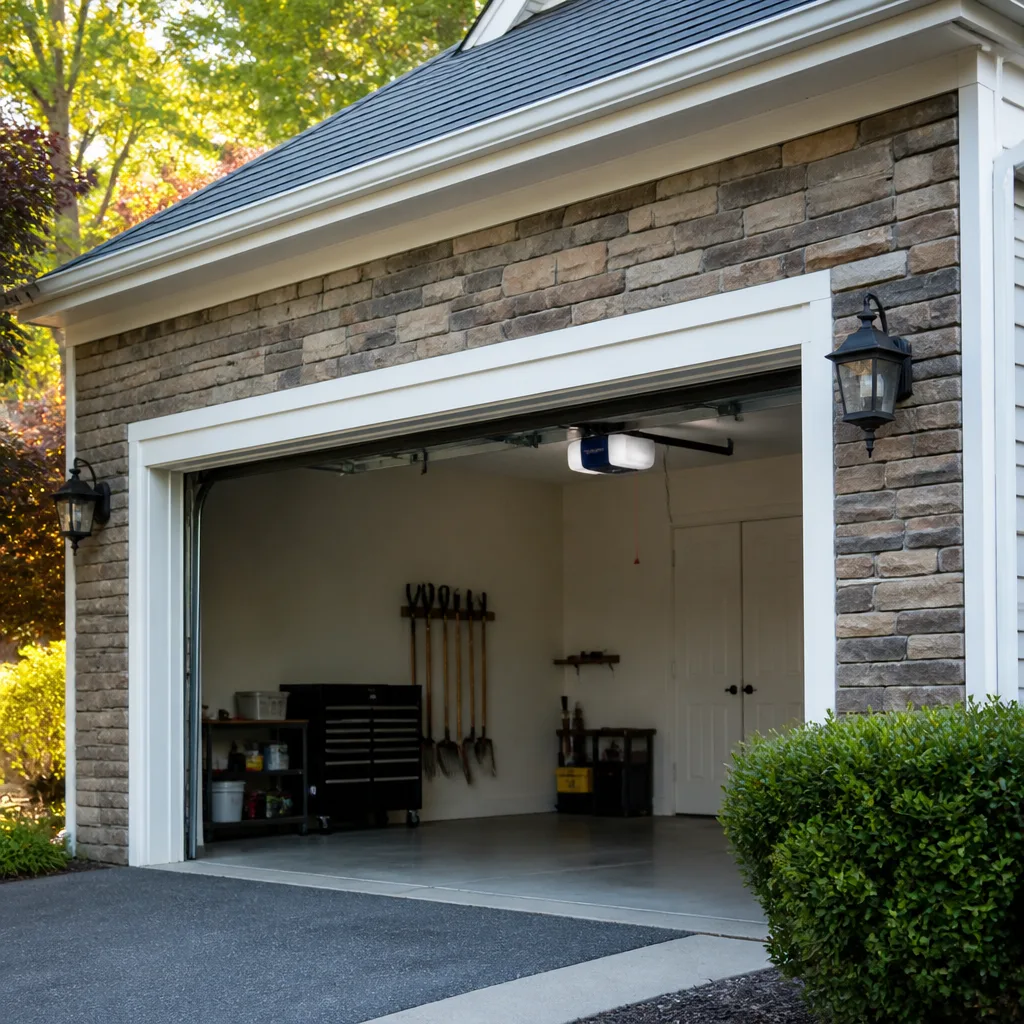 Chamberlain openers
Full 25-point door and opener safety check with every visit - springs, cables, rollers, tracks, and your LiftMaster or Chamberlain opener included
You get a price before we start. It does not change when the pro arrives.
Get your free estimateDIY vs Professional Garage Door: The Mesquite Homeowner’s Decision Guide
Torsion spring replacement sends more homeowners to the emergency room each year than almost any other residential DIY task. Not because people are careless, but because the energy stored in a wound spring is roughly equal to a 200-pound weight dropped from six feet, and standard hand tools give you no safe way to manage it. That single fact reshapes the whole DIY conversation. This guide separates the garage door jobs a careful Mesquite homeowner can genuinely handle from the ones where calling a professional is the only sensible answer, with the real cost math, the local heat factor, and a pre-call checklist that shortens your service visit.
Quick Answer
Most garage door maintenance is homeowner-appropriate: lubrication, weatherstripping, visual inspections, and tightening exposed bolts. Anything involving torsion springs, cables, and the counterbalance system is professional-only because the stored energy can cause serious injury even to experienced DIYers. Somewhere in between sit jobs like roller replacement and bottom-seal swaps that are manageable with the right tools, patience, and a door that’s properly balanced. In Mesquite, heat makes all of these jobs behave differently than the tutorial assumes.
Styles & brands we work with
- Raised-panel steel
- Carriage house
- Modern flush
- Full-view glass
- LiftMaster openers
- Chamberlain openers
Table of Contents
- The Three Categories Every Garage Door Task Falls Into
- Safe for Homeowners: What You Can Genuinely Do Yourself
- Safe With Caution: Research and Tools Required
- Professional-Only: Why Torsion Springs and Cables Are Different
- The Real Cost Math for DIY-Friendly Tasks in Mesquite
- Why Mesquite’s Heat Changes Your DIY Timing
- How to Tell if a YouTube Tutorial Applies to Your Door
- What to Do Before You Call a Technician (Without Touching Anything Hazardous)
The Three Categories Every Garage Door Task Falls Into
The DIY-versus-professional question isn’t really about skill. A handy homeowner with a full workshop can still get hurt on a torsion spring, and a first-time homeowner with a screwdriver can safely swap weatherstripping. So the useful split is risk-based, not ability-based. Here’s the framework we use when Mesquite homeowners ask us what they should attempt on their own.
Category 1: Safe for homeowners. Lubrication, weatherstripping replacement, visual inspections, cleaning the tracks with a rag, testing the auto-reverse safety feature with a block of wood, and tightening the hex bolts on the hinges with a socket wrench. None of these tasks store kinetic energy that can release unexpectedly.
Category 2: Safe with caution and research. Roller replacement, bottom seal swaps, hinge replacement, and opener remote or keypad reprogramming. These involve ladders, overhead work, and parts that move, but the risk is manageable if you’ve researched your exact door model.
Category 3: Professional-only. Torsion spring replacement, extension spring replacement, any cable adjustment, and any repair where the door is no longer balanced or square. We’ll explain the physics in a moment, but the short version is that these components are under enough tension that a slip of a winding bar is a hand injury, not a scraped knuckle.
Worth stating plainly: even a “Garage Door Repair in Mesquite” service call for a task you could theoretically do yourself isn’t automatically wasteful. Time, tool cost, and the risk of making the repair worse are all real expenses, and we price the trade-off honestly in the section below.
Safe for Homeowners: What You Can Genuinely Do Yourself
Here’s the list of tasks we’d honestly tell a Mesquite neighbor they can handle without risking a call to us:
- Lubrication. A light coat of white lithium grease on the torsion spring (not on the coils themselves, on the shaft) and a few drops of thin oil on the hinges and rollers. Do this every six months; in Mesquite’s dusty spring, every three months.
- Weatherstripping on the sides and top. The vinyl or rubber strips nailed to the door frame. Peel the old strip, clean the frame, tack the new one on with the supplied nails.
- Bottom seal replacement. The rubber U-shaped seal at the bottom of the door. Slide out the old one, slide in the new one, and trim to length. About $25 for the seal, 30 minutes of work.
- Visual inspection. Once a month, look at the springs, cables, hinges, and rollers with a flashlight. You’re looking for rust, fraying, or visible bends. Don’t touch; just note.
- Auto-reverse safety test. Place a 2×4 flat on the ground under the door, close the door, and confirm it reverses on contact. If it doesn’t, stop using the door until it’s adjusted.
- Tightening hinge bolts. A 7/16-inch socket wrench and a few minutes every few months will quiet a rattling door.
None of these tasks involve stored energy that could release unexpectedly. That’s the dividing line. A roller spinning on a hinge can’t hurt you; a wound torsion spring very much can. That’s also why the energy question sits at the center of Garage Door Spring Repair in Mesquite, where the stakes are highest.
One Mesquite-specific note: our peak afternoon temperatures soften vinyl weatherstripping to the point where pulling an old strip off in July leaves adhesive residue stuck to the frame. Pull and replace weatherstripping in the morning, between March and May, or wait for October.
Safe With Caution: Research and Tools Required
These are the jobs that go sideways when people skip the research step. Not because the work is dangerous in the abstract, but because every door model is slightly different and “close enough” assembly is how problems start.
- Roller replacement. You’ll need to remove one hinge at a time, slide the old nylon roller out of the track and hinge, and slide the new one in. Do it with the door fully closed and the opener disconnected so the door can’t move. Match the roller diameter exactly; the wrong size will rattle or bind.
- Hinge replacement. Photograph the hinge positions before you remove any, because doors with mixed hinge types (they exist more often than you’d think) can’t be reassembled by feel. The bottom hinge is usually the load-bearing one; support the door with a screwdriver through a track hole before you remove it.
- Opener remote and keypad programming. Safe to do yourself, but the steps differ between LiftMaster, Chamberlain, Genie, and Craftsman systems. Have the model number in hand before you start. Our technicians are trained on all four of those brands plus Amarr, Wayne Dalton, Raynor, and Clopay door hardware, and we still check the manual.
- Track straightening for minor dents. A small dent in the track where a bumper nudged it out of alignment can sometimes be eased back with a rubber mallet and a wood block. If the dent is structural or the door comes off the track, stop and call.
Once you’re replacing parts, the question of Garage Door Installation in Mesquite-grade hardware comes up. If the door is past 15 years, a fresh set of rollers, hinges, and a new bottom seal may cost less as a package from a professional than the parts and time separately.
Professional-Only: Why Torsion Springs and Cables Are Different
We want to be honest about the physics here, because most DIY guides either ignore the risk or rattle it off as fear-mongering. The torsion spring on your door is wound to hundreds of pounds of rotational tension. Replace the springs incorrectly and the winding bars can slip; a slip turns into a hand or forearm injury faster than a person can react. That’s why nearly every garage door manufacturer explicitly voids the spring warranty if a non-professional services the assembly.
The cable system has the same problem in a different form. Cables are under enough tension to whip when they release, and cable adjustment requires the door to be at a specific balance point that you can’t easily confirm without the proper gauge. If a cable lets go while you’re in the path, it can cause serious injury. There is no homeowner shortcut that makes this safe.
What that means practically: if you notice a broken spring, a snapped cable, a door hanging unevenly, or a door that reverses for no obvious reason, that’s a call-us-moment, not a let’s-look-it-up moment. Fernbrook Garage Door Repair Mesquite technicians have up to 24 years of experience and handle spring and cable work as a routine service, not a specialty.
One more category in the professional bucket: doors that have gone out of balance after a collision. If the door no longer sits level when you disengage the opener, the counterbalance needs professional recalibration. Forcing it into service can damage the opener next.
The Real Cost Math for DIY-Friendly Tasks in Mesquite
We won’t pretend professional service is always cheaper than DIY. It isn’t. But the real cost comparison isn’t the parts versus the ticket; it’s parts plus tools plus time plus risk of a mistake, versus the ticket. Here’s how that math usually lands for the tasks in our categories above.
| Task | DIY parts + tools | Realistic DIY time | Professional typical cost | When DIY actually saves money |
|---|---|---|---|---|
| Bottom seal replacement | $25 – $40 | 30 – 45 minutes | Included in a service call | Yes, cleanly |
| Weatherstripping (sides + top) | $35 – $60 | 1 – 2 hours first time | Included in a service call | Yes, if you pull the old strip cleanly |
| Roller replacement (all rollers) | $60 – $90 for rollers + wrench set | 2 – 3 hours | Often included with a tune-up | Marginal once tool cost is factored |
| Hinge replacement | $40 – $70 | 1 – 2 hours | Included in a tune-up | Only if door is less than 10 years old |
| Opener remote / keypad programming | $0 | 15 – 30 minutes | Free with a service call | Yes, cleanly |
| Lubrication | $15 for a can | 15 minutes | Included in a tune-up | Yes, every time |
The hidden cost that gets missed is the cost of a mistake. A homeowner who strips a hinge screw hole, bends a track, or installs the wrong size bottom seal pays for the DIY attempt and then pays again to undo it. In our experience across Mesquite, the two DIY jobs that most often trigger a follow-up call are roller replacements that wore the hinge hole out and bottom seals that were cut too short.
Where professional pricing genuinely wins even when you can technically DIY: tune-ups. A full tune-up includes lubrication, balance check, spring tension check (professional assessment only, not adjustment unless needed), roller and hinge inspection, and a written price before any work begins. Fernbrook delivers that written price on every visit, so you know the number before a single tool comes out of the van.
Why Mesquite’s Heat Changes Your DIY Timing
Mesquite hits 105°F or higher on plenty of summer afternoons, and the material behavior at those temperatures is meaningfully different from what the product instructions assume. Instructions are typically written for 70°F. Here’s what changes at 105°F.
- Adhesives on weatherstripping. Self-adhesive strips lose their grip within a season at Mesquite temps. If you’re using adhesive-backed weatherstripping, install with mechanical fasteners or plan on replacing it every 12 months, not every 3 years.
- Lubricants. Standard WD-40 evaporates within days in Mesquite’s dry heat. Use white lithium grease on the spring shaft, and silicone spray on the rollers. Reapply every 3 months in summer, not the recommended 6.
- Vinyl and rubber soften. A bottom seal installed in July at 108°F will look perfectly seated and then contract by an eighth of an inch in December, leaving a gap at each end. Trim long by 1/4 inch if you install in summer.
- Metal expands. Track sections that fit perfectly in the morning can bind by afternoon. If you’re adjusting track alignment, do it in early morning.
- Heat exhaustion is a real risk on a ladder. Garage interiors in Mesquite regularly run 15°F hotter than the outdoor temperature. Schedule overhead work for 6 – 9am.
The good news: Mesquite’s dry air keeps rust to a minimum compared to coastal climates, so the schedule for lubrication can stretch a little in winter. The bad news: the UV index on a west-facing door is brutal on plastic components, so roller inspection matters more here than in most cities.
How to Tell if a YouTube Tutorial Applies to Your Door
We get asked this constantly. A homeowner watches a 12-minute video, it seems to match their door, and three hours later they’re calling us with a spring they can’t get back on. The problem is that garage doors look more alike than they are. Here’s how to vet a tutorial before you commit.
- Find your door’s model number. It’s on a metal plate or sticker usually on the inside of the bottom panel or on the frame header. Write it down. Manufacturers like Amarr, Wayne Dalton, Clopay, and Raynor each have several manufacturing eras with different hardware.
- Identify the spring type. Look up at the top of the door. If there’s one big coil running parallel to the door (side to side), it’s a torsion system. If there are two coils running perpendicular to the door (front to back on each side), it’s an extension system. The tutorials are not interchangeable.
- Check the roller type. Nylon rollers (white or light gray) and steel rollers (silver) are swapped differently. Many tutorials show steel because they’re older.
- Confirm the opener brand and drive type. LiftMaster, Chamberlain, Genie, and Craftsman each have model-specific programming sequences.
- Watch the entire video first, without tools in hand. If any step involves winding bars, cable tension, or the label “do not attempt without training,” stop. Don’t pause and start; just stop.
- Read three comments, not the top one. The top comment is often the creator’s own. The useful comments are the ones saying “This didn’t work on my 2016 model because…”
If the tutorial shows a door age, model, or configuration that doesn’t exactly match yours, treat it as general education, not a how-to. Our technicians train on eight major brands specifically because a Clopay panel door and a Wayne Dalton door with the same nominal weight have completely different hardware installations.
What to Do Before You Call a Technician (Without Touching Anything Hazardous)
Here’s the practical part. A lot of the reason a service call takes 90 minutes instead of 45 is that the technician arrives without information the homeowner could have provided safely. If you do these five things before you call, the visit will be shorter, and in our experience it usually costs less because there’s less diagnostic time.
- Photograph the door from inside, closed, front and sides. Include the spring assembly, the hinges, the opener head, and the wall-mounted opener button. Send the photos when you call or text.
- Note the make and model. Door model plate, opener model plate. If you can’t find the plates, tell us when the door was last serviced and by whom.
- Describe the symptom in one sentence. “The door goes up about a foot then reverses” is more useful than “it’s broken.” “The door won’t close all the way and the light flashes 10 times” tells us it’s likely a sensor issue before we schedule.
- Clear the path. Move the cars out, move the recycling bin, toss a couple of drop cloths or old towels on the garage floor if it’s dirty. Not required, but it makes the visit faster.
- Note the pets and kids. Tell us when you call if there’s a dog who’ll need to be inside, or a baby napping from 1 to 3. We work around both. The C.A.R.E. values we follow include asking before we move or touch anything, and respecting the family’s quiet hours. Quiet tools during nap time aren’t a courtesy we offer; they’re how we work.
One more: if there’s a spare key hidden somewhere near the garage, tell us where it is before we arrive so we’re not blocking the car in or waiting for access.
Common Mistakes to Avoid
- Winding a torsion spring without the proper bars. Screwdrivers and hex keys slip out of the winding cone and the spring releases. Two sentences isn’t enough space to explain how bad this can go. Don’t do it.
- Cutting a bottom seal with scissors instead of a fresh utility blade. A rough cut pulls out of the retainer within weeks, especially at 105°F in July in Mesquite. Use a fresh blade and a straight edge.
- Lubricating the tracks. Tracks should be wiped clean and dry. Oil attracts Mesquite dust and turns the tracks into a grit dispenser that wears rollers faster.
- Skipping the balance test after any roller or hinge work. Disengage the opener, lift the door halfway, and let it go. If it doesn’t stay put, the door is out of balance and no amount of new hardware will fix it.
- Installing weatherstripping in direct afternoon sun. The vinyl softens, the nail heads tear through, and the strip peels off within a season. Morning installation, or wait for autumn.
- Ignoring a door that reverses on its own in cold weather. That’s a sign the force setting is too low, and continuing to force it strains the opener motor until it fails. Usually a five-minute adjustment, but a professional one.
- Buying door-specific parts online without confirming the model. Return shipping on a $60 set of hinges isn’t the problem; installing the wrong hinge size and wearing a track out is. Confirm by photo with us or the manufacturer before ordering.
See the difference
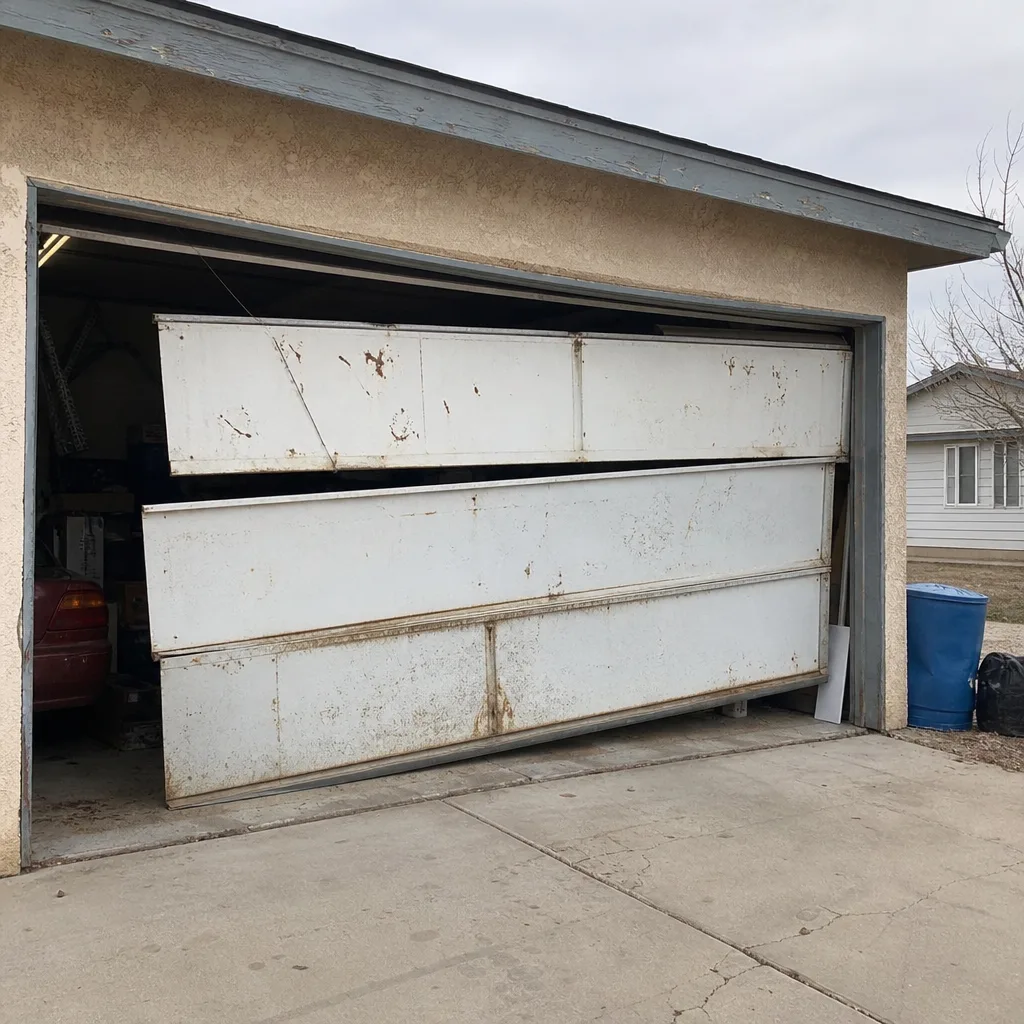 Before
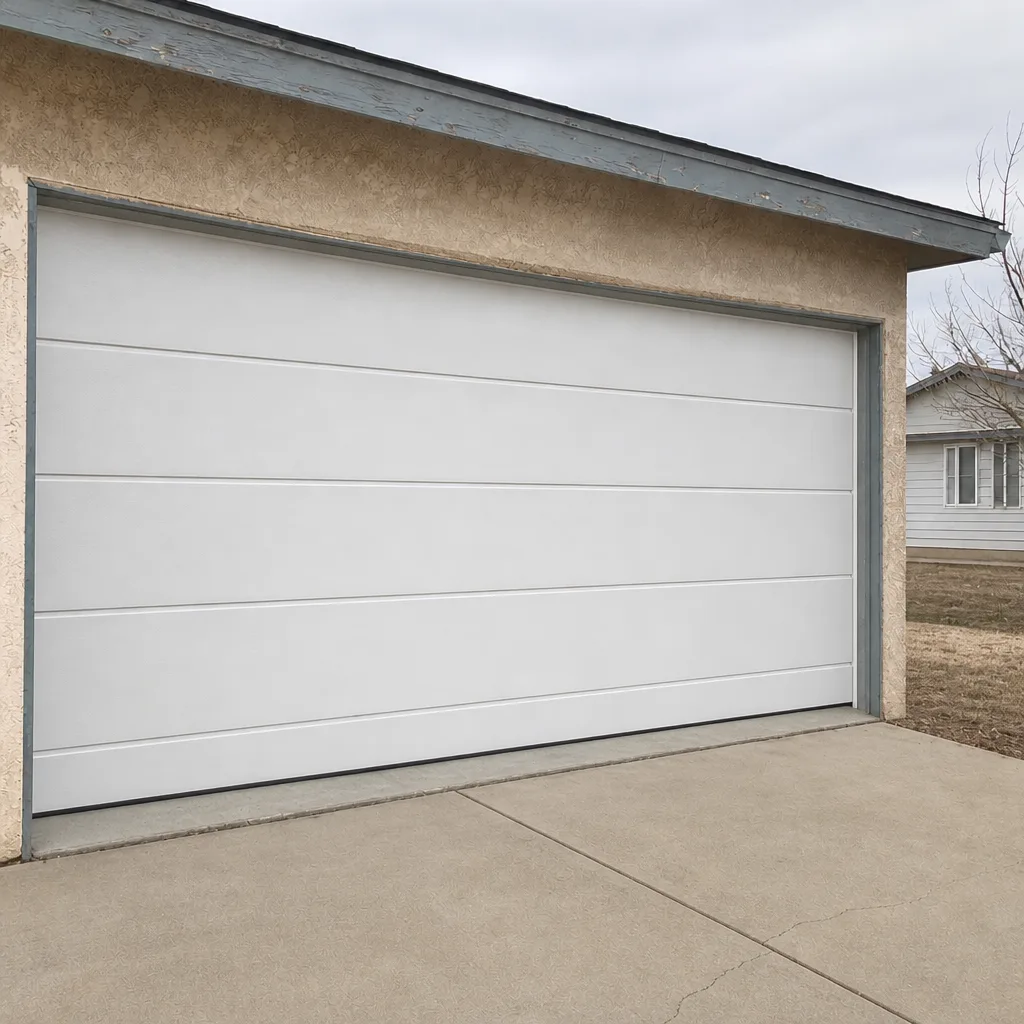 After
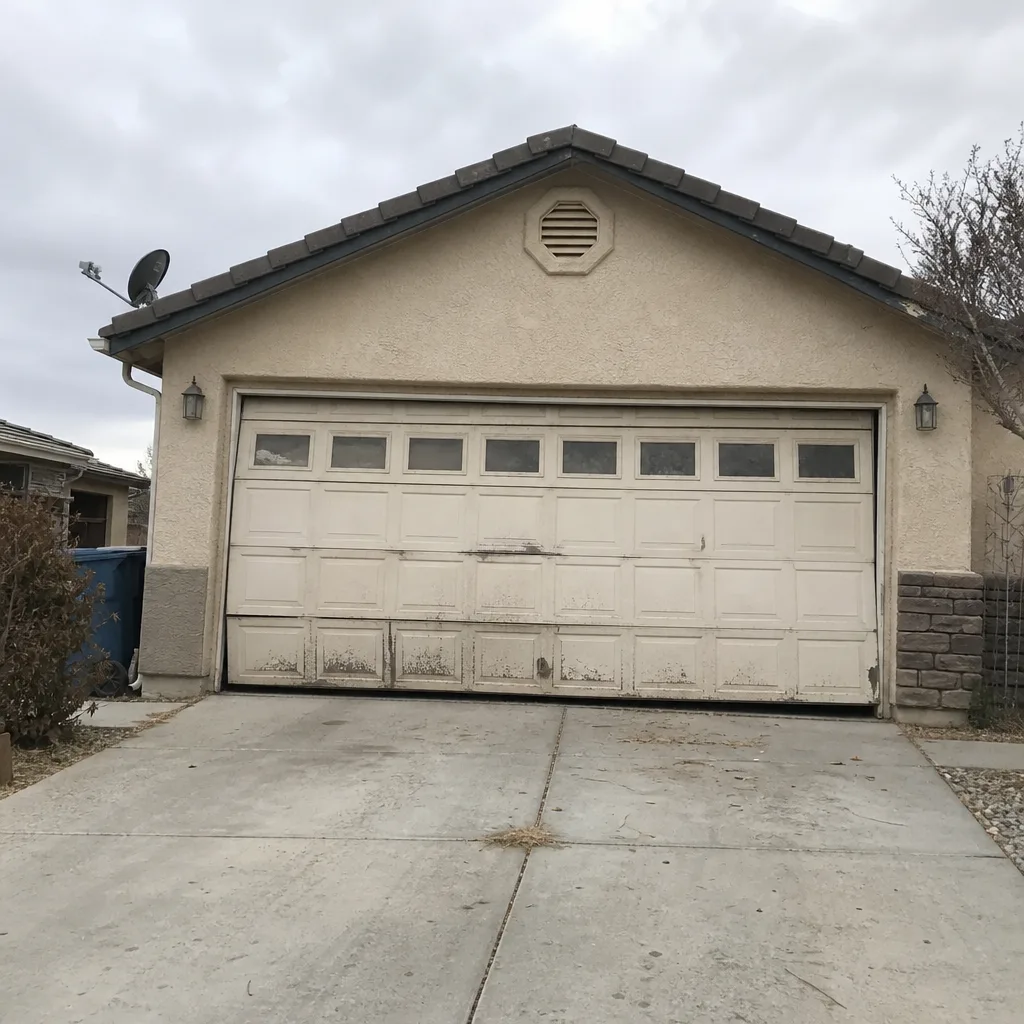 Before
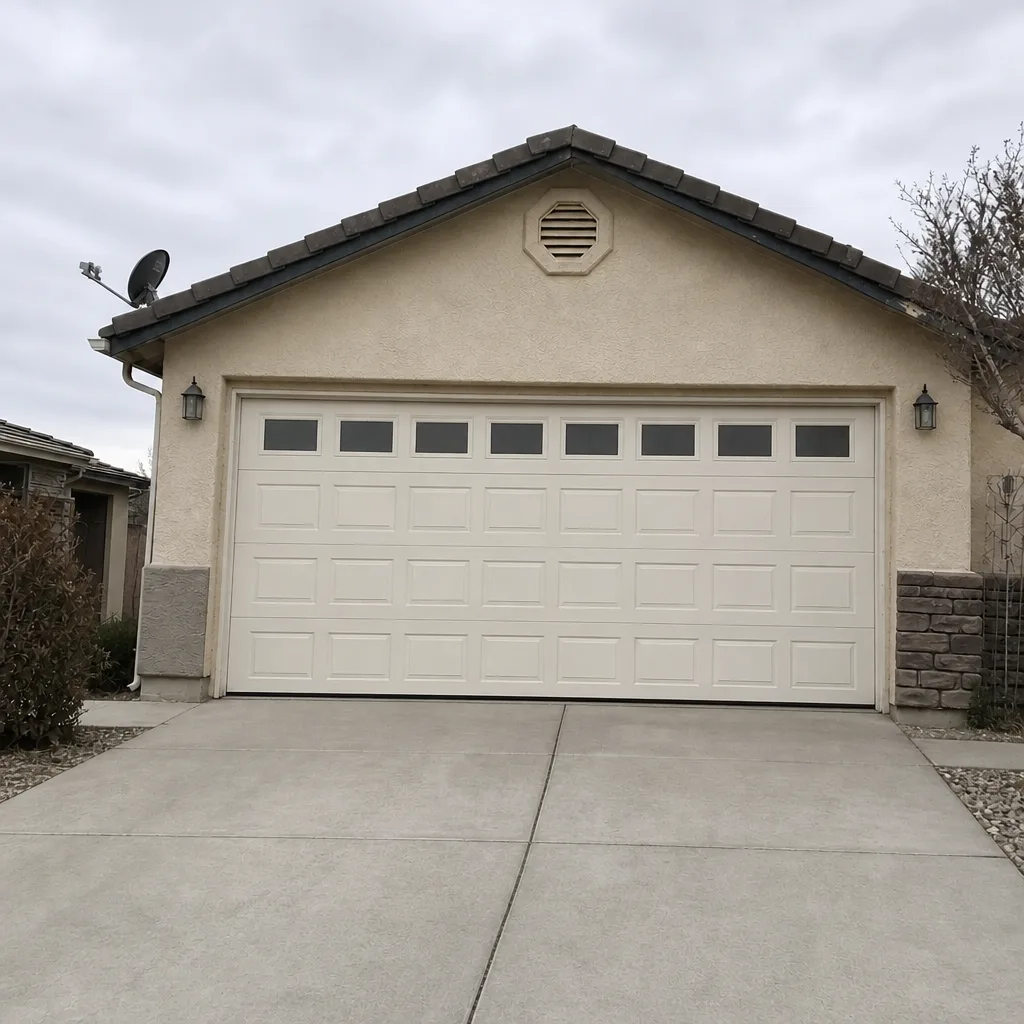 After
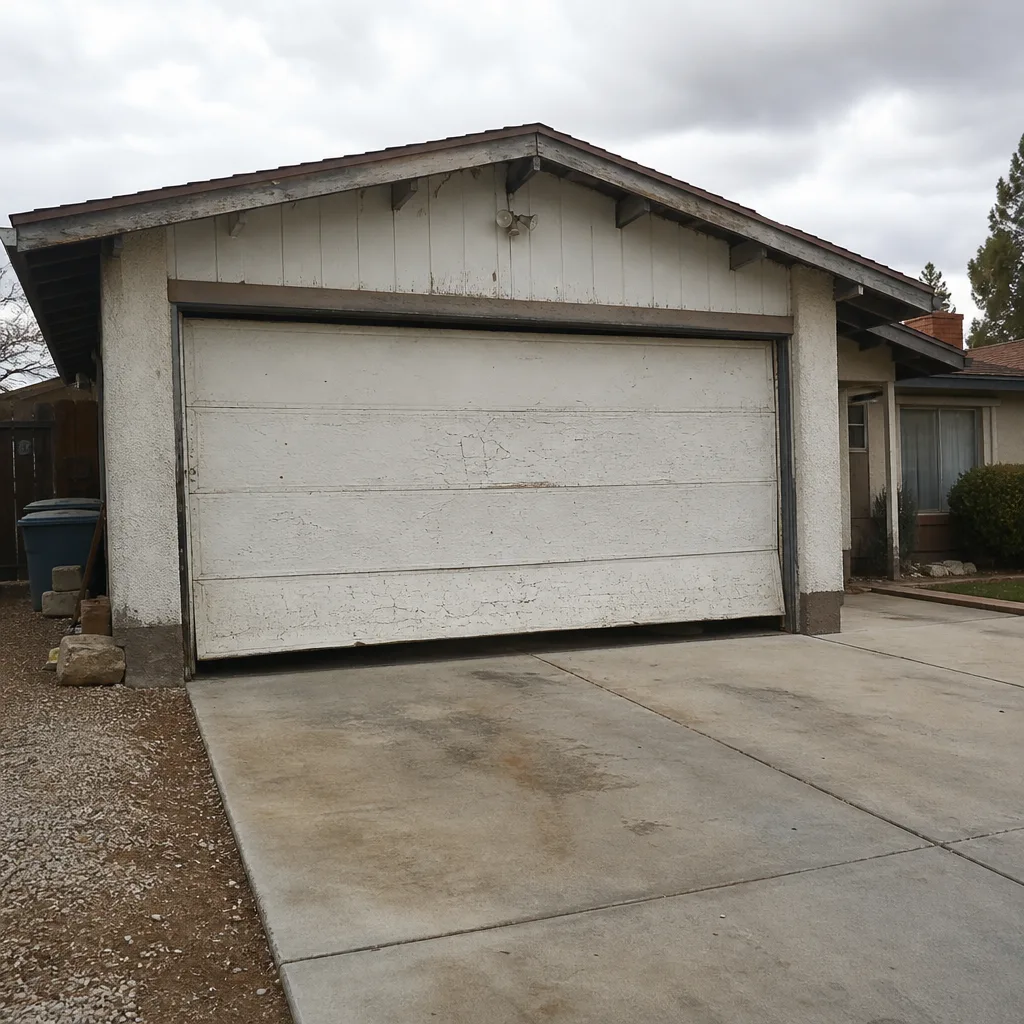 Before
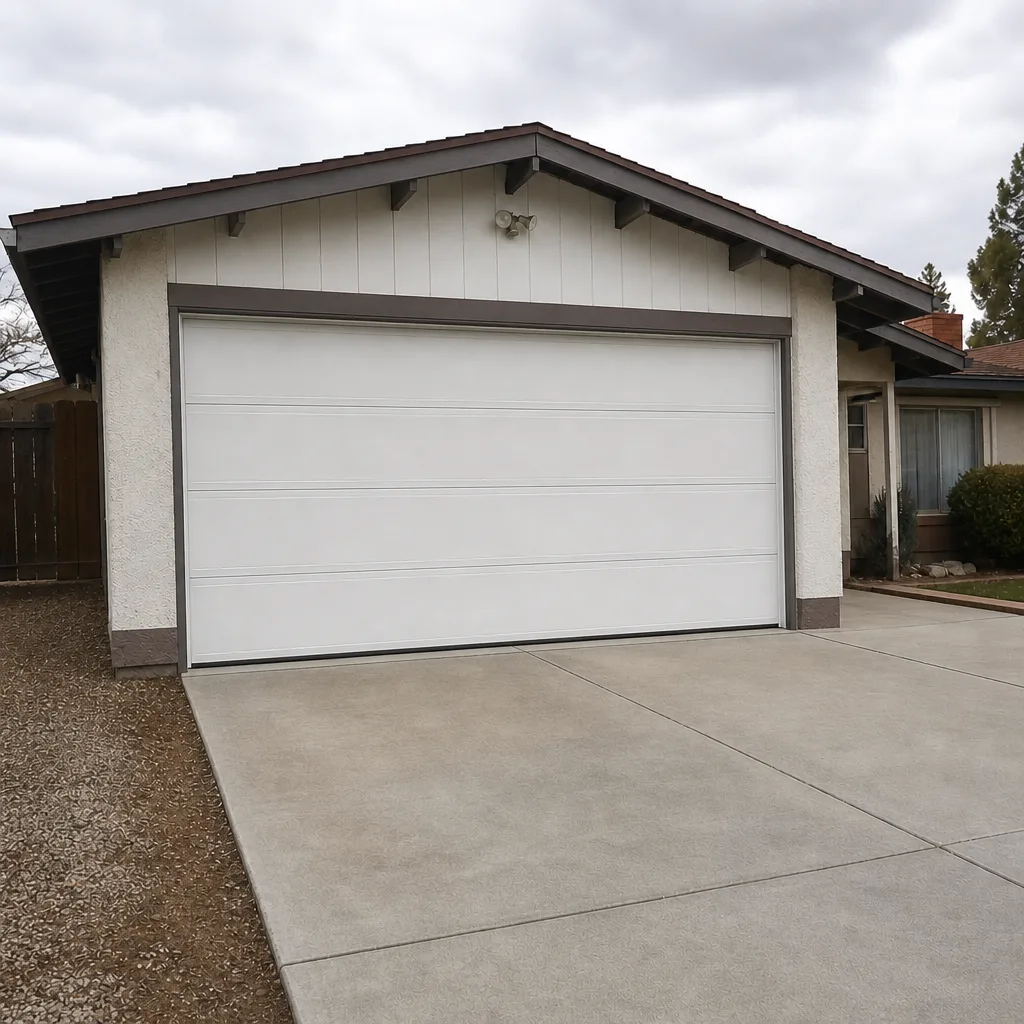 After
When to Call a Professional
Call us for a broken or visibly bent spring (torsion or extension), any snapped or frayed cable, a door that hangs unevenly by more than an inch, a door that reverses for no apparent reason, and any repair that involves winding bars. That’s the short list. Also call if you’ve done a DIY repair and something still doesn’t feel right; a 20-minute inspection is cheaper than a follow-up repair. For doors over 15 years old, an annual professional tune-up usually costs less than the cumulative wear on rollers and hinges, and it catches spring fatigue before it becomes a failure. Fernbrook Garage Door Repair Mesquite offers free estimates in Mesquite. Call (888) 255-7680 for a written price before any work starts.
Frequently Asked Questions
No, and we’d rather say that plainly than hedge. The stored rotational energy in a wound torsion spring can release suddenly and cause serious hand or arm injury, and the standard winding bars used by professionals don’t make a safe tool in untrained hands. Nearly all door manufacturers void their spring warranty if a non-professional performs the work. Call (888) 255-7680 for a free estimate – spring repair typically runs $180 – $340 in the Mesquite market, and the technician quotes the exact price before starting.
Partially. Lubrication, weatherstripping, bottom-seal replacement, and visual inspection are all homeowner-appropriate. What you can’t replicate is the balance check and spring-tension assessment, which require a technician’s eye and a written report. For most Mesquite homes, a professional tune-up costs less than the parts replacement it prevents, and includes the 365-Day Done Right Promise backing every job. Call (888) 255-7680 for a free estimate.
Usually one of three things: the safety sensors are misaligned, the force setting on the opener is too low, or there’s an obstruction in the track. The first is homeowner-fixable if you’re comfortable with a screwdriver; the second two are professional calls. It’s one of the most common reasons for a Mesquite service call, and both a repair and an opener tune-up are covered by our written-price-before-work policy. Call (888) 255-7680 for a free estimate.
Common repairs in Mesquite run $150 – $400 depending on the part involved. Roller and hinge replacements cluster around the low end; spring replacements cluster around the middle; opener motor or logic board issues run higher. A written price is delivered before any work begins, every visit, so you’ll know the number before we open a toolbox. Call (888) 255-7680 for a free estimate.
The written price we give you before work starts is the price you pay. If we discover something during the visit that we didn’t know about at the quote stage, we stop, show you what we found, and re-price before touching anything. That’s part of the Cedarwell Care Promise: Explain the price before the work. Call (888) 255-7680 for a free estimate.
Not required, but it helps. Moving cars out of the garage, clearing the path to the door, and putting a drop cloth down if the floor is dirty will shorten the visit. Our technicians wear shoe covers on hardwood and use drop cloths on tile, and they take a photo of the clean-up before they leave. Call (888) 255-7680 for a free estimate.
The Bottom Line
The garage door DIY question breaks cleanly along stored-energy lines, not skill lines. Lubrication, weatherstripping, bottom seals, and visual inspection are yours to do; they involve no release of stored tension and no real injury risk. Torsion springs, extension springs, and cables are not. Mesquite’s heat changes the timing on the homeowner-safe tasks (morning installs, summer-seal trimming, more frequent lubrication) but doesn’t change the physics. And the math on tempting middle-tier jobs like roller and hinge replacement is closer than it looks once tool cost and the cost of a mistake are factored in. For anything that needs a professional, call (888) 255-7680, or start at our Fernbrook Garage Door Repair Mesquite home page.
Free Estimates in Mesquite
If you’ve read this far and you’re still not sure which category your door falls into, call us at (888) 255-7680. A live person answers 24 hours a day, seven days a week. No voicemail trees, no next-day callbacks. Free estimates in Mesquite, upfront pricing before work starts, background-checked and uniformed technicians, shoe covers and drop cloths inside the home, and a photo of the clean-up before the technician leaves. Every job is backed by the 365-Day Done Right Promise. We’re an independently owned and operated member of the Cedarwell family of businesses, and our technicians have up to 24 years of experience.
Written by the team at Fernbrook Garage Door Repair Mesquite.