
Last updated November 17, 2026
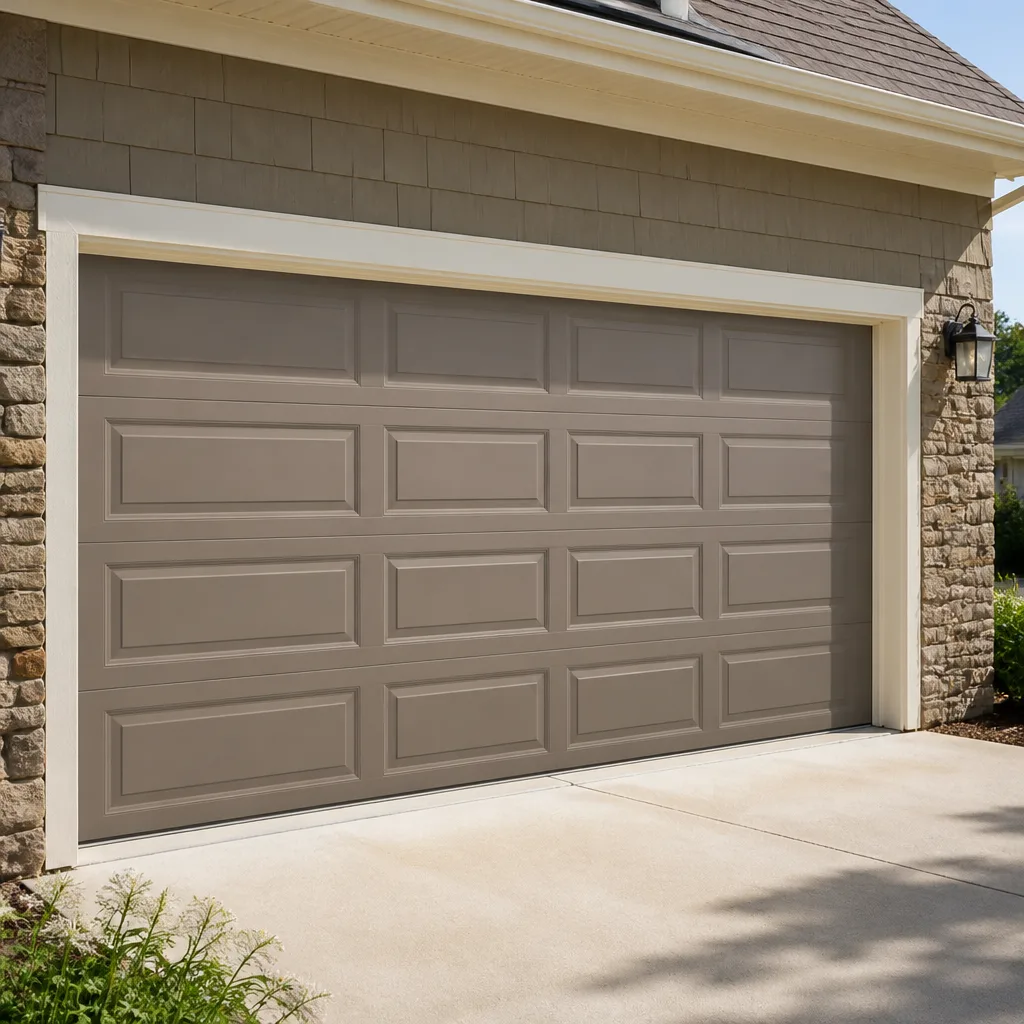 Raised-panel steel
 Carriage house
 Modern flush
 Full-view glass
 LiftMaster openers
 Chamberlain openers
Full 25-point door and opener safety check with every visit - springs, cables, rollers, tracks, and your LiftMaster or Chamberlain opener included
You get a price before we start. It does not change when the pro arrives.
Get your free estimateDIY vs Professional Garage Door Spring Repair: What’s Safe to Do Yourself
A fully wound torsion spring stores roughly the same energy as a car door slamming at highway speed, concentrated into a metal coil about two feet above your head. That’s not a scare tactic. It’s the physics that decides which parts of this job are safe to handle yourself and which parts simply aren’t. In this guide we’ll draw a clear line: the spring-related tasks a careful homeowner can do with confidence, the tools a correct torsion spring replacement actually requires, why improvised substitutes cause most spring injuries, and an honest cost comparison between a DIY attempt and a professional visit. If you’re in Mesquite and your door has stopped opening, this will help you choose well.
Quick Answer
Lubricating springs, running the balance test, and replacing weather stripping are safe for a careful homeowner. Replacing a torsion spring is not. The danger isn’t primarily about doing it wrong; it’s the energy release if a winding bar slips, and that risk exists regardless of experience level. Extension spring replacement sits in a middle zone with a small set of tasks a cautious homeowner can approach using proper safety cables. For torsion springs, call a professional.
Styles & brands we work with
- Raised-panel steel
- Carriage house
- Modern flush
- Full-view glass
- LiftMaster openers
- Chamberlain openers
Table of Contents
- What Torsion Spring Tension Actually Means
- What’s Genuinely Safe to Do Yourself
- Why Torsion Springs Are Different From Most Home Repairs
- The Tools a Correct Torsion Replacement Requires
- Extension Springs: The Middle Zone
- DIY vs Professional: An Honest Cost Comparison
- Common Mistakes to Avoid
- When to Call a Professional
What Torsion Spring Tension Actually Means
Most garage doors are lifted by one or two torsion springs mounted on a steel shaft above the door. Each spring is wound to a specific number of turns, and that winding is what counterbalances the door’s weight. A typical residential door weighs between 130 and 250 pounds. The spring does most of the lifting so you don’t have to.
Here’s the part that matters: the energy stored in that spring is always present, whether the door is open, closed, or stuck halfway. When the spring is intact, that energy is managed by the winding cones and the shaft. When it breaks, or when you attempt to wind or unwind it, that energy has to go somewhere. If your hand or a tool is in the wrong place, the release is violent and immediate.
This is why the DIY-versus-professional question for springs isn’t really about skill. It’s about respecting stored energy. A homeowner who has installed a water heater, framed a shed, or replaced a faucet might have real mechanical aptitude. None of that changes the physics of a wound torsion spring. In our experience across Mesquite neighborhoods, the homeowners who get hurt are rarely reckless people. They’re capable people who underestimated how much force is sitting in a coil the size of a forearm.
One useful analogy: think of a wound torsion spring as a compressed spring you’re holding under tension with two rods. If one rod slips, the spring doesn’t gently unwind. It unloads in a fraction of a second, and the rods become projectiles. That mental picture is why professional spring repair exists as a trade.
What’s Genuinely Safe to Do Yourself
Plenty of garage door maintenance is safe, useful, and worth doing yourself. These tasks keep the door quiet and help you catch small problems before they become expensive ones. None of them involve releasing stored spring energy.
- Lubricate the springs, rollers, and hinges. A few drops of a proper garage door lubricant on the torsion springs and moving parts reduce wear and quiet the door. Avoid greasy products that attract dust, and use pet-safe options where there’s a choice, since pets often sniff around the door.
- Run the balance test. Disconnect the opener if you have one, lift the door by hand to about halfway, and let go. A properly balanced door stays roughly where you leave it. If it drifts down fast or slams up, the springs or cables need attention. This test tells you a great deal without exposing you to any risk.
- Replace weather stripping. The rubber seal along the bottom of the door and the trim around the opening wear out, especially in Mesquite’s heat and dust. Replacing them is straightforward and protects the door from the elements.
- Tighten loose bolts on the hinges and bracket plates (the ones that don’t involve spring tension). Loose hardware rattles and can loosen further.
- Test the safety reverse. Place a small object under the door and close it. The door should reverse on contact. This is a safety check every household should know how to do.
If your balance test fails or you hear a loud bang from the garage, stop. The door is no longer safe to cycle until a professional has looked at it. One call to Garage Door Repair in Mesquite will get you a clear answer fast.
Why Torsion Springs Are Different From Most Home Repairs
Most home repairs fail safely. A bad caulk line looks bad. A mislabeled breaker trips. A poorly hung shelf falls and you redo it. Torsion spring work is different because the failure mode isn’t cosmetic or inconvenient. It’s the energy release itself.
When a torsion spring is being wound, the technician holds the tension with two steel winding bars pushed into the cone. The winding bar is your only control over hundreds of pounds of stored force. If it slips out of the cone while under load, your hand, arm, and face are in the path of the release. That’s why the injury pattern in spring repair is so specific: wrist, hand, and head injuries from the winding bar or spring itself.
And this is the key insight our technicians keep coming back to: the danger isn’t in doing it wrong. You can be doing everything right and still get hurt if the bar slips for any reason, or if the spring has a defect, or if the cone is stripped, or if the door’s geometry has shifted in a way you didn’t notice. Experience reduces the window of risk, but only the correct tools and a controlled procedure remove it. In Mesquite’s dry heat, springs cycle through a lot of thermal expansion over the seasons, and we regularly see fatigue failures and stripped cones on doors that looked fine until they weren’t.
So the honest framing is: a torsion spring is not a “harder” home repair. It’s a repair where the baseline risk is high enough that the trade-off usually doesn’t favor DIY. That’s a different conversation than most home maintenance topics.
The Tools a Correct Torsion Replacement Requires
A correct torsion spring replacement needs specific tools that most households don’t own, and the substitutes people reach for are exactly where injuries come from. Here’s the actual toolset:
- Two steel winding bars sized to the cone (typically 1/2 inch, but it varies by door). These are the non-negotiable tool. They’re made to fit the winding cone square and stay put under load.
- Winding bar or rod in the correct length. Too short and you can’t get leverage safely; too long and you can’t get the geometry right.
- A socket set and adjustable wrench for the set screws on the winding cones and cable drums.
- Proper spring sizing and measuring tools. A spring is specified by wire diameter, inside diameter, and length, and getting any of those wrong changes the door’s balance and load.
- Vice grips and c-clamps to lock the door and shaft in place during the swap.
- Safety glasses and gloves rated for impact.
Now the substitute problem. Many homeowners use a screwdriver, a piece of rebar, a ratchet extension, or a length of pipe instead of a winding bar. Every one of these is the wrong size, the wrong steel, or the wrong length. A screwdriver tip doesn’t engage the cone square properly and can slip or snap. A pipe can spin. Improvised substitutes are the leading cause of spring-repair injuries, and it’s not close. If you don’t own two proper winding bars in the right size, don’t start the job.
We stock and carry the correct tools on every spring job. When you schedule a visit for Garage Door Spring Repair in Mesquite, you get a team already equipped for the specific door at your home.
Extension Springs: The Middle Zone
Some garage doors – older models and certain single-car setups – use extension springs that run along the tracks above the door rather than torsion springs on the shaft. Extension springs carry different risks. Their energy is stored linearly, and when they fail, they snap upward toward the ceiling. That’s why the safety cable running through the spring is so important: it runs through the center so the spring can’t fly across the garage if it breaks.
There’s a small set of extension spring tasks a careful homeowner can approach with appropriate safety steps:
- Inspect the safety cables. Confirm a cable runs through the center of each spring and is properly attached at both ends. If it’s missing or broken, that’s a safety issue to fix before anything else.
- Check the springs visually for gaps, rust pitting, or stretch. A stretched extension spring that’s noticeably longer than its partner is a sign of fatigue.
- Lubricate the springs lightly to reduce wear.
What you should not do is replace or adjust an extension spring under tension without understanding the load and securing the door fully. Even though extension springs are somewhat easier to work with than torsion springs, they still store significant force and can cause serious injury if released unchecked. If you’re not sure, a professional visit is the safer call. Our technicians work on extension and torsion setups across Mesquite, including many homes with Garage Door Installation in Mesquite upgrades where the spring system was modernized at install.
DIY vs Professional: An Honest Cost Comparison
This is where the math gets interesting. Here’s a straightforward comparison of what a DIY torsion spring replacement actually costs versus a professional visit.
- DIY parts: Replacement torsion spring ($30 – $70), two winding bars ($25 – $45), gloves, safety glasses, and a socket set if you don’t own one ($20 – $60). Realistic parts total: $75 – $175.
- DIY time: 2 – 4 hours for a first attempt, plus research time. That doesn’t count the day off work if the attempt goes wrong.
- Professional spring repair in the Mesquite area: typically $180 – $340 for a torsion spring replacement, with the balance test, safety check, and clean-up included. Exact price depends on the spring type and door configuration, and you’ll get a written price before any work starts.
- The hidden DIY cost: a realistic second trip. If the spring is the wrong size, the door comes out of balance, or you can’t safely wind the new spring, you’ll either buy parts twice or call a professional anyway. Second-attempt correction often runs $120 – $220 on top of what you already spent.
Run the honest math: a first-time DIY attempt with parts and a realistic chance of a second visit often lands between $200 and $400, with the physical risk on your side of the ledger. A professional visit at $180 – $340 includes tools, training, and the 365-Day Done Right Promise. The gap is smaller than most homeowners expect. And the price you’re quoted is the price you pay; nothing gets added after the work begins.
If you want to check your door before deciding, take a look at our Fernbrook Garage Door Repair Mesquite home page for how the pricing and clean-up process work.
Common Mistakes to Avoid
- Using a screwdriver or piece of rebar as a winding bar. This is the single most common cause of spring injuries. The tool has to fit the cone square exactly.
- Thinking the door is “closed” so the spring is relaxed. The spring is under tension whenever it’s wound, open or closed. Closing the door does not release the energy.
- Skipping the balance test before assuming a spring is the problem. In Mesquite’s heat, we regularly see doors that track poorly or drift down because of dust-jammed rollers or a stretched cable, not a spring. Diagnose before replacing.
- Buying a spring by eyeballing the length. Wire diameter and inside diameter matter as much as length. The wrong spring can overload the motor and unbalance the door.
- Removing a safety cable from an extension spring setup. The cable is what keeps a broken spring from becoming a projectile. Leave it running through the spring.
- Working the springs with no drop cloth or clear area. Small fasteners and bearing plates love to disappear under the car. Lay a cloth down before you start.
- Testing the door with a child or pet nearby. The first cycle after any adjustment is when a problem shows itself. Clear the area first.
When to Call a Professional
Call a professional in any of these situations: the door won’t open or is stuck halfway; you hear a loud bang and the door feels heavy; the balance test fails; you see a gap in a torsion spring; a spring is visibly rusted or pitted; you’re not sure whether your door uses torsion or extension springs; or you simply don’t have the right winding bars in the correct size. Any of these makes the professional visit the safer and often cheaper choice.
What a professional visit includes: a written price before work starts, background-checked technicians in uniform, shoe covers and drop cloths inside your home, quiet tools if the kids are napping, and a photo of the clean-up before we leave. Every job is backed by the 365-Day Done Right Promise. Fernbrook Garage Door Repair Mesquite offers free estimates in Mesquite, so call (888) 255-7680 and a live person will answer, any hour, any day.
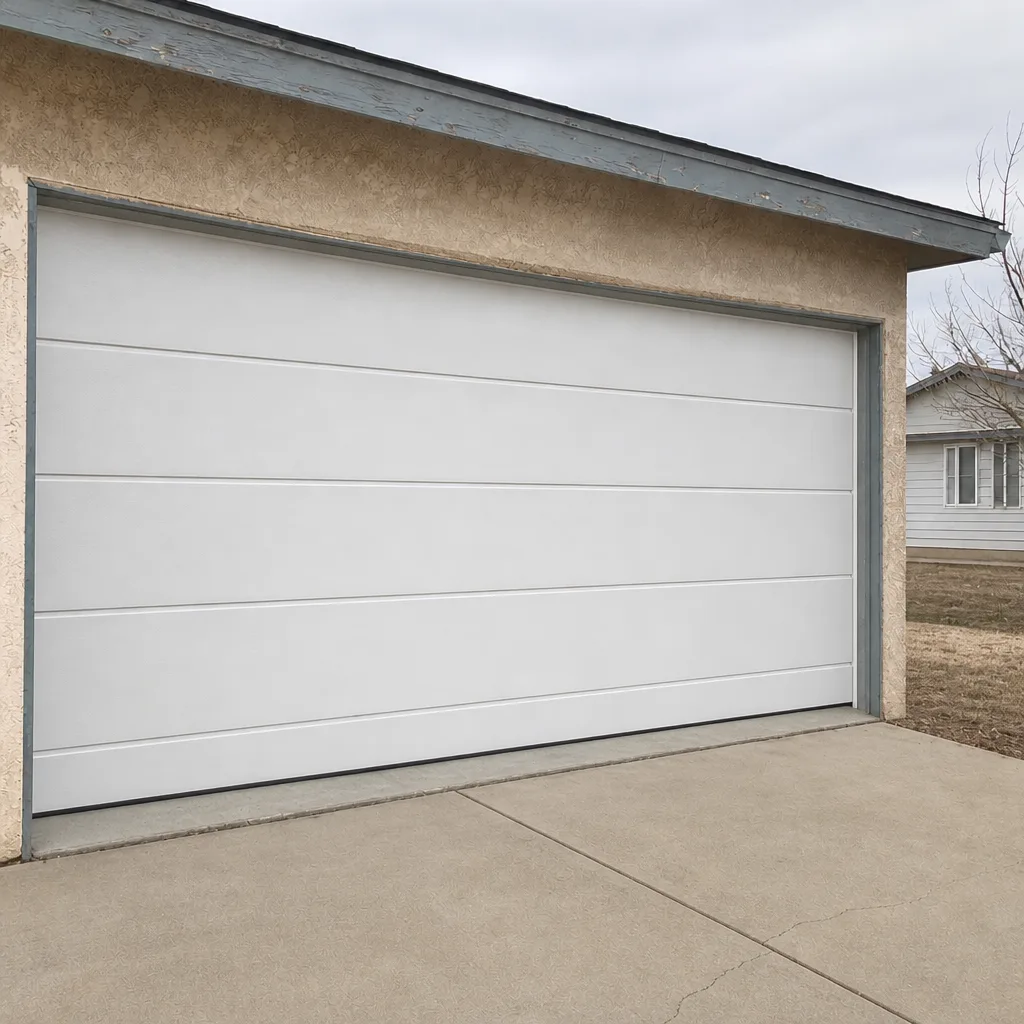
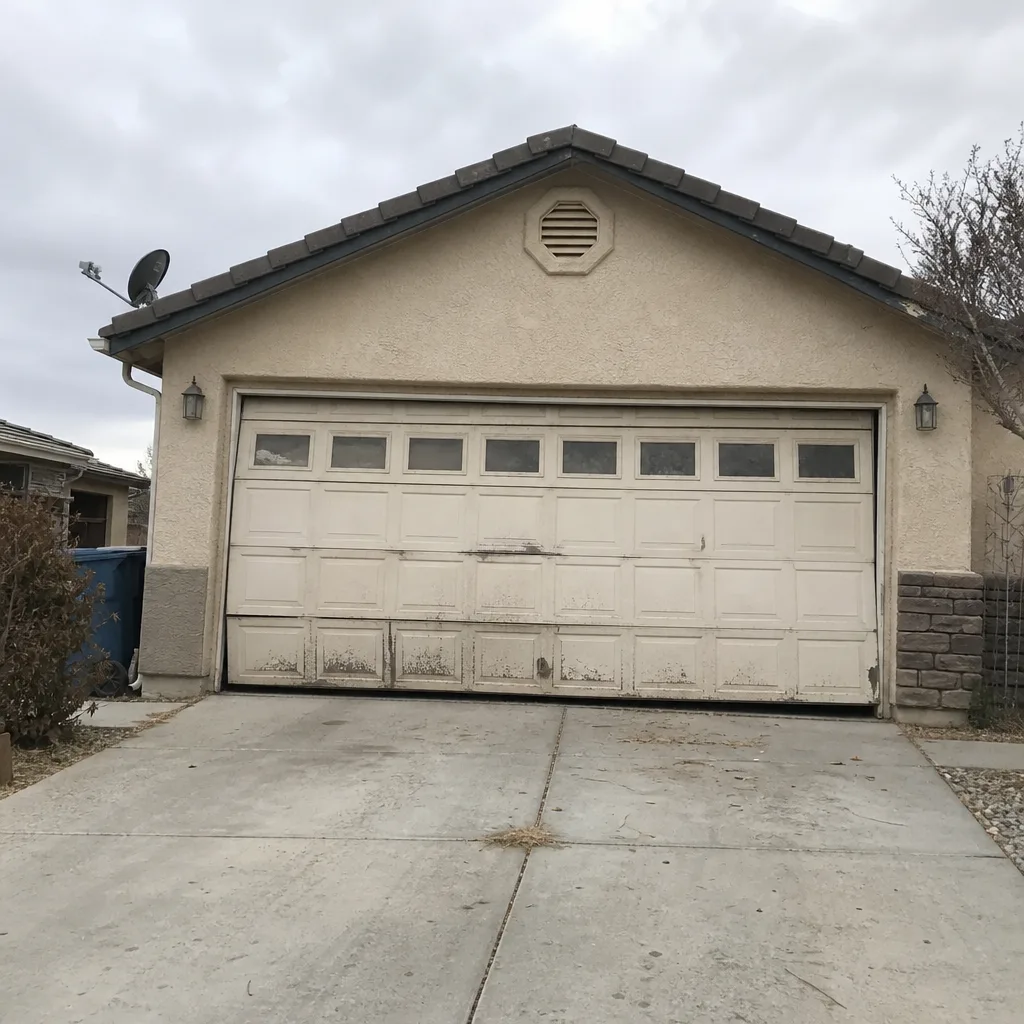
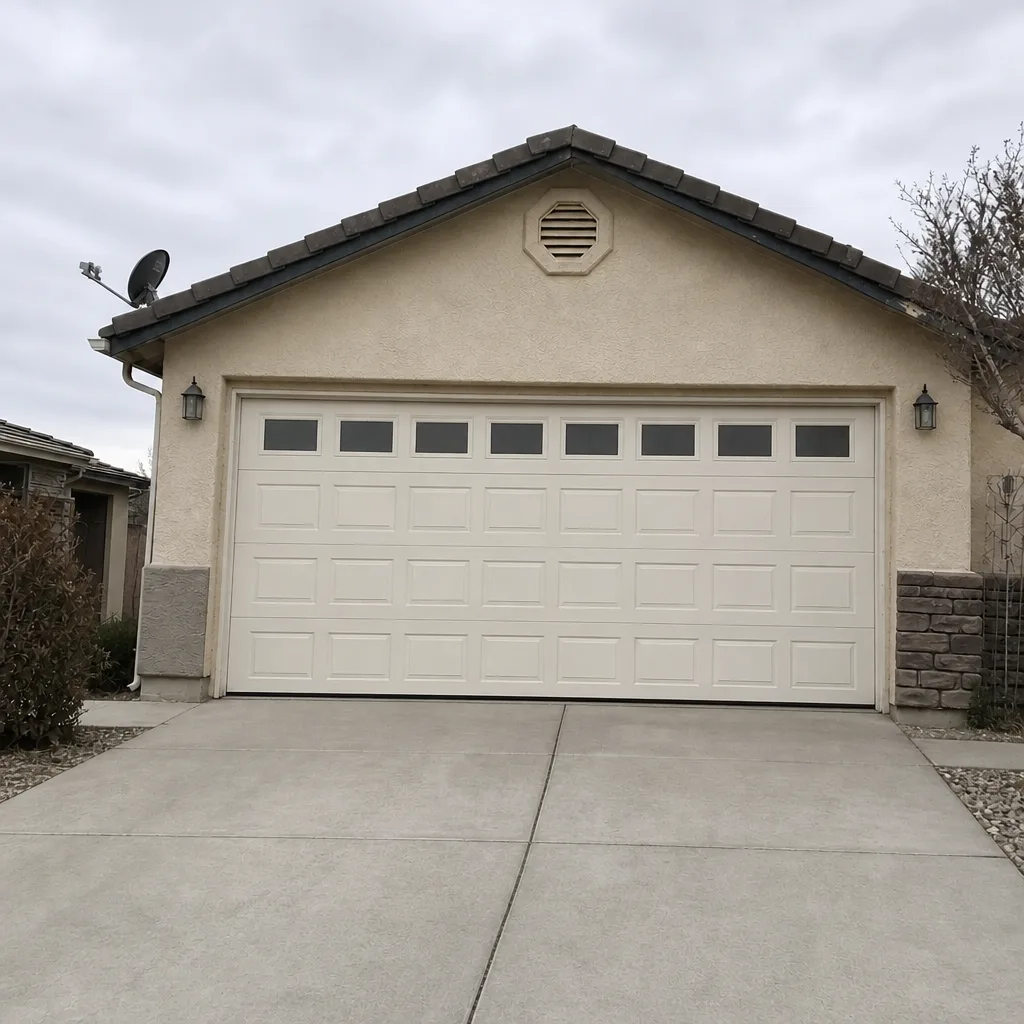
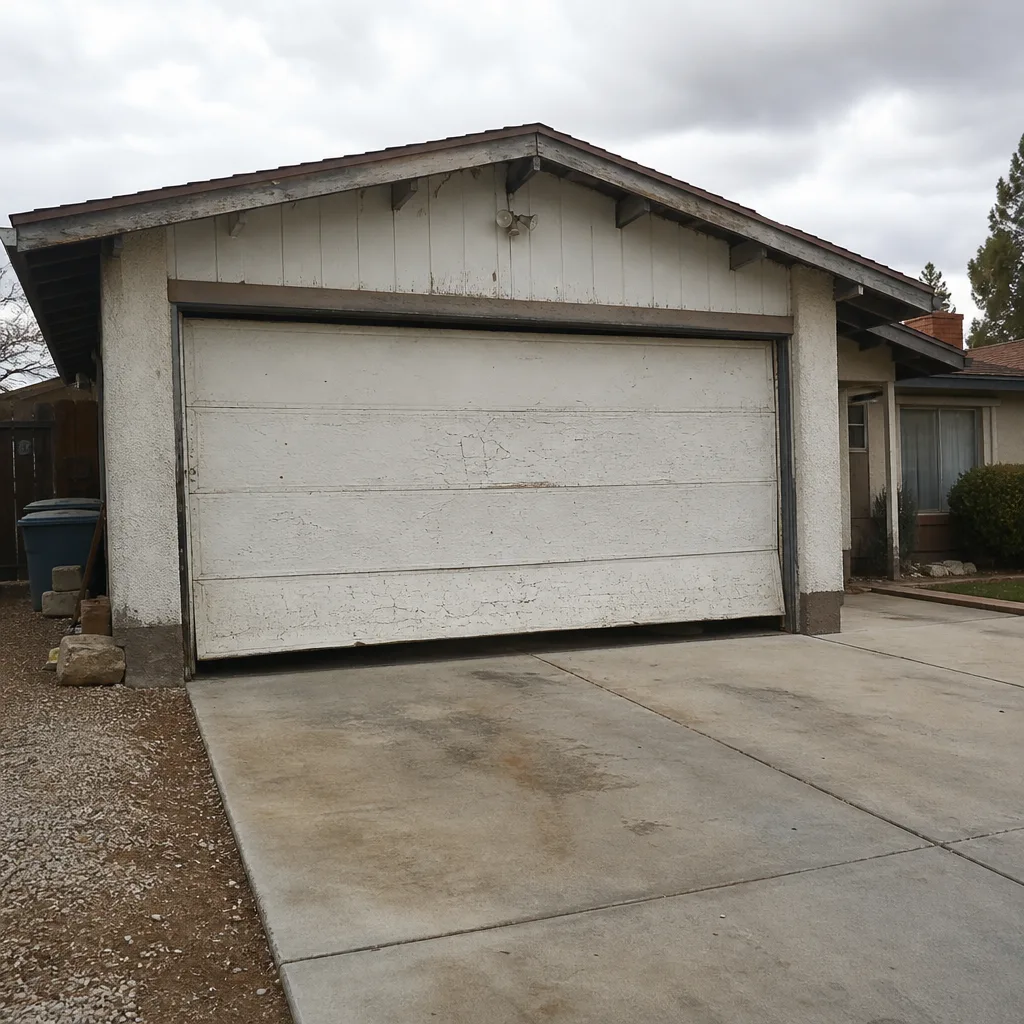
See the difference
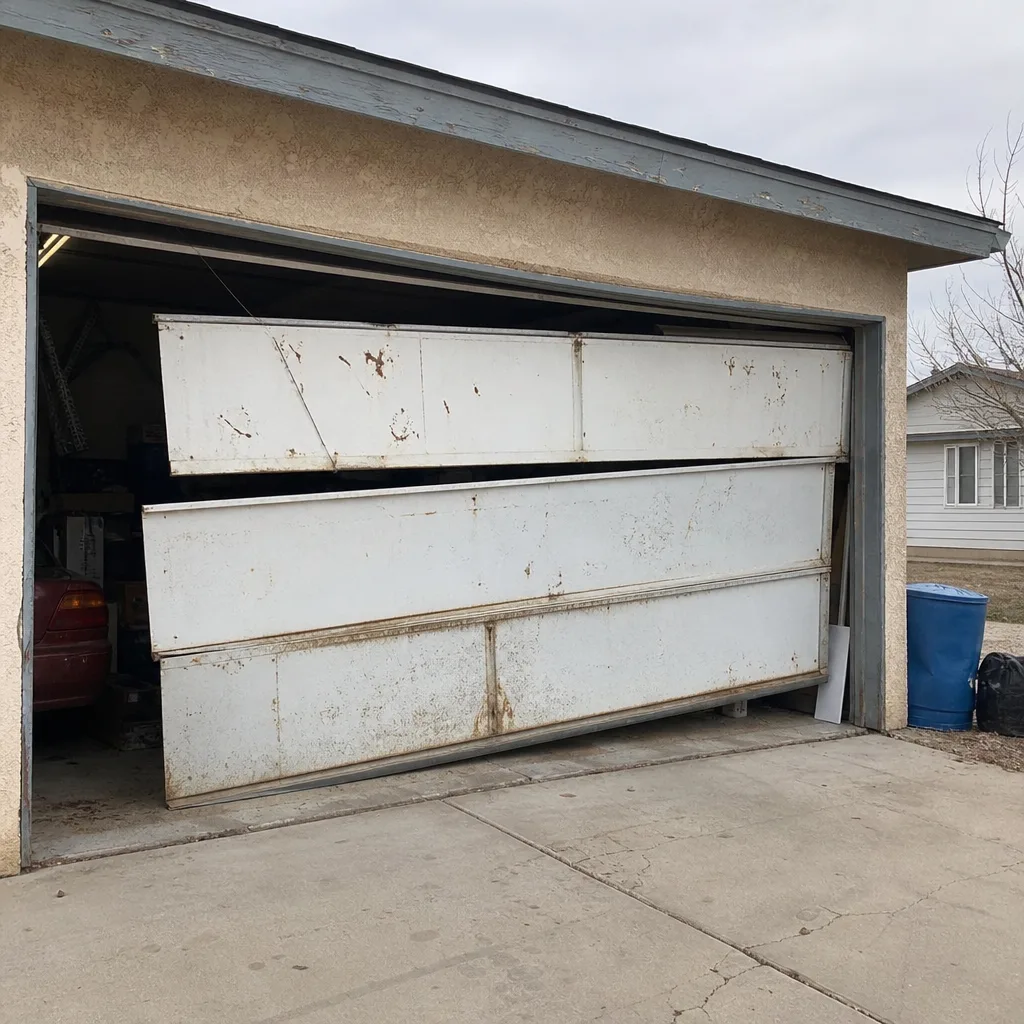 Before
 After
 Before
 After
 Before
 After
Frequently Asked Questions
No, not safely. Torsion spring replacement requires two steel winding bars in the correct size, and the stored energy in the spring is high enough that a slipped bar can cause serious injury regardless of how experienced you are. It’s the one spring task we strongly recommend leaving to a trained technician.
Lubricating the springs, running the balance test, replacing weather stripping, tightening non-spring hardware, and testing the safety reverse are all safe. Mesquite’s heat and dust wear weather stripping and rollers faster than in cooler climates, so a seasonal check goes a long way. Call (888) 255-7680 if the balance test fails.
Most torsion spring replacements in the Mesquite area run $180 – $340, depending on the spring type and door configuration. Extension spring work is usually lower. You’ll get a written price before any work starts, so nothing changes once the technician sees the door. Call (888) 255-7680 for an exact quote; estimates are free.
Yes. Fernbrook’s technicians are background-checked, uniformed, and trained on the major garage door brands, including Amarr, Wayne Dalton, Craftsman, and Raynor. Every visit is covered by the 365-Day Done Right Promise. Call (888) 255-7680 for details on your specific project.
No. You get a written price before any work begins, and that’s the price you pay. If additional work is genuinely needed, we explain it and get your approval before touching anything. Call (888) 255-7680 for a free estimate.
Torsion springs mount on a steel shaft above the door and store energy in a coiled twist. Extension springs run along the tracks and store energy in a linear stretch, with a safety cable running through the center. Torsion work is the higher-risk category; extension work includes a small set of homeowner-safe tasks like inspecting the safety cable.
We answer the phone 24/7 with a live person, so call (888) 255-7680 and we’ll tell you honestly what’s available for today. Spring repair is often handled same day. If the door is stuck, don’t force it open; stop and call.
The Bottom Line
The DIY-versus-professional choice for spring repair comes down to stored energy. Lubricating springs, testing balance, and replacing weather stripping are safe, useful homeowner tasks. Torsion spring replacement is not, because the wound spring holds force that a slipped tool can release in a fraction of a second – a risk that experience reduces but doesn’t erase. The realistic DIY cost often lands close to the professional price once you account for correct tools and a likely second trip. In Mesquite, we help homeowners make that choice with a written price before work starts and clean-up you can trust.
If your door needs attention, call Fernbrook Garage Door Repair Mesquite at (888) 255-7680 for a free estimate. A live person answers any hour, any day, and every job is covered by the 365-Day Done Right Promise.
Written by the team at Fernbrook Garage Door Repair Mesquite.