
Last updated November 17, 2026
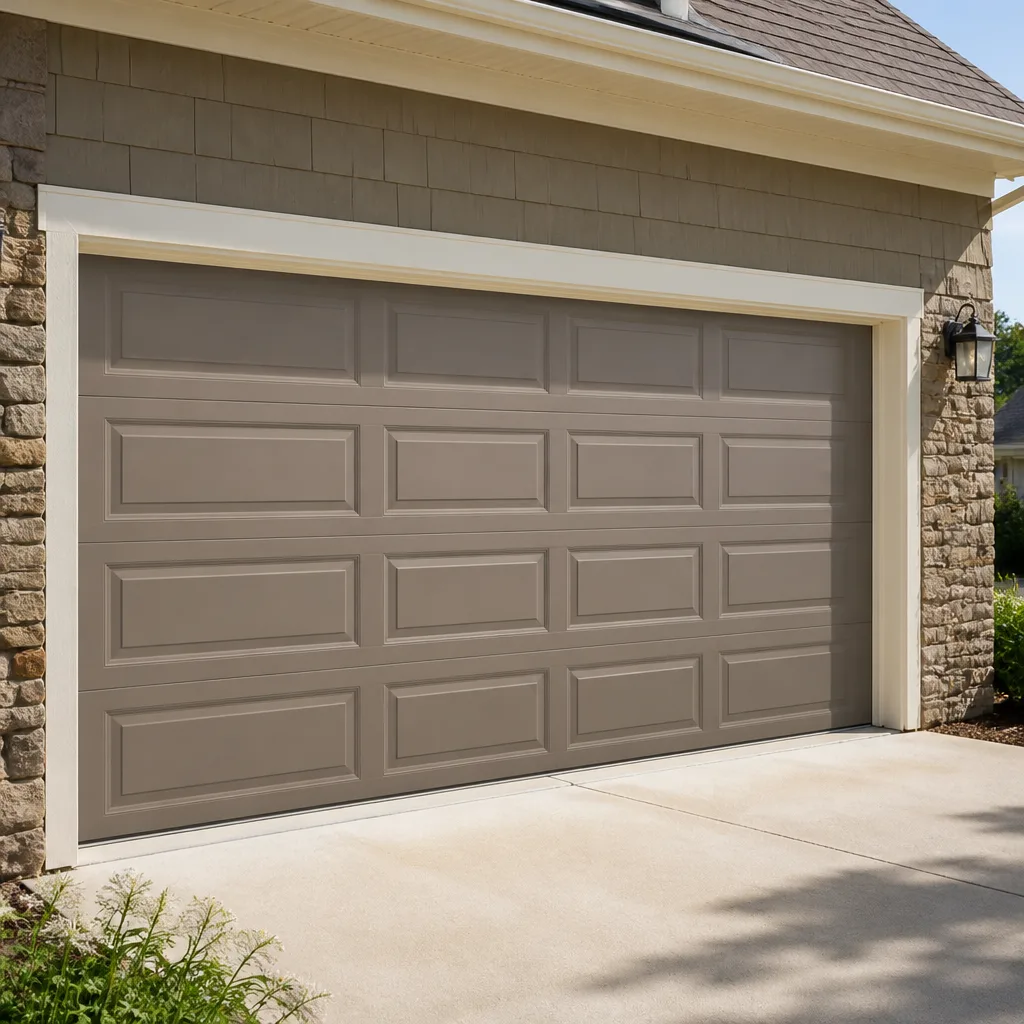 Raised-panel steel
 Carriage house
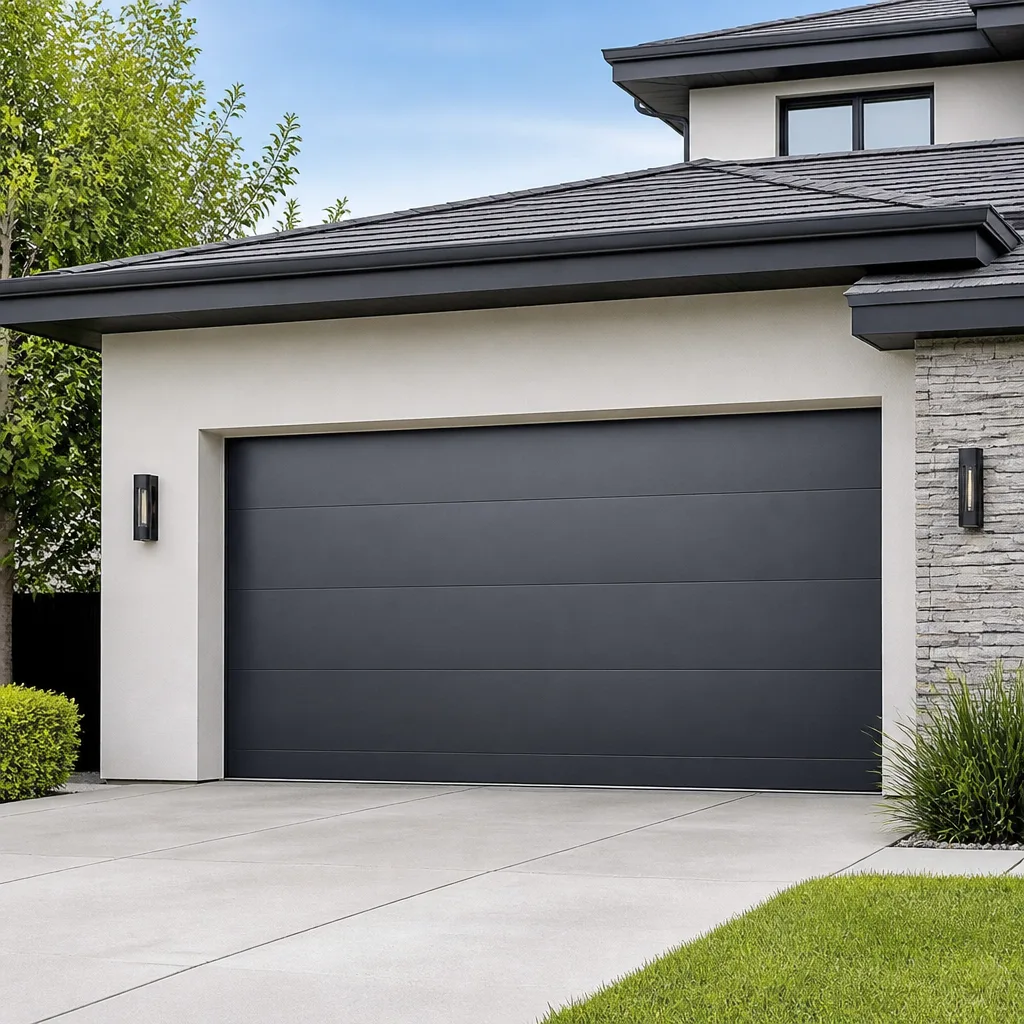 Modern flush
 Full-view glass
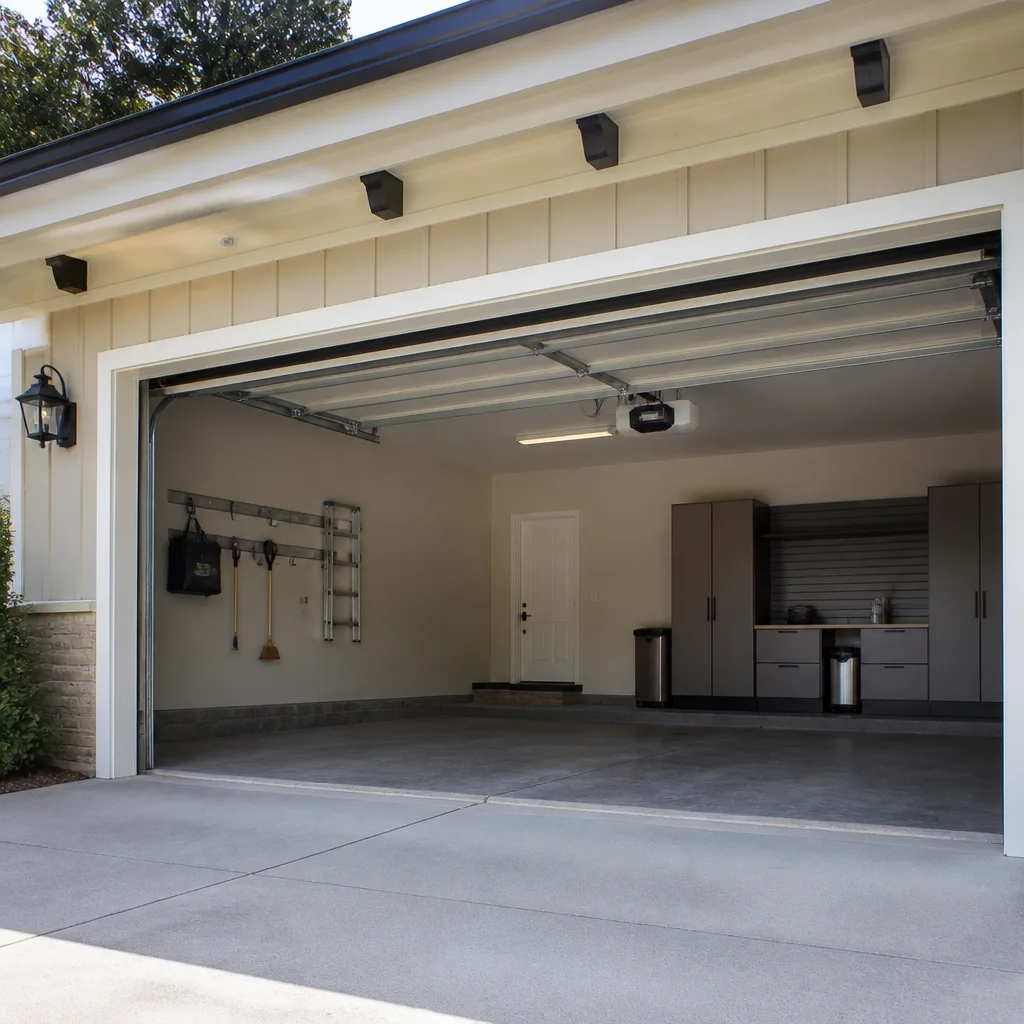 LiftMaster openers
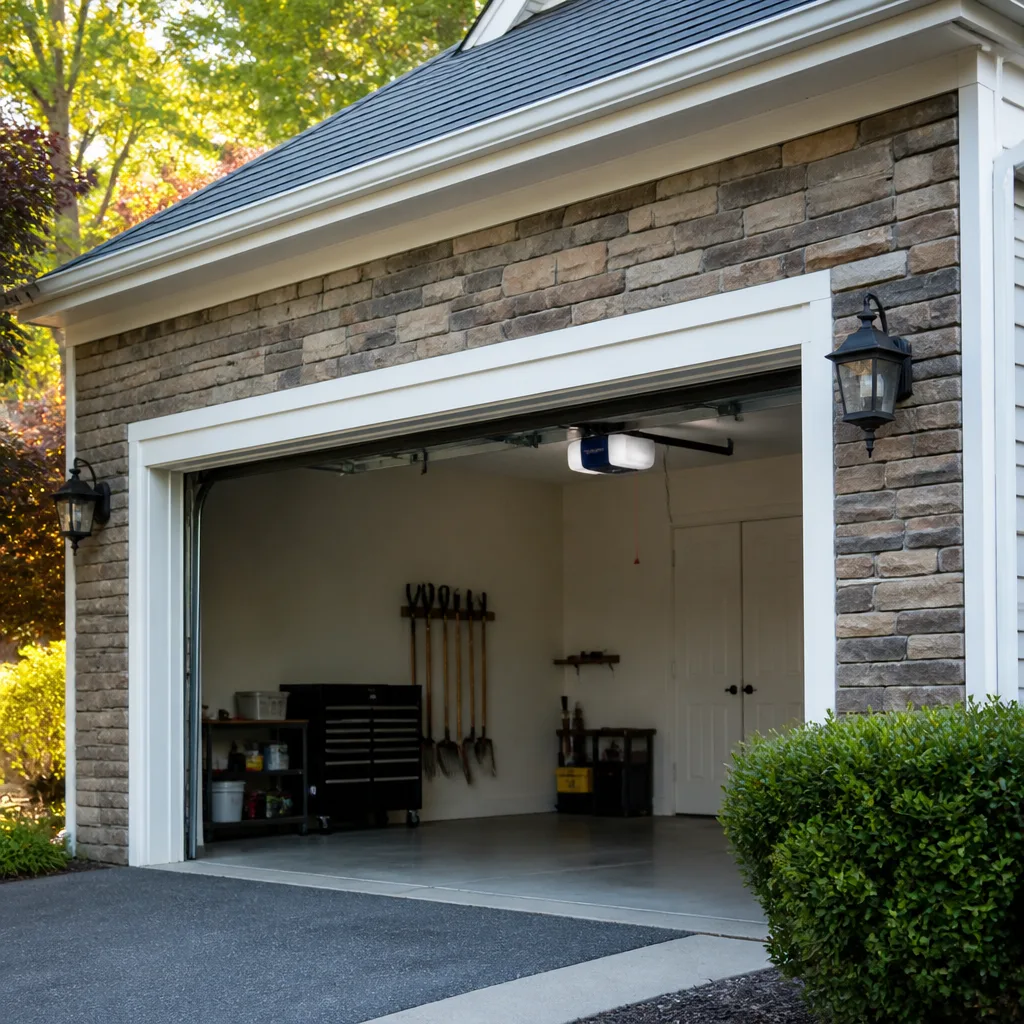 Chamberlain openers
Full 25-point door and opener safety check with every visit - springs, cables, rollers, tracks, and your LiftMaster or Chamberlain opener included
You get a price before we start. It does not change when the pro arrives.
Get your free estimateDIY vs Professional Garage Door Repair: What’s Safe to Do Yourself
A torsion spring on a standard two-car garage door stores roughly 100 foot-pounds of torque when it’s wound. That’s not a scare tactic. It’s a specific number that explains, in one line, why the spring sits in a different category from every other part on your door. The seal at the bottom, the remote on your visor, the rollers on their tracks – those are homeowner work. The spring system is not, and the reason has nothing to do with how handy you are. This guide separates the two clearly, walks through three repairs you can genuinely do this weekend, and explains what “winding a spring” actually involves so the line makes sense instead of feeling arbitrary. If you’re in Mesquite and your door has stopped behaving, read the next few sections before you touch anything.
Quick Answer
Almost everything involving the door panel, weather seal, and opener remote is safe for a careful homeowner to handle. Almost everything involving the spring system – torsion or extension – is not, because those parts store enough energy to cause serious injury even when the door looks still. If your door won’t lift, slams down, or has a visible gap in the spring, stop and call a trained professional.
Styles & brands we work with
- Raised-panel steel
- Carriage house
- Modern flush
- Full-view glass
- LiftMaster openers
- Chamberlain openers
Table of Contents
- Why Stored Energy Changes the Rules
- Safe-to-DIY vs Leave-It-Alone: The Two Lists
- Three Repairs You Can Do This Weekend
- What Winding a Spring Actually Involves
- How to Read a Tutorial: Torsion vs Extension
- Questions to Ask Before a Pro Starts Work
- Mesquite-Specific Notes on Heat, Dust, and Hardware
- Common Mistakes to Avoid
Why Stored Energy Changes the Rules
Your garage door is a balancing act. The springs are wound so they lift almost the entire weight of the door – a two-car door weighs somewhere between 130 and 250 pounds depending on insulation and material – and the opener only adds a small shove to get it moving. That balance is what keeps the door feeling light in your hand. It’s also what makes the spring dangerous: it’s holding the door’s weight for you, all day, every day, without complaint. When it fails, that stored energy doesn’t disappear. It releases.
Compare that to the other parts of the door. A bottom seal is rubber. A roller is a wheel on a stem, held by a bracket you can reach with a socket wrench. A remote is a small radio transmitter with a battery and a learn button. None of those parts are holding weight when you touch them. None of them release energy if you do the job wrong – the worst case is a door that doesn’t seal or a remote that still won’t open. That gap, between parts that store energy and parts that don’t, is the entire argument. It’s also why we tell Mesquite homeowners to think of the door in two zones rather than treating it as one repair.
The same logic applies whether your door is a Clopay steel panel on a newer build near the Virgin River or an older Amarr on a home off Sandhill Boulevard. Age changes how likely a failure is. It doesn’t change which parts are dangerous to touch.
Safe-to-DIY vs Leave-It-Alone: The Two Lists
Here’s the clean split. If a repair appears on the left side of this list and the door is otherwise working, you can do it yourself with basic tools, a step stool, and a YouTube video. If it appears on the right, call a professional – the risk to you is real, and the cost of a trained technician visit is far less than a trip to the emergency room.
Safe to DIY
- Bottom weather seal (astragal): rubber or vinyl strip that bolts into the bottom section with a few screws.
- Opener remote programming: pairing or unpairing a remote, changing batteries, resetting the wall console.
- Roller lubrication: a few drops of garage-door lubricant on each roller stem and hinge.
- Track cleaning: wiping dust and grit out of the rails so the door runs smoother.
- Safety-eye alignment: nudging the photoelectric sensors back into line if the door reverses at the floor.
- Panel wiping and paint touch-ups: cosmetic upkeep on steel or aluminum doors.
- Manual release pull on the opener trolley: using the red handle correctly during a power outage.
Leave to a professional
- Torsion springs: the horizontal spring on the shaft above the door – the highest-energy part on the system.
- Extension springs: the springs alongside the horizontal tracks, especially on older doors without safety cables.
- Lift cables: the braided steel cables that run from the bottom bracket to the drum.
- Bottom corner brackets: the plates under tension from the cables – never unbolt these.
- Center bearing plate and spring shaft: the metal that holds the torsion bar in place.
- Track realignment after impact: a bent track means the door isn’t hanging square, which touches the springs.
- Opener replacement or motor and gear work: not high-energy, but heavy, and it needs a proper mounting and travel-limit calibration.
Three Repairs You Can Do This Weekend
These three tasks are genuinely safe, need no specialized tools, and can usually be finished in under an hour each. If your door is otherwise opening and closing normally and the springs look intact, they’re good places to start.
1. Replace the bottom weather seal
- Buy a replacement seal that matches the profile of your door’s bottom retainer – measure the retainer width, not just the door width.
- Open the door most of the way so the bottom edge is at chest height, then engage the manual release so it stays put.
- Loosen the screws holding the old seal in the retainer and slide it out. If it’s brittle and cracking, work slowly to avoid snapping the ends.
- Slide the new seal into the retainer from one end, then press it into every channel by hand.
- Re-tighten the retainer screws, re-engage the opener, and run the door through one full cycle. A gap on either side means the seal is sitting wrong – pull and reseat it.
2. Reprogram the opener remote
- Find the “learn” button on the opener motor unit – usually a small colored square near the antenna wire.
- Press and release it. An LED will light up or blink, and you’ll have a short window (usually 30 seconds) to finish.
- Press and hold the button on the remote you want to pair. The opener will click or the LED will flash again to confirm. If your opener is a Chamberlain or Genie, the confirmation pattern is slightly different, so check the manual if nothing happens.
- Release the remote button and test the door from the driver’s seat.
3. Lubricate the rollers
- Use a garage-door-specific lubricant – silicone or lithium. Avoid WD-40 as a lubricant; it cleans rather than lubricates. It’s also pet-safe and non-staining when you use the right product, which matters in homes with dogs and cats.
- Work with the door closed. Apply a couple of drops to each roller stem where it meets the hinge bracket, not on the track surface.
- Wipe away any excess with a rag so it doesn’t drip onto the floor of the garage.
- Run the door up and down two or three times to work the lubricant into the bearings.
That’s it. None of these steps involve touching a wound spring or a cable. If you find yourself reaching for a winding bar, stop and step back. That’s where DIY ends and professional work begins.
What Winding a Spring Actually Involves
Most warnings about garage door springs are vague – “don’t touch it, it’s dangerous.” That’s not enough to make a real decision. Here’s what actually happens when a technician winds a torsion spring, so you can picture it and judge for yourself.
A torsion spring is mounted on a steel shaft above the door. To wind it, you insert solid steel bars roughly 18 inches long into holes in the winding cone at one end of the spring. You turn the bar, in a fixed direction, in quarter-turn increments. Each turn adds tension to the spring. A standard residential door might need seven full turns – that’s 28 quarter-turns, done by hand, with the bar in a specific position each time, and with your face and body placed so the bar can’t swing into you. The spring is under load the entire time. If the bar slips out of the hole – which happens, especially on a cold or worn spring – it can spin violently. If the spring breaks during winding, it can release all of the energy at once.
This is why the do-it-yourself winding tools sold online are dangerous. They don’t change the physics. A technician carries a proper set of winding bars, wears gloves and eye protection, and knows the load strategy for the door’s specific weight. That’s the job. If you’re near a garage door in Mesquite that’s clearly lost spring tension – a door that will only open a foot before stopping, or one that slams shut under its own weight – leave it in place and call us. Our team handles spring repairs through Garage Door Spring Repair in Mesquite and we’ll walk through the price in writing before anything is touched.
How to Read a Tutorial: Torsion vs Extension
Not every spring tutorial shows the same system, and the two systems don’t have the same risk profile. Torsion springs sit horizontally on a shaft above the door and carry almost all of the danger. Extension springs run alongside the horizontal tracks and stretch under tension – older doors often lack the safety cables that would contain them if they snap, which makes the risk worse, not better. If the video doesn’t match your door, stop watching.
Before you follow any tutorial, check four things:
- Where is the spring? A horizontal cylinder above the door is torsion. Springs running along the left and right tracks are extension. The repair procedure is completely different, and a tutorial for one will teach you the wrong move on the other.
- Does the tutorial use winding bars or a wrench? If it’s winding bars, it’s torsion and you should not follow it. If it’s a wrench and a bolt on the bracket, it’s extension – also not a homeowner job, but for different reasons.
- Does the instructor show safety cables? Any extension spring tutorial that skips the safety cable step is incomplete. That cable is what stops a broken spring from flying across the garage.
- Does the video show the door’s weight class? A door rated for one weight requires a specific spring; buying the wrong one is a common Mesquite failure when homeowners order online without matching the door’s stamped weight.
If the video is unclear on any of these, treat it as unsafe to follow. The number of DIY spring repairs we’ve been called to rescue in Mesquite tells us most tutorials don’t say enough.
Questions to Ask Before a Pro Starts Work
A professional visit is only as good as what’s confirmed before the first bolt moves. These are the questions we think any homeowner should ask, and the answers you’ll get when you call us.
- “Is this spring repair covered by your liability insurance?” Spring work is a specific category. Ask whether the policy explicitly covers torsion and extension spring incidents, not just general property damage. A yes that gets vague when you press is a no.
- “Will you show me the price in writing before you start?” If the answer isn’t an immediate yes, walk. Ours is written on every visit and presented before the first tool is out of the box.
- “What happens if something goes wrong after you leave?” Every job we do is covered by our 365-Day Done Right Promise. If the repair doesn’t hold, we make it right.
- “Will there be shoe covers and drop cloths inside the house?” The garage connects to the kitchen on most Mesquite homes. It matters.
- “Who’s arriving, and are they background-checked?” A uniform and a marked vehicle are the baseline. A background check is the real question.
- “Is the estimate free, and is there any charge to come out?” An honest company answers plainly.
Mesquite-Specific Notes on Heat, Dust, and Hardware
Garage door hardware in Mesquite ages differently than hardware in cooler climates. Summer afternoons routinely push the interior of a west-facing garage well past 110°F, and the metal, lubricant, and rubber all feel it. We regularly see rollers that have gone dry and started squealing in June because the factory lubricant baked off in May. We see bottom seals that harden and crack after two or three summers of intense sun exposure, especially on doors facing the afternoon sun in neighborhoods off West Pioneer Boulevard. And we see a small but steady stream of spring failures in the first hot week of the year – the transition from a cooler month to a 105°F afternoon is when a worn spring finally lets go.
The dust is the other factor. Fine desert grit works its way into the tracks and rollers and acts like an abrasive. A quarterly wipe-down of the tracks and a light relubrication of the rollers makes a real difference here and is exactly the kind of maintenance a homeowner can do safely. Spring replacement, cable work, and track realignment we handle ourselves. Our technicians have up to 24 years of experience, and they’re trained on the brands we see most in Mesquite – LiftMaster and Chamberlain openers, Clopay and Amarr doors – so the diagnosis isn’t guesswork. If you’re deciding whether a full replacement makes more sense than a repair, Garage Door Installation in Mesquite walks through the panel and opener options we install most often.
Common Mistakes to Avoid
- Watching a torsion tutorial and applying it to an extension spring door. The steps are different enough that mixing them up can release tension you weren’t expecting. Match the tutorial to your door before you touch a tool.
- Using WD-40 as a lubricant on the rollers. It cleans, it doesn’t lubricate. The rollers dry out faster afterward, and in Mesquite heat they start squeaking again within weeks.
- Buying a bottom seal online without measuring the retainer. Profiles vary by brand. A seal that doesn’t seat leaves a gap, and in a Mesquite monsoon that gap is a puddle at the back of your garage.
- Forcing the door when it only opens a few inches. That’s a spring failure symptom, not a stubborn door. Forcing it can buckle a panel and turn a spring repair into a panel and spring repair.
- Tightening the bolts on the bottom corner brackets “just to be safe.” Those brackets are under cable tension. Loosening or removing them is one of the ways DIY spring repairs turn into emergency room visits – leave them alone.
- Skipping the safety-eye test after any repair. Stand a small object in the door’s path and confirm the door reverses. It takes 20 seconds and confirms the most important safety feature on the opener.
- Not asking for the written price before the work starts. A verbal estimate turns into a surprise invoice more often than anyone wants to admit. Ask before the first bolt moves.
See the difference
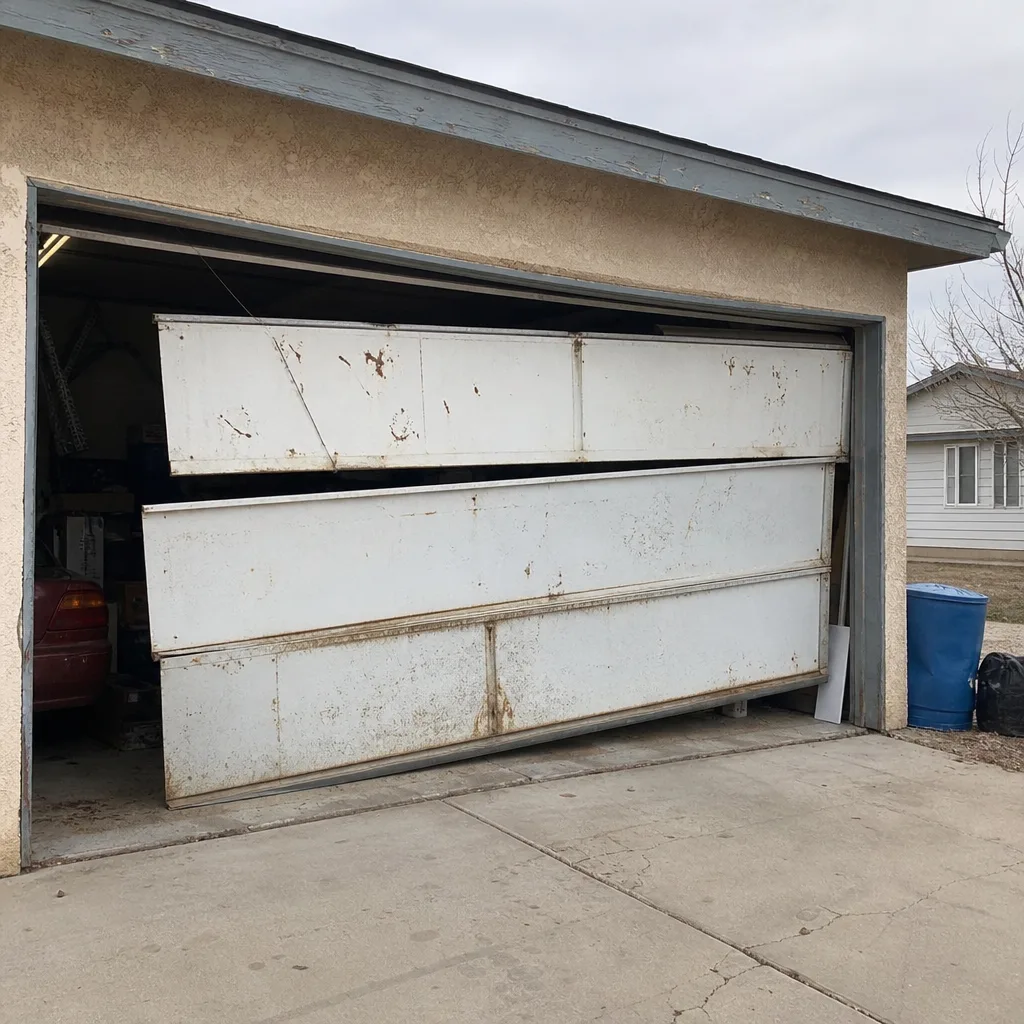 Before
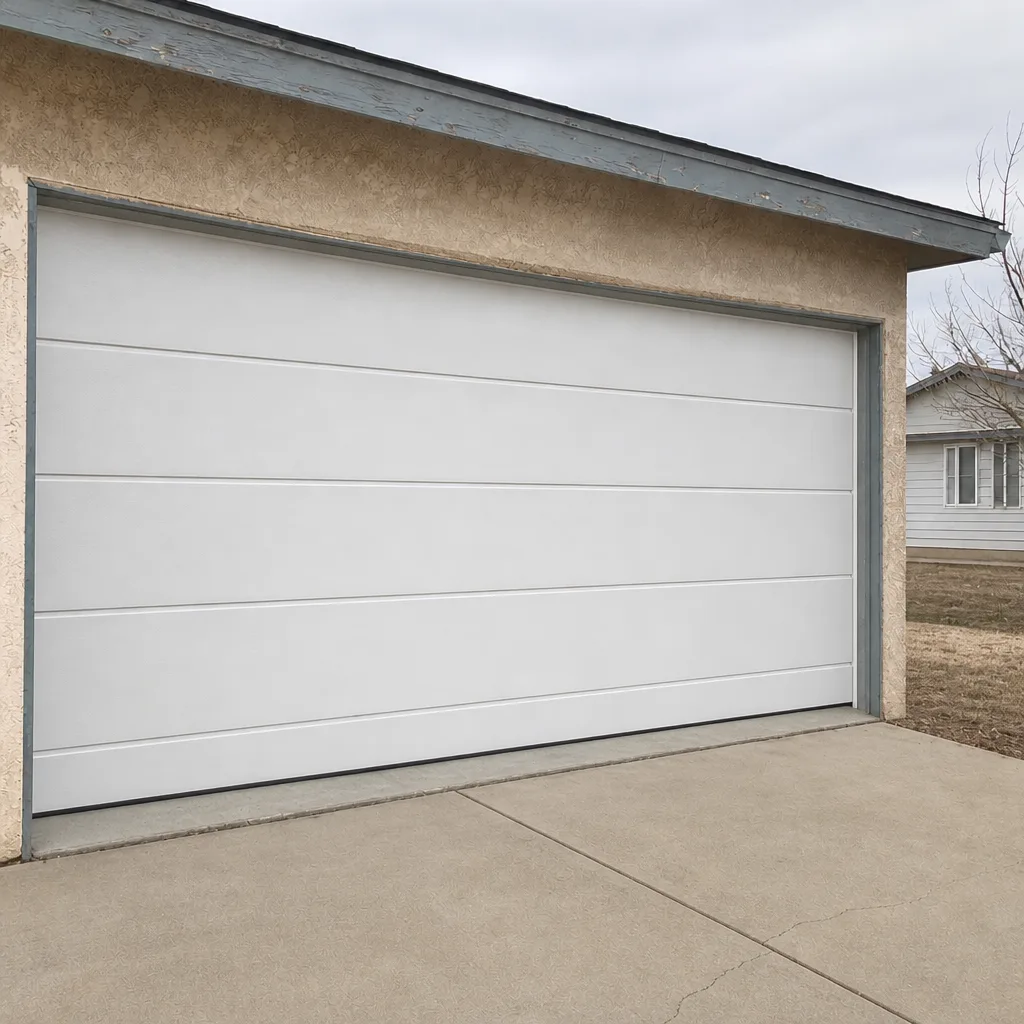 After
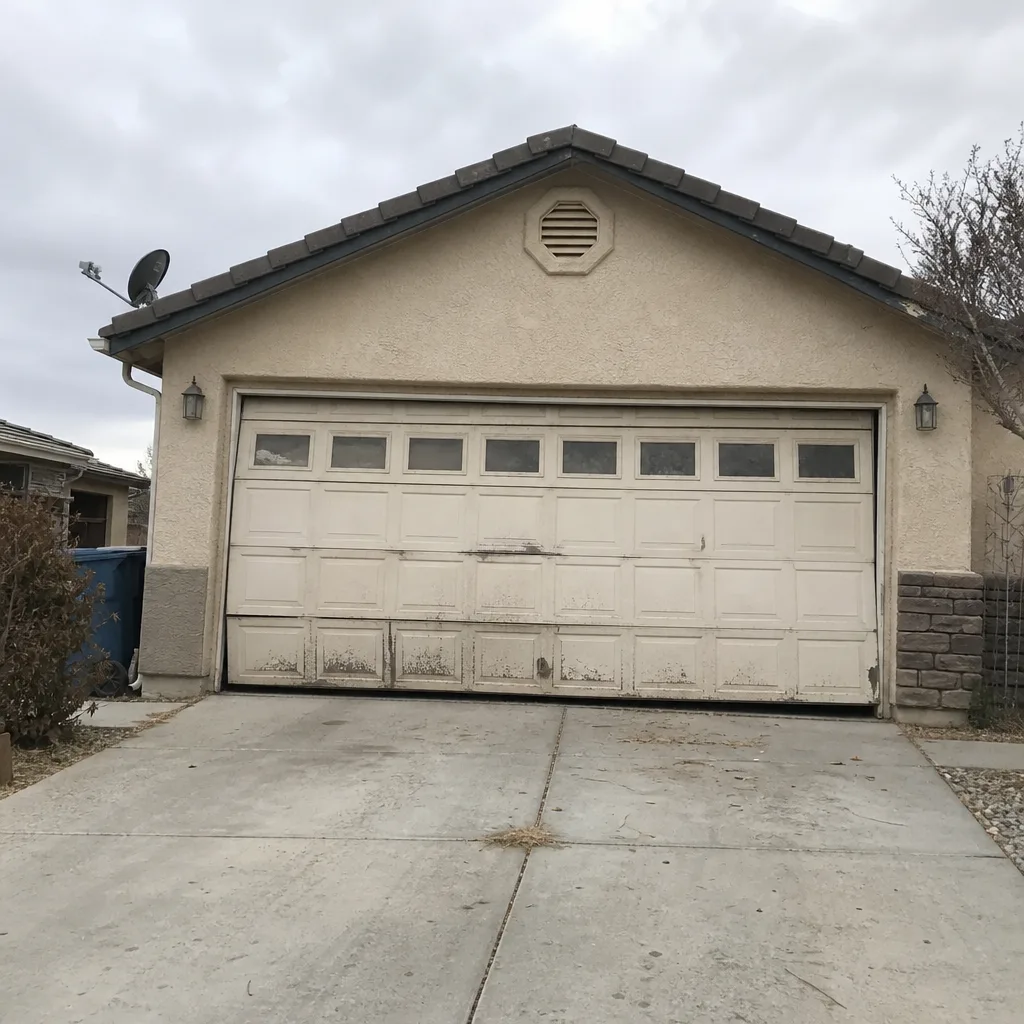 Before
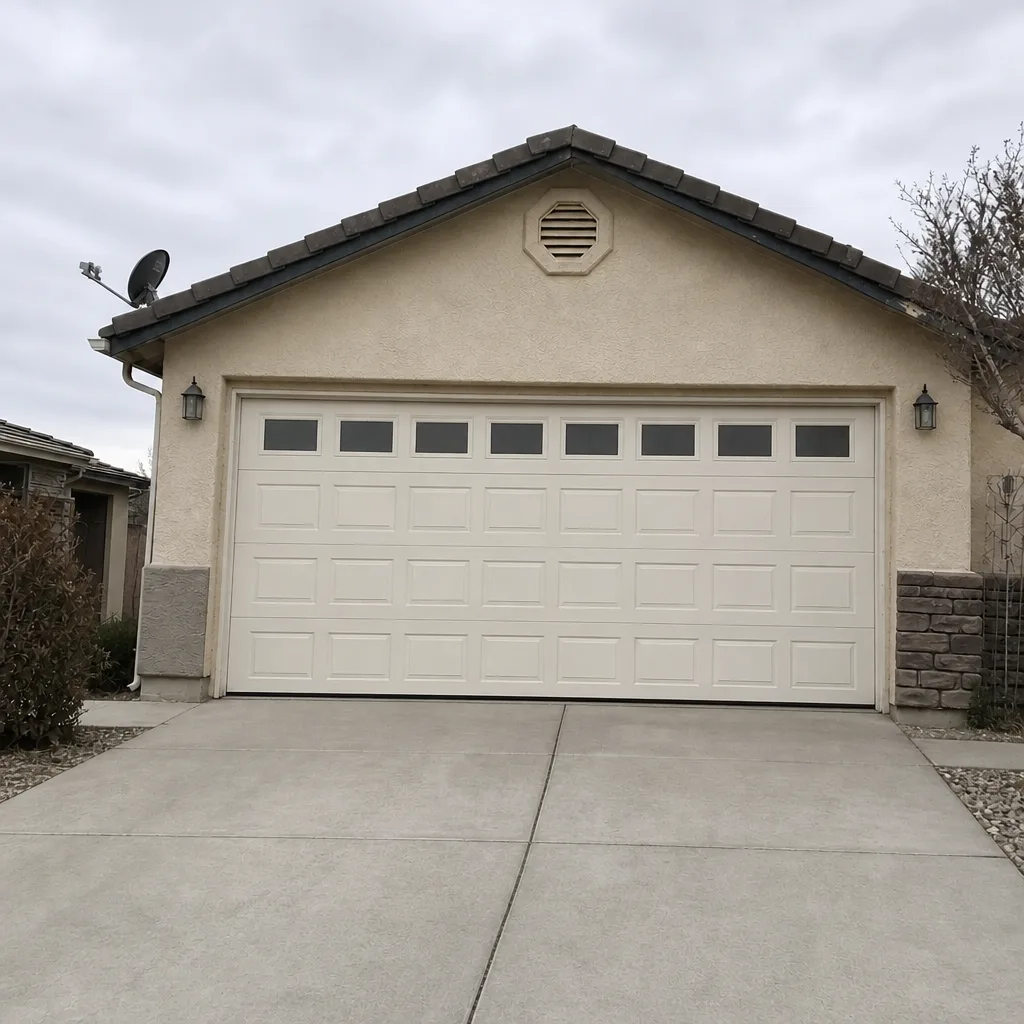 After
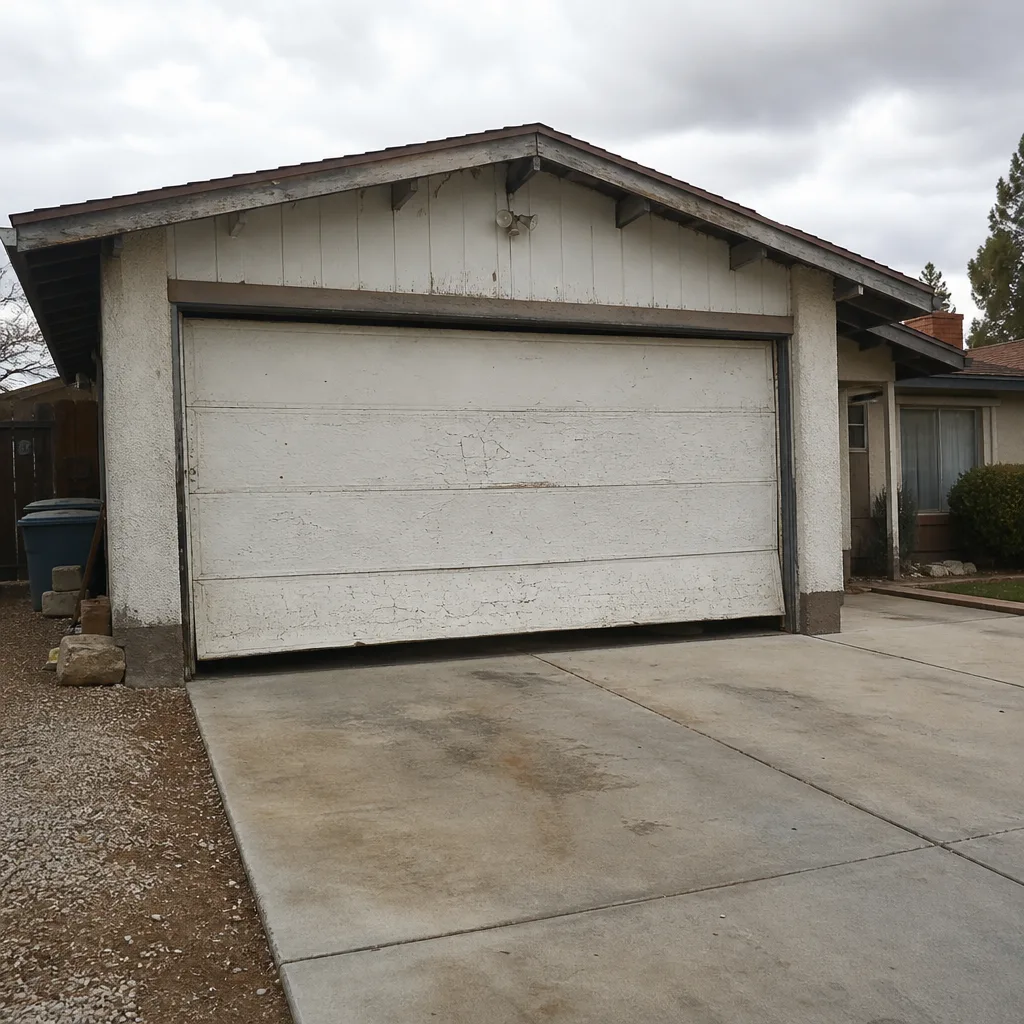 Before
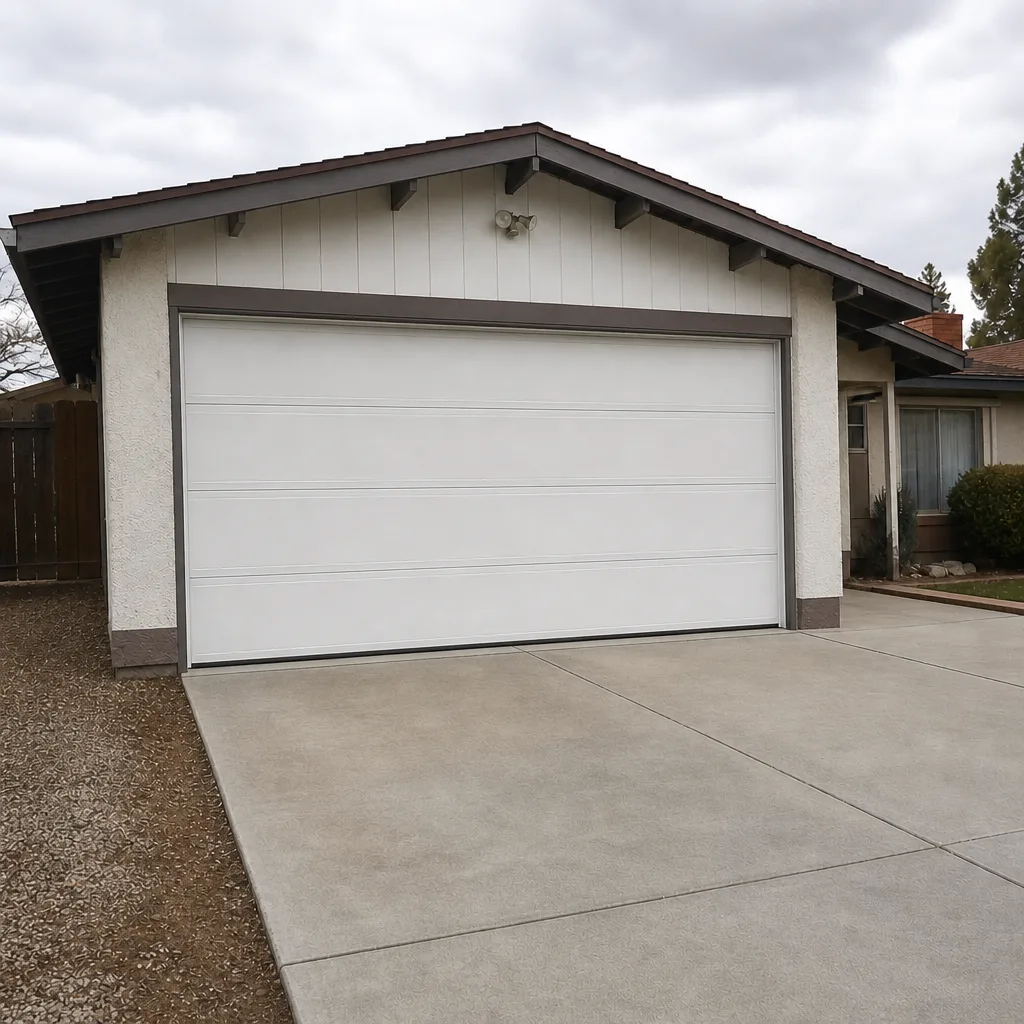 After
When to Call a Professional
Call a professional when the door won’t open all the way, opens only a foot and stops, slams down under its own weight, has a visible gap in the spring coil, or has lost a cable. Call us too if the door has come off one track, if a panel has buckled after an impact, or if the opener’s motor runs but the door doesn’t move – that’s a stripped gear or a disconnected trolley, and both need a trained hand. Fernbrook Garage Door Repair Mesquite offers free estimates in Mesquite – call (888) 255-7680. Every visit comes with a written price before work begins, background-checked technicians in uniform, shoe covers and drop cloths inside the home, and a photo of the cleanup before they leave. If the repair isn’t right, our 365-Day Done Right Promise has you covered.
Frequently Asked Questions
You should not. The spring is under enough stored torque to cause serious injury if it releases unexpectedly, and winding it requires specific tools and load training. Prices for a spring replacement in Mesquite typically fall in a modest range for a single spring and somewhat higher for a matched pair with cables. Call (888) 255-7680 for an exact quote – estimates are free.
Most common repairs in Mesquite fall in a few predictable buckets: a bottom seal replacement runs a small amount, a roller or hinge replacement a small amount more, and a spring replacement carries the largest single line item. We quote every job in writing before any work starts, so there’s no surprise on the invoice. Call us for a free estimate.
For most repair calls in Mesquite, yes – our team answers the phone live, 24 hours a day, and we do same-day repair visits whenever the schedule allows. Installation and full replacement estimates are scheduled differently, since the door has to be measured and ordered. Call (888) 255-7680 and we’ll give you a realistic window.
No. The price we write down before the work starts is the price you pay, unless you approve a change to the scope. That written step is part of the Cedarwell Care Promise on every Fernbrook visit.
Yes – our technicians are background-checked, uniformed, and insured. They’re trained on the brands we see most often in Mesquite, including LiftMaster, Chamberlain, Genie, Clopay, Amarr, Wayne Dalton, Craftsman, and Raynor. Our technicians have up to 24 years of experience across the team.
First check that the two safety eyes near the floor are aligned and clean. If they’re clear and the door still won’t reverse, the opener’s safety circuit or the travel limits need attention. Don’t operate the door until it’s fixed – that’s the feature protecting kids and pets in the driveway. Call (888) 255-7680.
The Bottom Line
The line between DIY and professional is not about how handy you are. It’s about stored energy. Bottom seals, remote programming, and roller lubrication are safely yours. Springs, cables, and corner brackets are not, ever, under any circumstance. That one rule prevents almost every DIY garage door injury we hear about, and it’s the rule we ask every Mesquite homeowner to hold onto. If your door has stopped behaving, don’t force it. Call (888) 255-7680 for a free estimate with a written price before work starts. Read more about our Garage Door Repair in Mesquite service, or start at the Fernbrook Garage Door Repair Mesquite home page to see everything we handle.
Written by the team at Fernbrook Garage Door Repair Mesquite.