
Last updated November 17, 2026
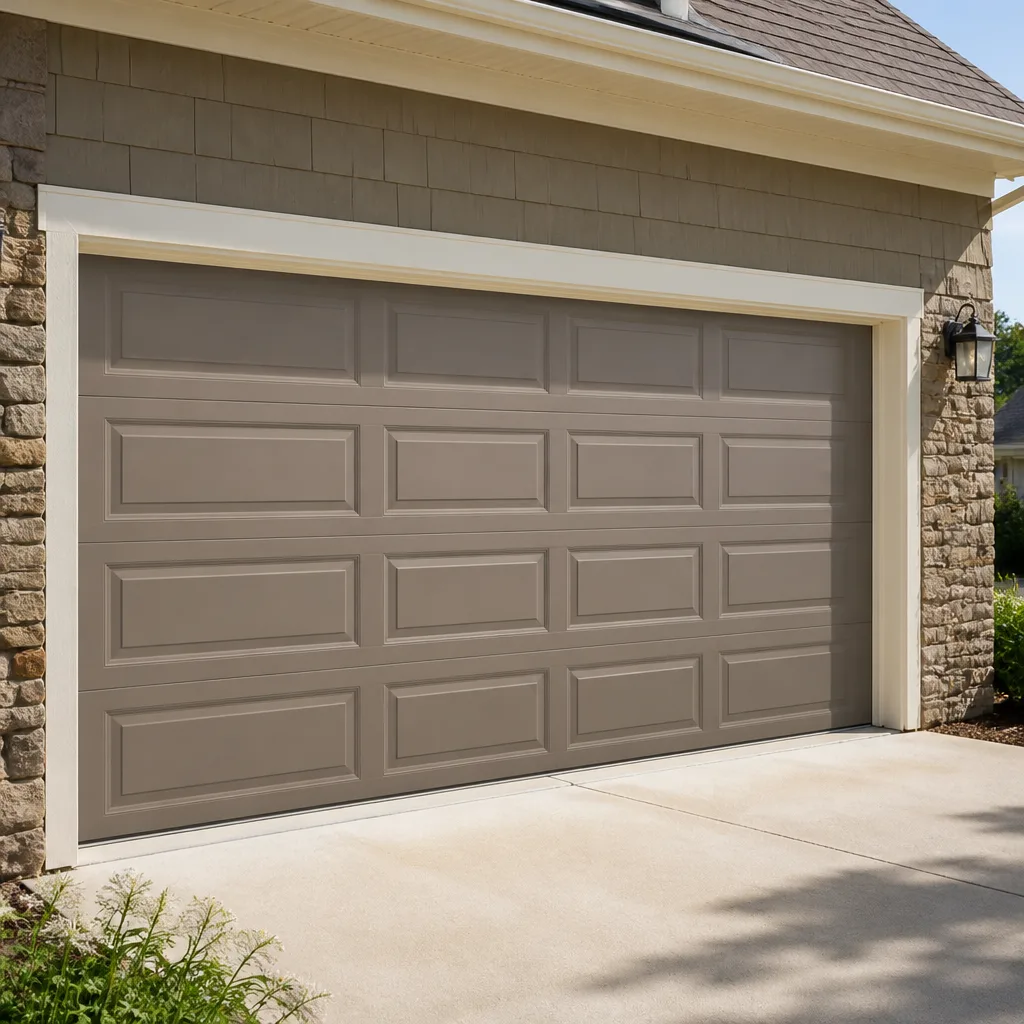 Raised-panel steel
 Carriage house
 Modern flush
 Full-view glass
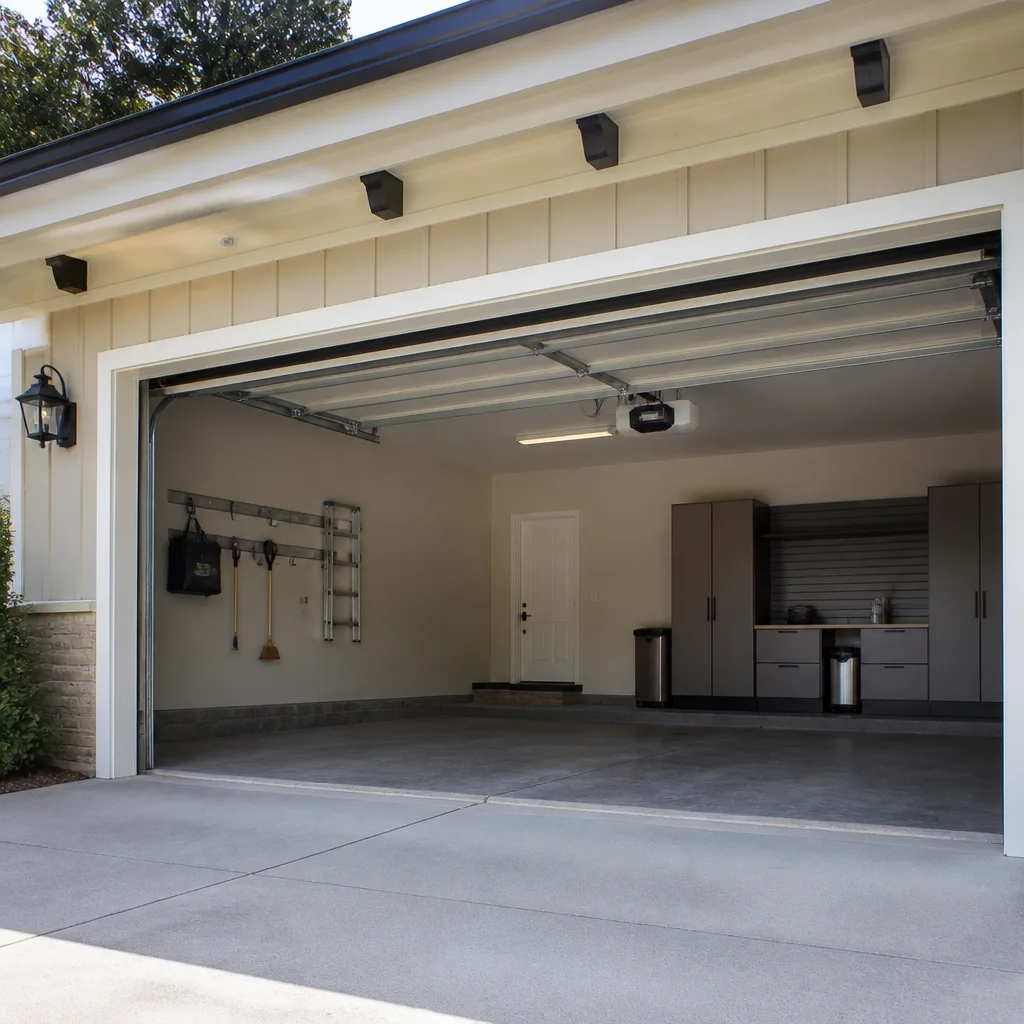 LiftMaster openers
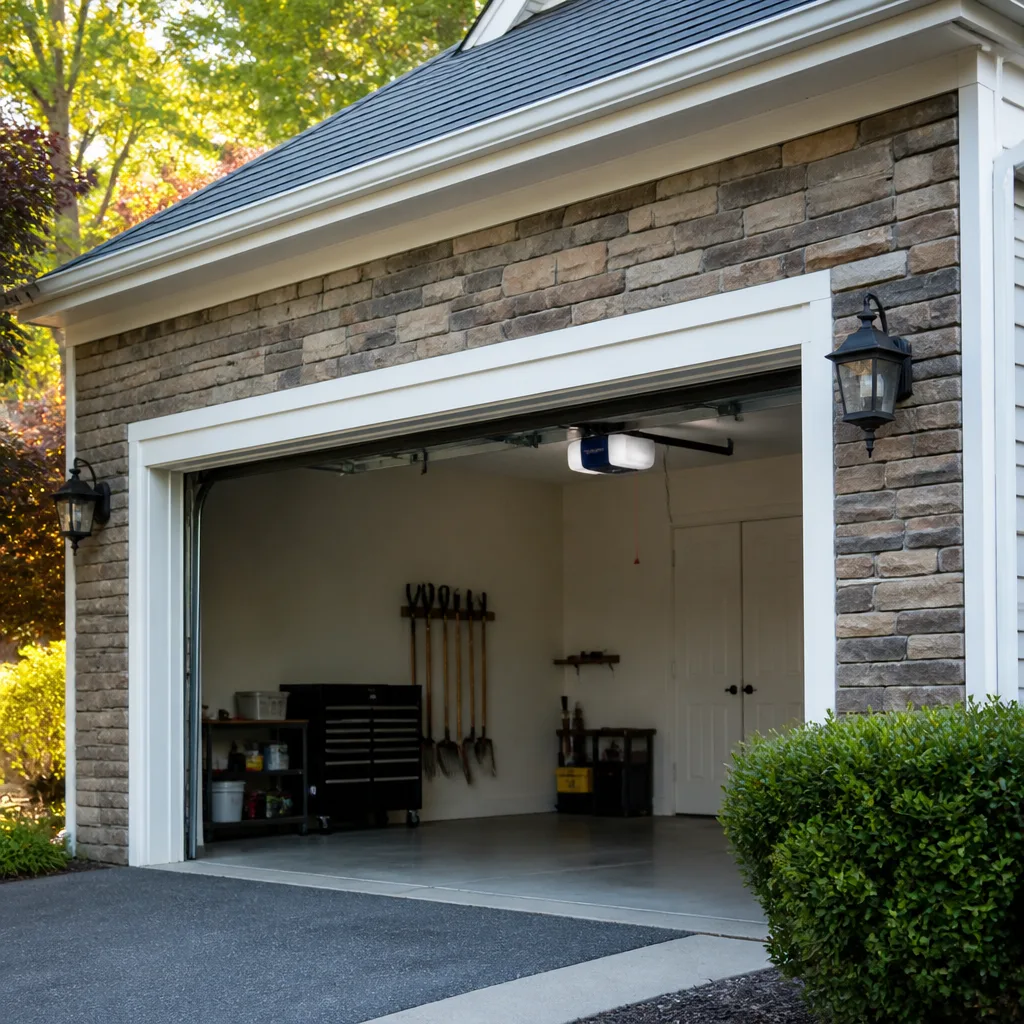 Chamberlain openers
Full 25-point door and opener safety check with every visit - springs, cables, rollers, tracks, and your LiftMaster or Chamberlain opener included
You get a price before we start. It does not change when the pro arrives.
Get your free estimateGarage Door Opener Repair Warning Signs Every Homeowner Should Know
Here’s a detail from years of service calls that surprises almost every homeowner: the openers that fail completely at 11 p.m. with a door stuck halfway up almost never fail without warning. They send signals for 60 to 90 days first. The grinding that shows up on the first cycle of the morning and clears by the second. The half-second hesitation before the door moves. The one click that isn’t quite in rhythm with the rest. These feel minor enough to ignore, so most people do, right up until the door stops answering the remote. This guide teaches you to tell normal mechanical noise apart from the specific sounds and signs that mean a component is weeks from quitting, with notes from what we see in Mesquite garages in particular.
Quick Answer
The warning signs that a garage door opener needs repair are: grinding or scraping that appears on the first cycle of the day, a humming motor with no door movement, intermittent hesitation before the door travels, a door that reverses without an obstruction, a visible gap on one side of the door, rust streaks on the rail, and a full open cycle that has slowed by more than 15%. Grinding that clears after one cycle is the most commonly ignored sign and usually points to a worn trolley carriage that fails within weeks if left alone.
Styles & brands we work with
- Raised-panel steel
- Carriage house
- Modern flush
- Full-view glass
- LiftMaster openers
- Chamberlain openers
Table of Contents
- What Each Sound Is Telling You: A Noise Diagnostic
- Visual Warning Signs Most Homeowners Walk Right Past
- Why a Door That Reverses for No Reason Is Not a Nuisance
- The Speed Test: Timing a Full Open Cycle
- Which Warnings to Monitor and Which Need Repair Before the Next Use
- Why Mesquite’s Climate and Age of Homes Matter for Your Opener
- Brand Notes: LiftMaster, Chamberlain, Wayne Dalton, and Craftsman
- Simple Habits That Add Years to an Opener
What Each Sound Is Telling You: A Noise Diagnostic
An opener doesn’t have many ways to communicate. Nearly everything it wants to tell you comes through sound. Our technicians have up to 24 years of experience, and the single most useful skill we’ve developed is translating four distinct noises into what’s actually happening inside the unit. Listen carefully on a quiet morning. Put your phone down, stand in the garage, and run one full open and close cycle.
- Grinding or scraping. Metal-on-metal grinding that appears on the first cycle and fades on the second usually points to a worn trolley carriage or a dry section of the rail. The carriage rides the rail and pulls the door; when its bushings wear, the first travel of the day grinds until a bit of grease works its way in. That “clearing up” is the warning, not the fix. Left alone, the carriage seizes or jumps the rail and the door stalls mid-cycle.
- Clicking. A single click at the start of a cycle is normal relay engagement. Rhythmic clicking through the whole travel usually means a failing gear or a stripped sprocket inside the motor housing. This is the sound that goes from occasional to constant fastest.
- Humming with no movement. The motor runs but the door doesn’t travel. That’s almost always a broken torsion spring, a stripped drive gear, or a door that’s binding in its tracks. Stop using the opener immediately here, because the motor is straining against a load it wasn’t built to move, and running it repeatedly can burn out a motor that would otherwise be fine.
- Intermittent hesitation. A half-second pause before the door moves, or a pause mid-travel, usually signals a failing capacitor, worn motor brushes, or a circuit board that’s starting to go. This is the quietest warning, and the one most homeowners only notice when the pause becomes a full stop.
If you hear grinding that clears or hesitation that’s getting longer, that’s your cue to schedule a trained technician rather than keep running the door. A garage door repair in Mesquite visit for a noise that early is usually quick and inexpensive compared with the same problem after a carriage failure.
Visual Warning Signs Most Homeowners Walk Right Past
You don’t need to understand the mechanics to see these. What you need is a habit of actually looking, once a season. Most warning signs are visible from the driver’s seat if you know where to look.
- The trolley cord. Look at the rope or strap hanging from the trolley carriage (the part that pulls the door). Fraying, sun bleaching, or a cord that’s stiff and cracked means it’s nearing failure. It’s your manual release, so you want it healthy, not just present.
- Rust streaks on the rail. Rust along the rail, especially near the motor head, tells you moisture has been working in. In Mesquite’s dry climate, rust usually isn’t weather; it’s condensation from a garage with poor airflow, and it means the rail and carriage are running rougher than they should.
- A gap on one side of the door. Stand inside with the door closed and look at where it meets the floor. If one side touches and the other sits a quarter-inch high, that’s a bent carriage or a rail that’s pulled out of alignment. The opener is pulling the door off-center, and both the door and the opener pay for it.
- Loose or wobbling track brackets. A wobble at the bracket means the door is pulling on a fastener that’s backing out, and the opener’s carriage overcorrects every cycle.
- A remote that needs more presses. If your remote takes two or three presses when it used to take one, that’s a warning from the receiver or the battery, not from your thumb.
None of these require an immediate stop-use, but each one narrows the gap between “an inexpensive fix” and “a component swap.”
Why a Door That Reverses for No Reason Is Not a Nuisance
A door that goes halfway down and then reverses to open on its own is not temperamental. It’s doing exactly what it was built to do: a safety sensor has reported an obstruction, and the opener is obeying. The question is not how to stop it reversing. The question is why the sensor thinks there’s a problem, because the most common culprits have nothing to do with the door itself.
- Sensor misalignment. The two small sensor eyes at the bottom of the tracks must see each other. A breeze, a bumped track, or a kid’s ball that rolled through can nudge one a quarter-inch and knock them out of line.
- Dirt or a cobweb. Dust buildup on the sensor lens is enough to fool the receiver. A soft cloth and a couple of minutes will resolve most of these, and it’s the first thing to check.
- Sunlight. Low afternoon sun hitting one sensor can blind the pair. In some Mesquite garages with west-facing doors, this is a seasonal problem that returns every year, and the fix is a small reposition of the sensor.
- A failing sensor or wired harness. If the eyes are clean, aligned, and still trigger reverses, the sensor or the wiring behind it is failing. That’s a repair, and it’s one you want handled rather than bypassed.
Please don’t disconnect or bypass the sensors as a workaround. They’re the same mechanism that stops the door on a child’s bicycle or a dog who wanders under it. A reversing door is your system working as designed, and it needs a diagnosis, not a defeat.
The Speed Test: Timing a Full Open Cycle
Here’s a simple check any homeowner can run in under a minute, and it’s the earliest reliable signal of motor wear. You’ll need a stopwatch or your phone’s timer.
- Stand in the garage with the door fully closed and a clear path.
- Press the wall button and start the timer the instant the door begins to rise.
- Stop the timer the moment the door reaches full open.
- Write the number down (a note in your phone works) with the date.
- Repeat once a season and compare.
A full open cycle on a healthy residential opener typically runs 12 to 20 seconds depending on door size and weight. The number itself matters less than the trend. If your cycle time today is more than 15% slower than your own recorded baseline, the motor’s brushes are likely wearing, the gear assembly is dragging, or the door’s balance has shifted and the opener is fighting it. Any of those three shortens the opener’s life every day you leave it.
The same slowdown can also mean a torsion spring has lost tension and the opener is shouldering weight it was never built to carry. If that’s what a technician finds, they’ll often point you toward garage door spring repair in Mesquite rather than an opener replacement, because the opener the slowdown was killing isn’t always the part at fault. Springs carry the door’s weight; the opener only guides it. If you want a second opinion on which one is tired, that’s exactly the conversation to have before a motor swap.
Which Warnings to Monitor and Which Need Repair Before the Next Use
Not every warning sign means pull the door out of service. Some are safe to watch for a couple of weeks while you book a visit. Others mean the next press of the button could cause real trouble. Here’s how we sort them.
Safe to monitor for a few weeks:
- Grinding that clears after the first cycle.
- A remote that needs an extra press.
- Minor hesitation that hasn’t grown.
- Rust on the rail without visible binding.
- A single cleat of noise from the chain or belt in cold mornings.
Schedule a repair before the next use:
- Humming with no movement at all – the motor may be burning out, and this is the most urgent noise on the list.
- The door reverses and will not close even with the sensors cleaned and aligned.
- A visible gap on one side of the door that’s widening between cycles.
- A trolley cord that’s frayed down to a thread.
- Any grinding that no longer clears by the second cycle.
When in doubt, err on the side of the call. The cost of a diagnosis visit is small next to the cost of a carriage that fails with the car half in the garage. And on a system built to hold hundreds of pounds of door in the air, a bent carriage or a tensioned spring is not a part anyone should be handling with a step stool and a YouTube tab. That work belongs with a trained technician, full stop. The spring and cable system carries enough stored force to cause serious injury, and even a confident DIYer can be caught by a tensioned spring. Our job is to keep families out of that equation.
Why Mesquite’s Climate and Age of Homes Matter for Your Opener
Opener problems don’t happen in a vacuum, and what we see in service calls around Mesquite shapes how we read a warning sign. Two local factors stand out.
First, the desert cycle of heat and fine dust. A garage here rides from near-freezing mornings in winter to triple-digit summer afternoons, and that temperature swing works on rail alignment, carriage bushings, and plastic gear housing. Fine dust finds its way onto the rail and into the carriage and accelerates the grinding that shows up first thing in the morning. If you live along the valley floor, expect to clean and lubricate the rail on a tighter schedule than an installer’s manual would suggest. On top of that, the trim and door panels on our west- and south-facing homes take a serious sun load, so a remote that’s stiff or a trolley cord that’s brittle is more likely here than in a shaded or milder climate.
Second, home age. Mesquite has a lot of homes built in the 1990s and 2000s that still have their original opener. If yours is in that group, the motor brushes and capacitor are at the age where afternoon hesitation, especially on the hottest days, becomes the first honest sign that a motor is on its way out. If your garage is in a neighborhood like the ones off Sandhill or near the Oasis, you may also have the classic west-facing door, and the seasonal sensor sun-glare we mentioned above is the most likely reason your door reverses every March. None of this changes what the warning signs mean. It just tells you which ones to expect first, and how quickly to act.
Either way, the door and opener are a system, and the quickest way to see a system improve is to have a trained eye read the whole thing. That’s what a garage door repair in Mesquite visit does: the technician checks the opener, the door’s balance, the springs, and the sensor alignment, all in one pass.
Brand Notes: LiftMaster, Chamberlain, Wayne Dalton, and Craftsman
The warning signs above apply across brands, but each brand has its own quirks, and knowing yours helps you ask better questions. Our technicians are trained on LiftMaster, Chamberlain, Genie, Clopay, Amarr, Wayne Dalton, Craftsman, and Raynor, so we’ve seen the patterns in each.
- LiftMaster. The quietest and most common in newer Mesquite homes. When grinding shows up, it’s usually the trolley carriage bushings well before the motor. LiftMaster’s logic boards also flash a specific error pattern through the wall panel, which is worth noting when you call for service.
- Chamberlain. Shares the same parent platform as LiftMaster, so the sounds and fixes are similar. The hesitation pattern on older Chamberlain units usually points at the capacitor, and the fix is often faster and cheaper than a full motor replacement.
- Wayne Dalton. Common on homes built in the 1990s, and their drive assemblies wear in a recognizably slow, gradual way. A Wayne Dalton that’s slowing over several months is often a motor on its last legs rather than a carriage.
- Craftsman. Often the original opener still running in a 1990s home. Craftsman units can be remarkably durable, and when they fail, the failure tends to be the gear assembly rather than the electronics. If the door clicks rhythmically through its entire travel, that’s the gear.
You’ll notice that nearly every one of these repair paths costs less than a new motor, which is why catching the warning signs early is worth the attention. If your opener is 15 or more years old and you’re on your second or third repair, a new unit often makes more economic sense, and that’s the sort of honest conversation a free estimate is for. That’s what our garage door installation in Mesquite work is for: a measured, written estimate on a new opener when the numbers actually favor it.
Simple Habits That Add Years to an Opener
A weekly routine takes three minutes and catches most of what this guide warns about before it becomes a repair. Nothing here involves tools, and none of it moves you into territory a homeowner shouldn’t be in.
- Once a week, stand in the garage and listen to one full open and close. If the sound changed, that’s your early warning.
- Once a month, look at your trolley cord, the rail, and the bottom corners of the door with the door closed.
- Once a season, wipe the sensor lenses with a clean cloth and check that the two eyes line up.
- Once a year, have the door’s balance and springs checked by a technician. A door that’s balanced is a door that lets the opener guide rather than lift, and that alone can buy several years of motor life.
- Keep the rail lubricated on a schedule, and use a pet-safe lubricant where a choice exists – especially if you have a dog or cat who uses the garage.
One more habit that’s more than a habit: when a technician visits, they should ask before moving a pet crate, a bicycle rack, or a shelf that’s in the way. Fernbrook’s C.A.R.E. values spell that out – Clean up like it is our own home, Ask before we move or touch anything, Respect the family’s time and quiet hours, and Explain the price before the work. It’s a short list you can hold a crew to, and you should expect a written price before any work starts, a clean-up photo on the way out, and a live person who answers the phone at any hour. That’s the Cedarwell Care Promise, and it’s how we’d want a repair handled in our own homes.
Common Mistakes to Avoid
- Ignoring grinding that “clears up.” That first-cycle grind is the single most-missed warning we see in Mesquite. It clears because lubrication is working its way in, not because the component healed, and it becomes a carriage failure if you wait.
- Bypassing or taping the sensors. A reverse that keeps happening is a sensor reporting a real condition. Taping or disconnecting the eyes leaves a door that can’t stop on a child or a pet – the one thing this system is designed to protect against.
- Running the door to “test” a humming motor. Humming-with-no-movement means the door is stuck. Every cycle you press the button on a binding door burns motor life. Stop pressing and call.
- Spraying a general lubricant on the springs or cables. The weight-bearing spring and cable system is a skilled trade’s job. Treating a spring bind with a can of spray isn’t a fix, and it can hide the problem from the next person who looks at it.
- Replacing an opener when the door is out of balance. The most expensive mistake we see. If the door’s springs have lost tension, a new motor will simply fail the same way. Balance first, then judge the opener.
- Waiting for the remote to “start working again.” A remote that needs extra presses today, then stopped, then revived, is a receiver or battery on the way out. There’s no self-healing on the electronics side.
- Choosing a low bid without a written price first. The invoice that grows between quote and completion is the second fear every homeowner has, right after the price itself. Get the number in writing before any work, every time.
See the difference
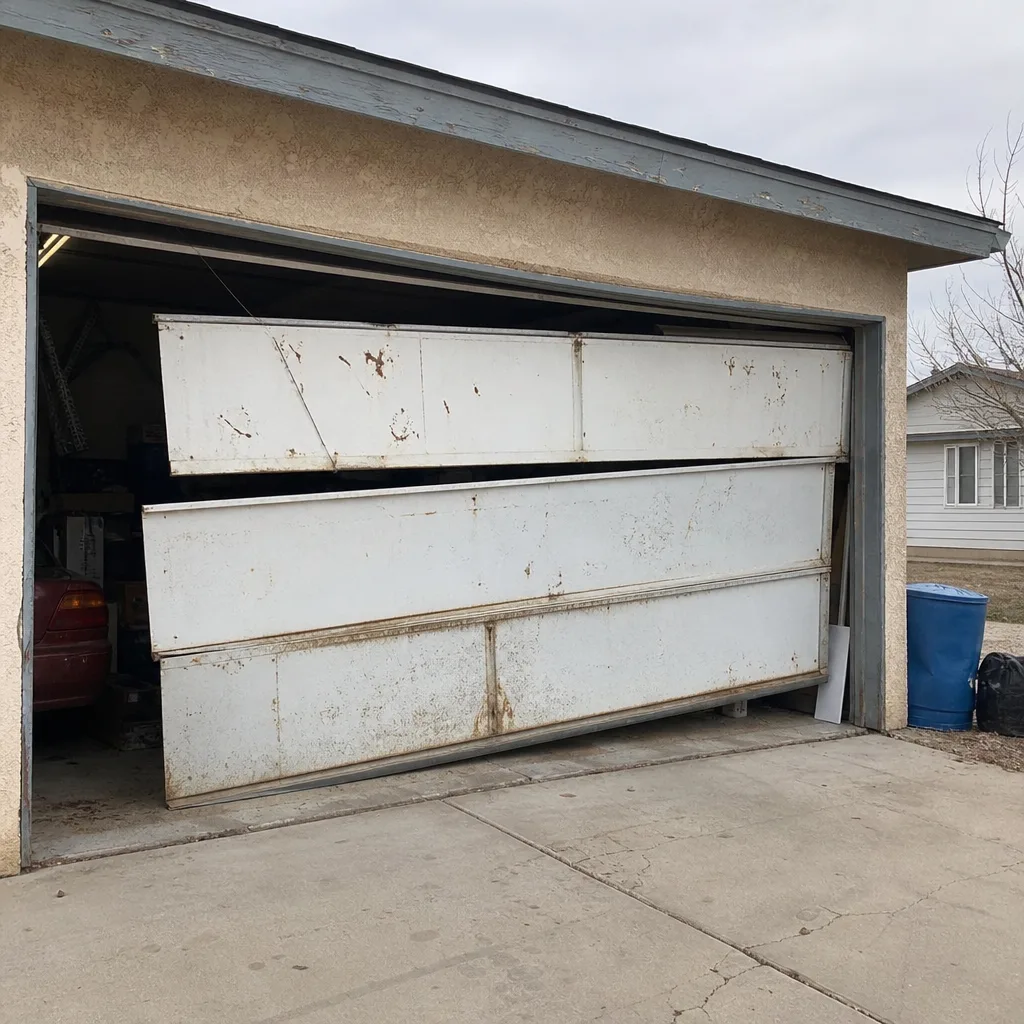 Before
 After
 Before
 After
 Before
 After
When to Call a Professional
Call us when the sound you’re hearing has changed and stayed changed for more than a week, when the door reverses and stays reversed even with clean aligned sensors, when the door hums without moving, when you see a widening gap on one side of the door, or when your full-open cycle has slowed by 15% or more since you started timing it. Any of those, in any Mesquite garage, is a repair that’s better scheduled than delayed. Fernbrook Garage Door Repair Mesquite offers free estimates in Mesquite and a written price before any work begins, every visit. Our technicians are background-checked and trained on eight major brands, and calls are answered by a live person 24 hours a day, seven days a week. Call (888) 255-7680 for a free estimate. For an overview of everything we do, visit our Fernbrook Garage Door Repair Mesquite home.
Frequently Asked Questions
The most common early warning sign is grinding that appears on the first open cycle of the day and disappears by the second. It’s usually a worn trolley carriage or a dry section of rail, and in our experience it typically leads to a full failure 60 to 90 days later if left. Call (888) 255-7680 for an exact quote – estimates are free.
Most opener repairs in Mesquite run in a modest range compared with full replacement, with the exact figure depending on the part and the brand. The number you’re quoted before work begins is the number you pay.
- Diagnostic visit and inspection: free with repair
- Trolley carriage or rail repair: typically the entry-level figure
- Capacitor or receiver replacement: mid-range
- Full gear or motor assembly replacement: the highest single-part figure
- New opener installed (when repair isn’t worth it): quoted separately, with a written measure
We won’t quote a number we haven’t seen. Call (888) 255-7680 for an exact quote – estimates are free, and the written price comes before any work starts.
Yes. We keep same-day availability for repair calls, and calls are answered by a live person 24 hours a day, seven days a week – no voicemail. Note that a new-door or full opener installation is measured and scheduled rather than same-day; that’s a different job, and we’ll quote it in writing before anything is ordered. Call us today for a same-day repair.
If the motor runs but the door doesn’t move, or the door feels very heavy to lift by hand, the springs are the likely culprit. If the door moves but grinds, hesitates, or runs slower than it used to, the opener is the likely culprit. A trained technician can tell the difference on a single visit. Call (888) 255-7680 for a free estimate.
No, the reverse itself is safe – it means the safety sensor is working. What’s dangerous is disconnecting the sensors to stop the reversals. Let us diagnose why the sensor is tripping, since it’s almost always alignment, dirt, or seasonal sun on a west-facing door in Mesquite. Call (888) 255-7680 and we’ll get the sensor reading correctly again.
No. We put the price in writing before any work starts and stick to it. If we find something unexpected, we stop, explain what we found, and quote the new figure for your approval before continuing. Call (888) 255-7680 for an exact quote on the garage you have.
The Bottom Line
Your opener warns you before it fails. Grinding, humming with no movement, hesitation, a reversing door, rust, a bent carriage, a slowing cycle – each one is a message, and each one buys you time if you act. Track your cycle time once a season, listen once a week, and treat a repeating sound as a scheduled repair rather than a nuisance. Get the price in writing before work starts, keep the sensors intact, and let a trained technician handle anything that touches a spring or a tensioned cable. That’s the difference between a small repair and an inconvenient replacement.
Written by the team at Fernbrook Garage Door Repair Mesquite.