
Last updated November 17, 2026
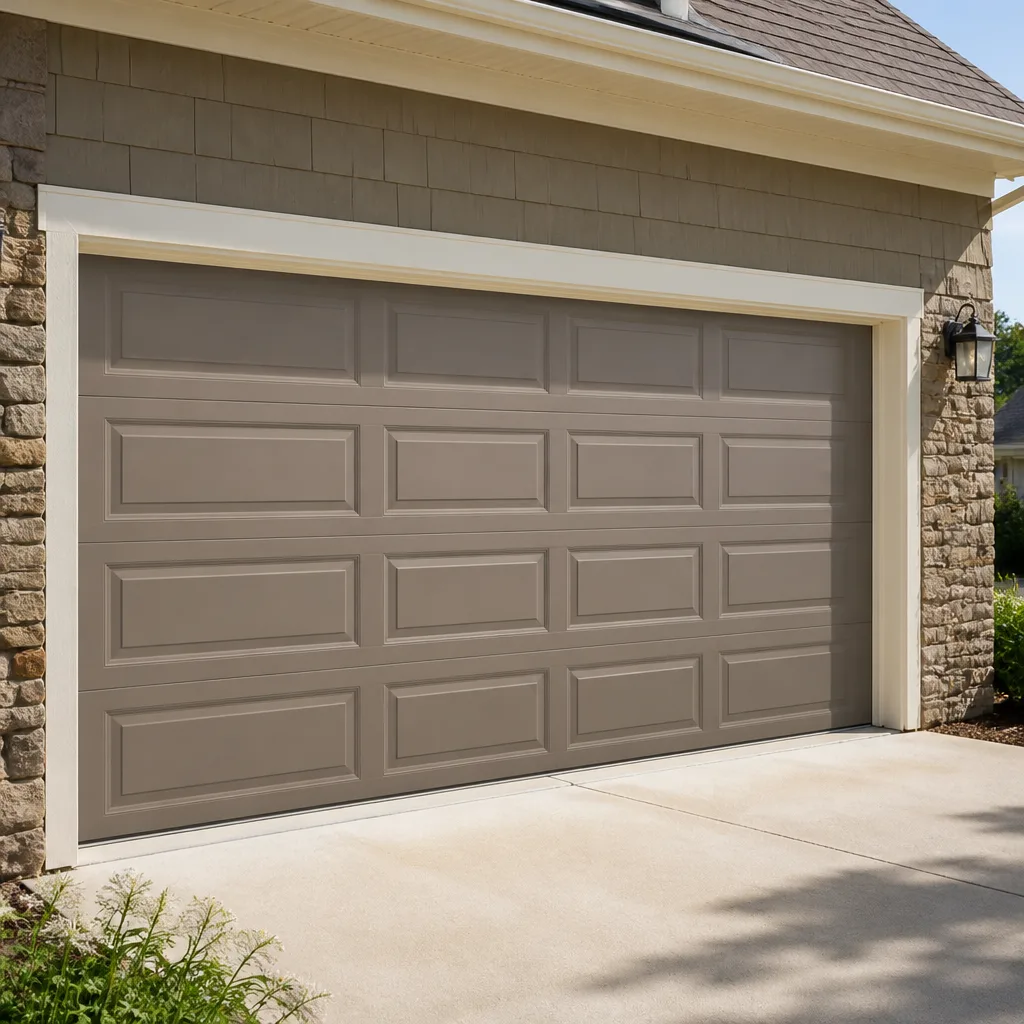 Raised-panel steel
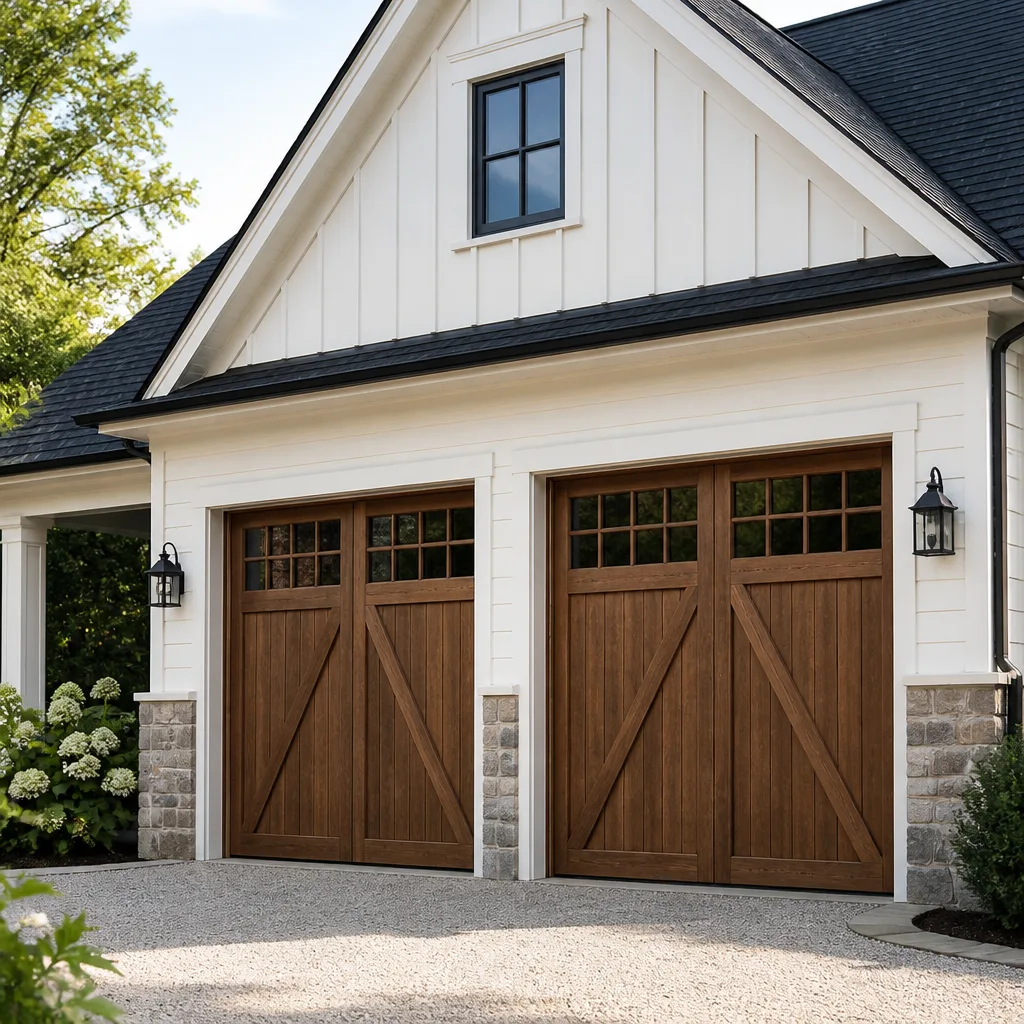 Carriage house
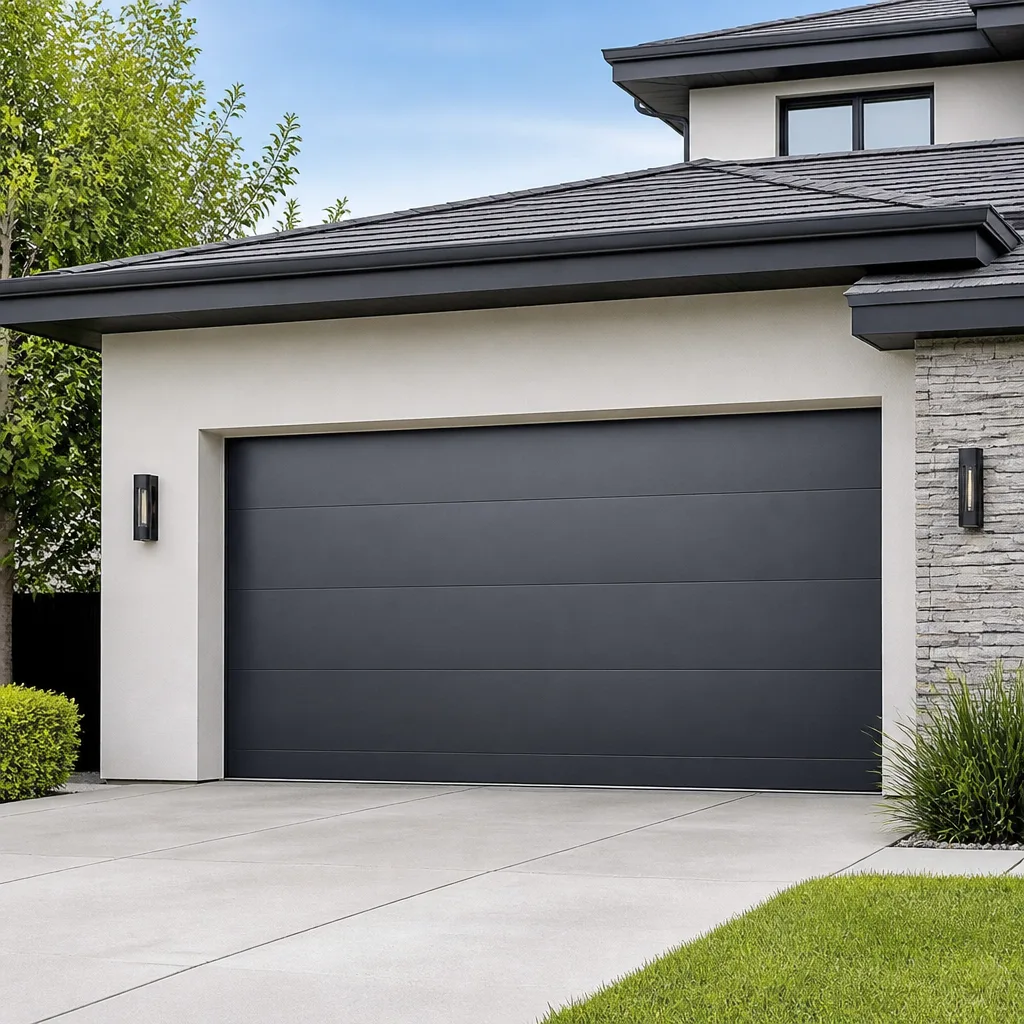 Modern flush
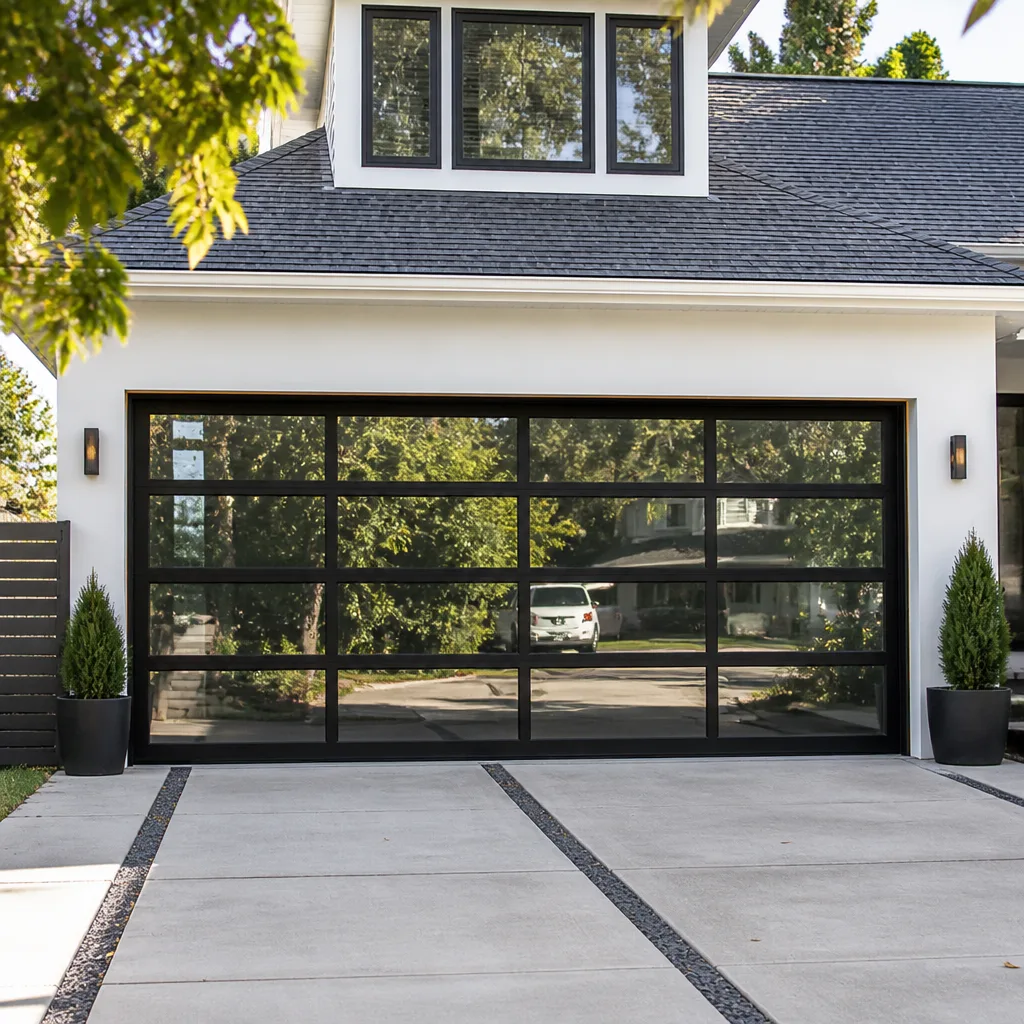 Full-view glass
 LiftMaster openers
 Chamberlain openers
Full 25-point door and opener safety check with every visit - springs, cables, rollers, tracks, and your LiftMaster or Chamberlain opener included
You get a price before we start. It does not change when the pro arrives.
Get your free estimateGarage Door Spring Repair Troubleshooting: Common Problems and How to Fix Them
A garage door that opens six inches and then stops isn’t usually a spring problem at all – it’s more often a safety sensor or travel-limit issue. That single distinction saves homeowners hundreds of dollars a year in unnecessary repairs. What follows is a diagnostic guide, not a repair manual: how to read what your door is telling you, safely, without touching the springs or cables. We’ll map specific symptoms to likely causes, walk through the balance test that reveals spring condition, explain the difference between a broken, misadjusted, and worn spring, and show you how to describe symptoms clearly enough to save a trip. This guide is written from Mesquite, where the heat does its own number on metal parts.
Quick Answer
In most cases, the symptom tells you the cause: a door that won’t lift at all usually points to a broken torsion spring or a snapped lift cable, while a door that opens partway and reverses is usually a sensor, track, or opener-limit problem. A door that crashes down or drifts slowly points to a worn or out-of-balance spring. The safe test is a balance check – disconnect the opener and lift the door by hand to halfway. If it won’t hold there, the springs are the likeliest culprit, and that’s a repair for a trained technician, not a homeowner.
Styles & brands we work with
- Raised-panel steel
- Carriage house
- Modern flush
- Full-view glass
- LiftMaster openers
- Chamberlain openers
Table of Contents
- Reading Your Door’s Symptoms Like a Technician Would
- The Balance Test: What It Reveals About Your Springs
- Broken, Out of Adjustment, or Just Worn: Three Different Problems, Three Different Costs
- Troubleshooting Dead Ends: What You Shouldn’t Bother Trying
- How to Describe Symptoms So the Technician Arrives With the Right Parts
- What Spring Repair Costs in Mesquite
- Why Mesquite Heat Shortens Spring Life
Reading Your Door’s Symptoms Like a Technician Would
The first thing a good technician does on arrival isn’t reach for a tool. It’s watch the door move. A door’s behavior under load tells you almost everything about where the fault lives. Here’s how to do that at home before you call anyone.
Stand to the side of the door (never underneath it), operate it from the wall button, and watch for a full cycle. Note where in the travel the problem happens, whether the door reverses, whether it sounds different than it used to, and whether the movement is smooth or jerky.
- Door won’t lift at all, and you hear a click with no movement. Usually a broken torsion spring, a snapped lift cable, or a stripped opener gear. The opener motor runs but the door doesn’t move – classic broken spring or broken cable pattern.
- Door opens six to twelve inches and reverses. In most cases this is a safety sensor or opener travel-limit issue, not a spring problem. Look at the sensor LEDs near the floor first.
- Door lifts halfway and stalls. A partial lift often means an out-of-adjustment or weakened spring that can lift the door’s weight at the bottom but not through the full arc.
- Door crashes down or drops fast on the close. A spring that has lost tension can no longer counterbalance the door’s weight. Stop using the door and call a professional.
- Door drifts slowly and feels heavy by hand. Classic worn-spring signature. The spring hasn’t failed, but it isn’t doing its job.
- Door pulls hard to one side. Often a stretched lift cable on one side or a worn roller – but occasionally a spring that’s winding unevenly on the torsion bar.
Each of these symptoms points to a different repair, and the repair price varies widely. That’s why we ask families to describe what they saw rather than what they think is broken. The description itself does most of the diagnostic work.
The Balance Test: What It Reveals About Your Springs
The balance test is the one diagnostic a homeowner can do safely. It tells you whether the springs are still carrying the door’s weight, and it takes about two minutes. You’ll need the door closed, the opener unengaged, and enough grip strength to lift a door by hand.
- Close the door completely. Make sure no one is in the doorway.
- Disconnect the opener. Pull the emergency release handle – usually a red cord hanging from the opener rail. That couples the door to the manual-lift position.
- Lift the door by hand to waist height – around the halfway point. Use the bottom edge, grip with both hands, lift smoothly.
- Let go gently. Don’t shove – just release your grip and see what happens.
- Watch the result. The door should hold roughly where you left it. If it drops, the springs are too weak. If it rises on its own, the springs are over-tensioned.
- Reconnect the opener. With the door in the closed position, pull the release cord again to reengage the trolley. Or just operate the opener once – most openers will re-engage automatically.
What the result tells you
If the door stays put within a few inches of where you released it, the springs are correctly balanced and your problem is somewhere else – opener, sensors, rollers, or track. If it falls immediately, the springs are weak or broken and the opener has been doing the lifting, which shortens its life and is harder on the door. If it rises under its own power, the springs are over-wound and the door may climb too fast on open and slam shut on close. Both weak and over-tensioned springs are unsafe to leave as-is, and adjusting torsion springs requires specific winding bars and training – this is not a homeowner job.
One important safety note: do not inspect the springs up close while the door is under tension. High-tension torsion springs and cables store enough energy to cause serious injury if they release suddenly. The balance test is observation only – you’re not touching the spring or its hardware.
Broken, Out of Adjustment, or Just Worn: Three Different Problems, Three Different Costs
These three states look similar from the driver’s seat – the door doesn’t feel right – but they’re very different problems with different costs and urgency. Knowing which one you’re likely facing helps you budget and helps the technician arrive prepared.
Broken spring
You’ll usually know. A torsion spring snaps with a sound like a gunshot and the door becomes dead weight. A visible gap in the coil – roughly two to four inches of clean break – confirms it. The repair is a spring replacement, usually the pair for safety and even wear. This is the most urgent of the three because the opener cannot safely lift the door in this state.
Spring out of adjustment
The spring is intact but tensioned wrong – too loose or too tight – usually because someone tried to “help” it during a previous repair, or because the door has been rebalanced for new rollers without resetting the springs. Symptoms: door drifts, feels uneven, or lifts faster or slower than it should. Repair is a re-tensioning (and sometimes a proper balance adjustment), typically less costly than a replacement.
Spring worn
The spring is intact and roughly in the right tension range, but it has cycled thousands of times and lost strength. You’ll notice the door feels heavy by hand even though it opens. Worn springs are the slowest-developing of the three, and often the easiest to defer a month or two if the door still cycles reliably – but not indefinitely, because a worn spring will eventually break. If your door is more than a few years old and getting noticeably harder to lift by hand, this is likely what’s happening. Our Garage Door Spring Repair in Mesquite page covers what each of these repairs looks like from start to finish.
Troubleshooting Dead Ends: What You Shouldn’t Bother Trying
We get it – everyone tries the easy stuff first. But three common home remedies don’t address spring problems, and each of them delays the real diagnosis by days. Here’s what to skip.
- Lubricating the tracks. Lube on tracks is actually counterproductive – it attracts dust and grit and makes rollers slip instead of roll. A door that feels heavy due to weak springs won’t get easier with track lube, and you’ve now got a messy track to clean.
- Resetting the opener repeatedly. If the door is heavy because the spring is weak, the opener can’t lift it no matter how many times you press the remote. Resetting the travel limits on the opener may make the door “do something” but it’s masking the problem, and running the opener against a heavy door wears the gear and motor faster.
- Cranking the springs by hand “just a little.” This is the deadliest mistake on the list. Torsion springs are under hundreds of pounds of stored tension. Attempting to adjust them with a screwdriver, pliers, or any tool that isn’t a proper winding bar has caused serious injuries. Don’t.
The four things actually worth checking before you call: the sensor LEDs (any sensor with a blinking or dark light is the likely culprit for reversal problems); the wall button and remote batteries; whether the emergency release cord was pulled accidentally; and whether anything is obstructing the track (a stray toy, a bike handle, a pet’s ball wedged in the corner). Beyond those checks, it’s time for a call.
How to Describe Symptoms So the Technician Arrives With the Right Parts
This is the practical payoff of the whole guide. When you call, the person answering has to decide which parts to load. A vague description – “it’s broken” – usually means a diagnostic visit and, potentially, a second trip once the right spring is identified. A specific description means one visit.
Here’s a script our team uses when taking a call. It’s also what we’d suggest you have ready when you dial any repair company.
- The symptom in one sentence. “The door lifts about a foot and reverses.” Or “It won’t move at all when I press the button.”
- When it started, and whether it’s gotten worse. “It started two days ago and it’s now doing it every time.”
- What you’ve tried already. “I checked the sensors and they’re both solid green.” Or “I reset the opener and it didn’t help.”
- The door type and size. Single-car sectional, double-car, roll-up, carriage-house style – a quick phone photo of the door and the spring helps enormously.
- The brand. Fernbrook technicians are trained on LiftMaster, Chamberlain, Genie, Clopay, Amarr, Wayne Dalton, Craftsman, and Raynor. Knowing yours means the technician can arrive with the right parts in hand.
- A photo of the spring assembly. Torsion springs are color-coded with a painted tip. That color, plus the door’s height and weight, tells a trained technician exactly which spring to bring.
If you take one thing from this section, it’s the photo. A clear image of the door from a few feet back, plus one of the torsion bar or extension springs above the door, cuts diagnostic time dramatically. If you’re in Mesquite and have a photo ready, our team can often tell you what’s happening while you’re still on the phone. That’s what our Garage Door Repair in Mesquite service is built around.
What Spring Repair Costs in Mesquite
Mesquite pricing runs close to the Las Vegas valley average, with a modest break because our market is smaller and drive times are shorter than the metro. Here’s the range we see on residential torsion and extension spring jobs. Every price is quoted and agreed before work starts – you will not get a surprise invoice after the fact.
- Single torsion spring replacement (one spring): typically $180-$290, including the new spring, winding, and safety inspection.
- Torsion spring pair replacement (both springs at once): usually $260-$420, and the option we recommend when the second spring is close in age – springs paired at installation tend to fail within a short window of each other.
- Extension spring replacement (both sides): often $150-$260, since extension springs are simpler to swap.
- Spring re-tensioning / re-balancing (spring intact, out of adjustment): routinely $90-$170.
- Broken lift cable (often breaks with a spring): $85-$180 per side, typical add-on.
- Full balance service (springs, cables, rollers, and track inspection): $260-$480 depending on whether the spring itself needs replacing.
Two things drive the price up or down: door size and weight, and whether the door has one spring or two. A standard single-car door with one torsion spring is the lowest-cost job. A double-car carriage-house door with two torsion springs is the highest. Mesquite homes tend toward the former, which is good news for most of our local readers.
One more Mesquite-specific note: in the summer, we see spring replacement calls spike, because the heat accelerates cycle fatigue in torsion springs. If you’re calling in July or August about a broken spring, you’re not alone – and the prices above still hold. A written price is delivered before any work begins, every visit, no exceptions.
Why Mesquite Heat Shortens Spring Life
Most spring-repair guides ignore geography, but in Mesquite, geography is a real part of the diagnosis. Summer highs here regularly reach into the triple digits, garages face west or south on most lots, and uninsulated garage interiors get hot enough to push metal past its design envelope. That matters for spring life.
Torsion springs fatigue faster when they’re cycled in a hot garage. A spring rated for a given number of cycles at 70 degrees Fahrenheit endures noticeably fewer cycles at 110 degrees. The 10,000-cycle standard spring that might last a decade in a climate like San Diego’s can wear out in five to seven years in a Mesquite garage that bakes all afternoon. We see this pattern regularly in neighborhoods along the I-15 corridor, and it’s why we often suggest a heavier-cycle spring as the replacement – it costs $20-$50 more up front and can double or triple the life in this heat.
Two practical notes for Mesquite homeowners. First, if your garage faces south or west and gets afternoon sun, keep the door closed during the hottest hours when you can – it reduces heat load on the spring assembly. Second, if you’re replacing the spring anyway, ask about high-cycle upgrade options. It’s the single best value-add on a spring job in our market. For a Mesquite home with a door showing early wear symptoms, our team can walk you through the options during a free estimate – see Garage Door Installation in Mesquite if it turns out the door itself is due for replacement rather than repair.
Common Mistakes to Avoid
- Trying to fix a broken torsion spring yourself. Torsion springs are under hundreds of pounds of tension and will release that energy without warning. This is the single most dangerous garage door part to touch.
- Running the opener against a heavy door. If the spring is broken or worn, every press of the button puts the door’s full weight on the opener gear and motor. In Mesquite heat, that wears the opener faster than usual.
- Lubricating tracks to “fix” a heavy door. It doesn’t address the spring, and the lube attracts desert dust that makes rollers slip.
- Replacing one spring when the pair is old. Paired springs are usually installed at the same time and fail within months of each other. Replacing one now often means paying for a second service call within the year.
- Choosing a company by price alone without asking what’s included. A $99 spring special that doesn’t include balanced inspection, safety reverse testing, or a warranty on the spring is not the same job as a $240 service with all three.
- Hooking the opener back up before the door is in the closed position. Force-reengaging the trolley with the door open can bend the arm or damage the carriage.
- Not asking for the price in writing before work starts. Verbal estimates with no written confirmation invite invoice surprises. Ask for the price, in writing, before the technician lifts a tool.
See the difference
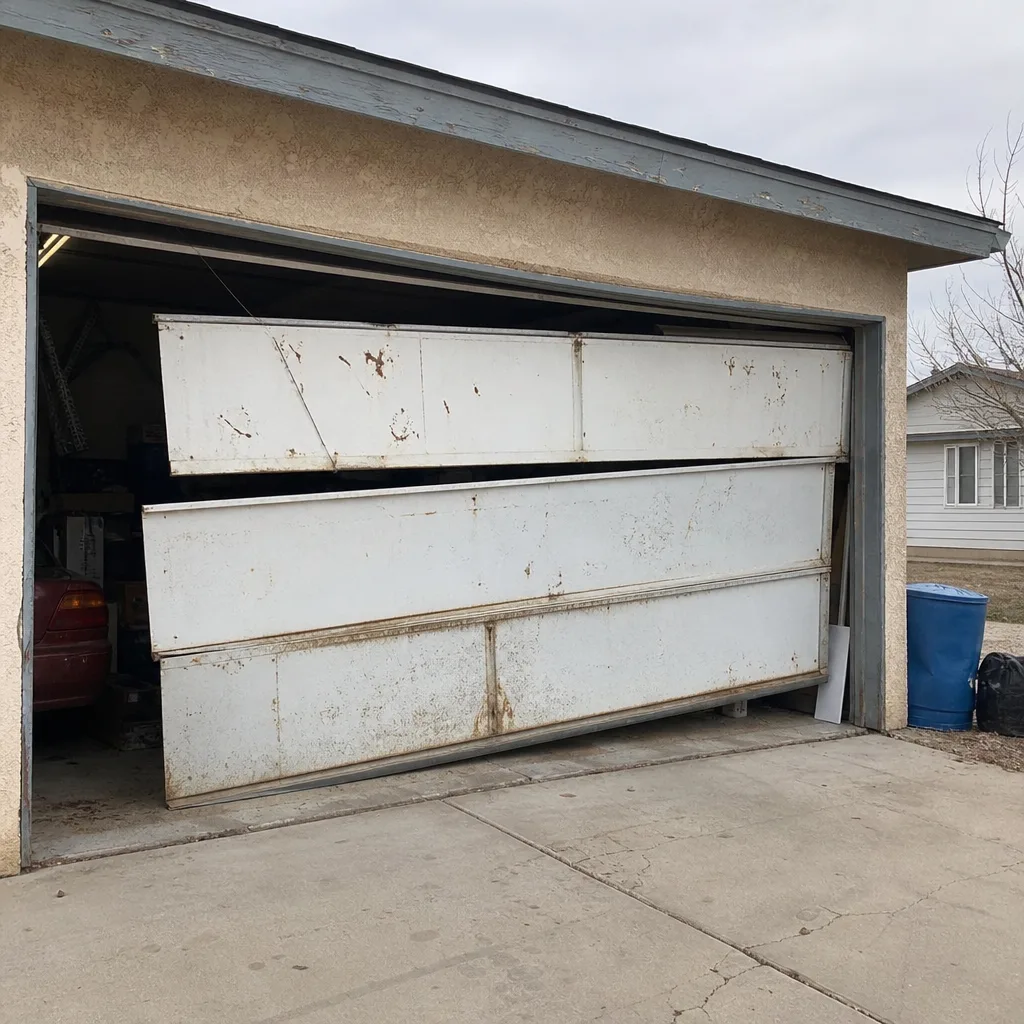 Before
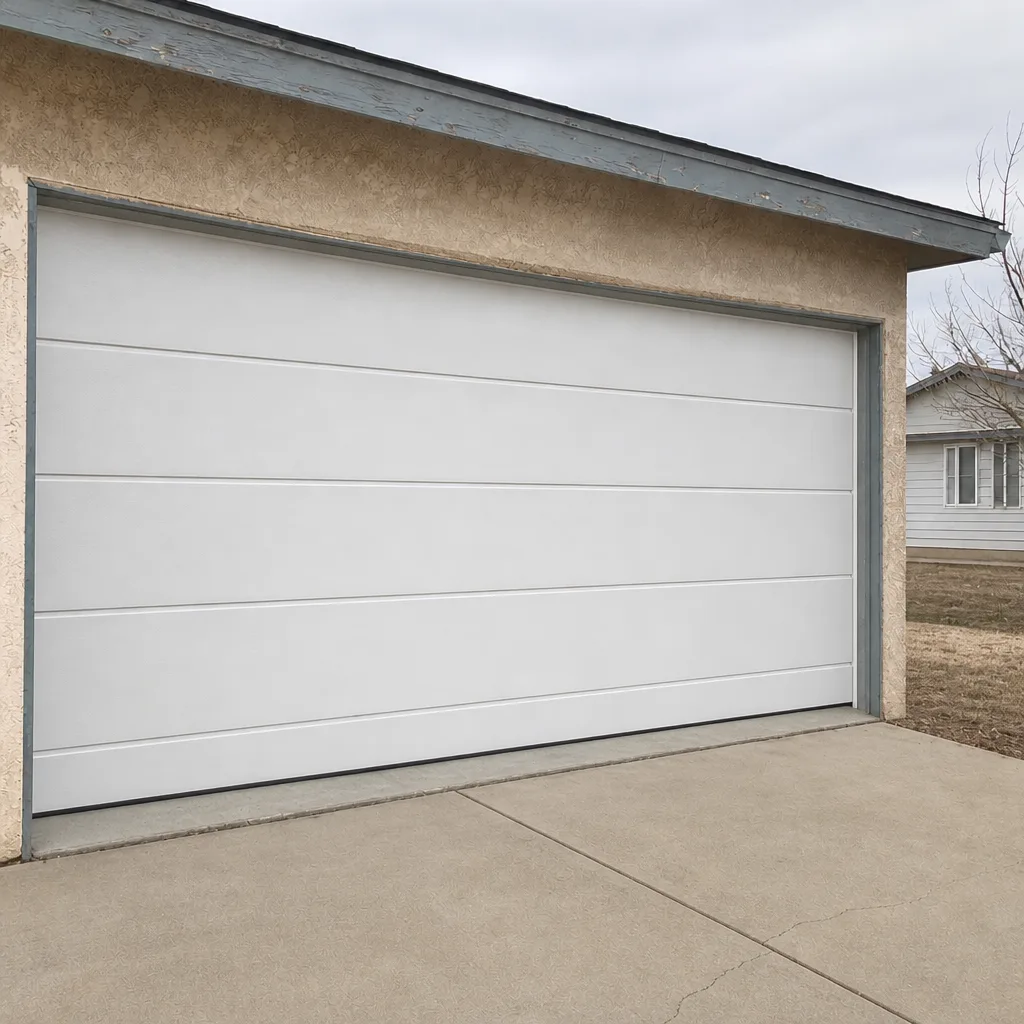 After
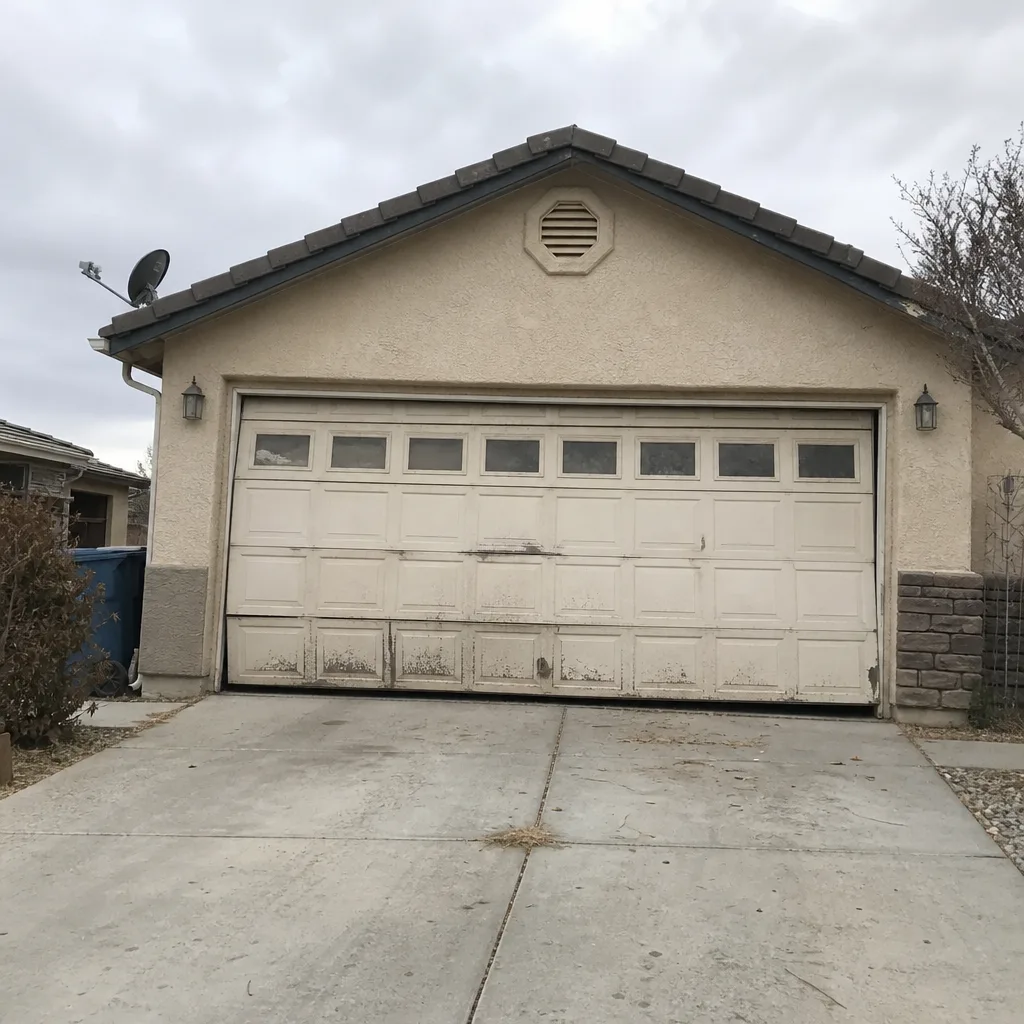 Before
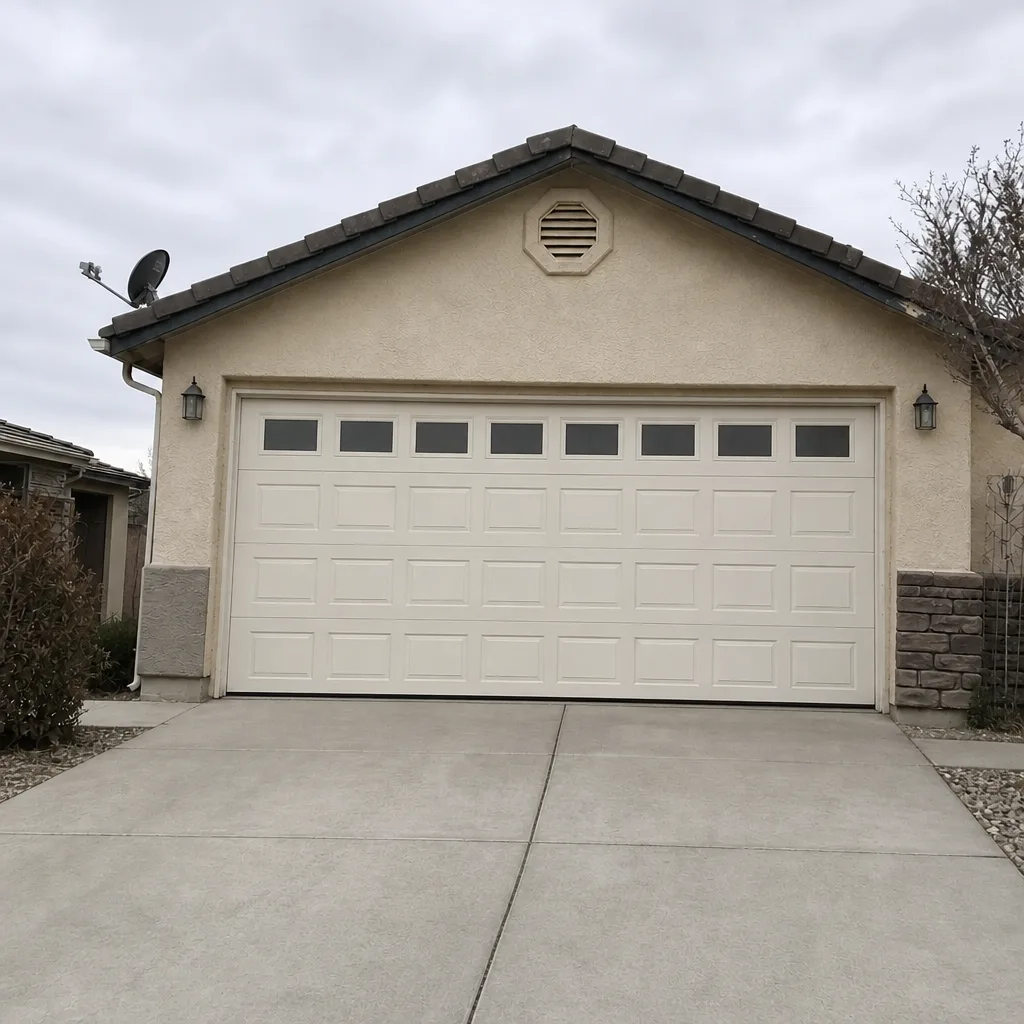 After
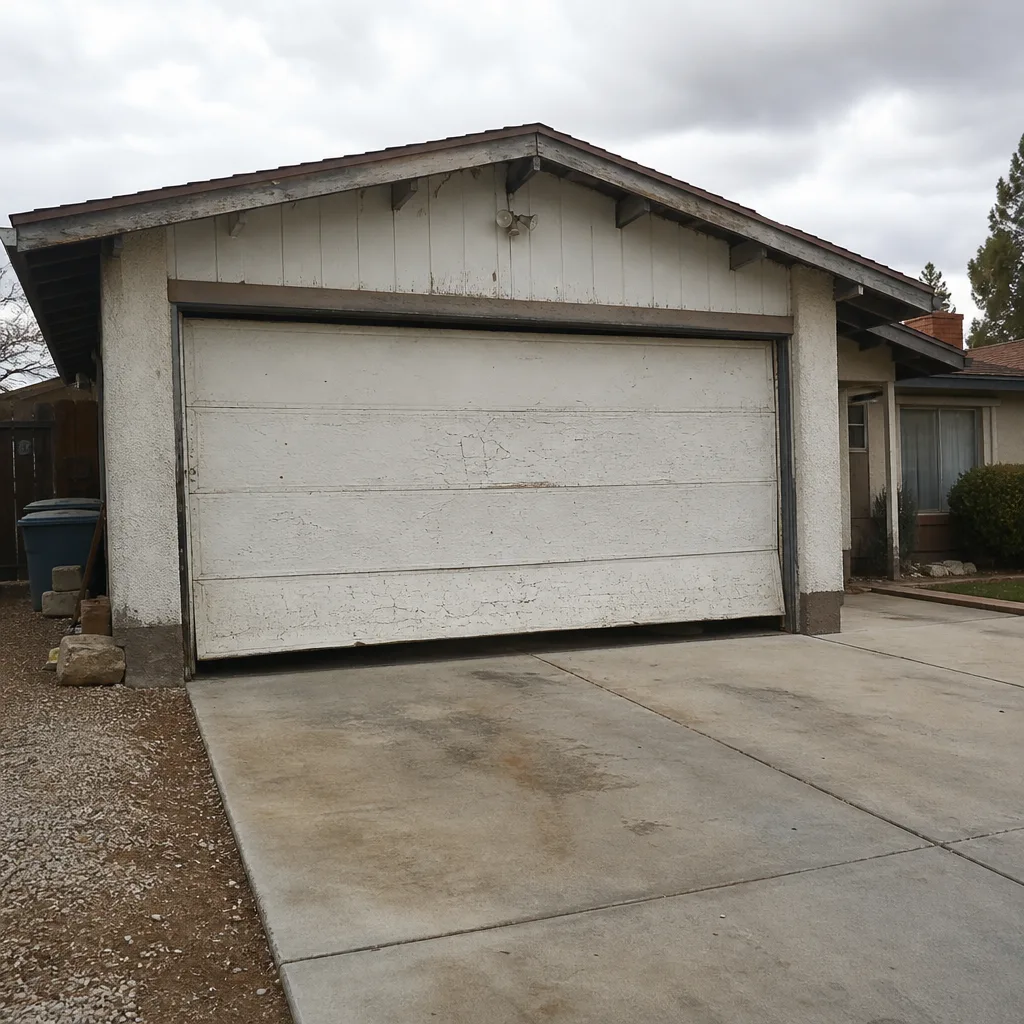 Before
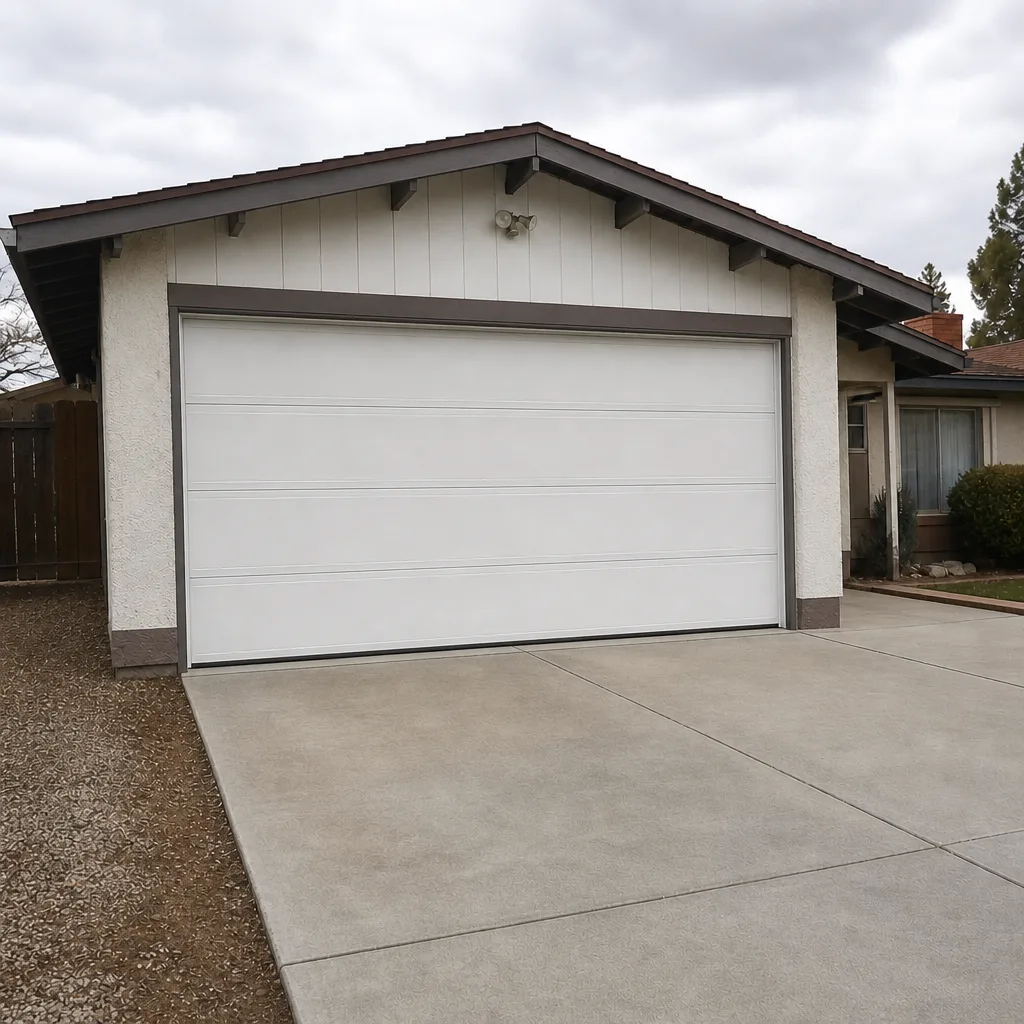 After
When to Call a Professional
Call a trained technician when you see any broken spring (a visible gap in the coil), hear a loud bang from the garage with no other obvious cause, or if your balance test shows the door won’t hold at halfway. Call if the door drops fast when lowered, if you hear metal cables scraping, or if you’re tempted to adjust anything on the spring assembly yourself. In Mesquite, our team can often diagnose from a photo you text or email, and we’ll give you a written price on the spot – no second visit to price the job. Fernbrook Garage Door Repair Mesquite offers free estimates in Mesquite – call (888) 255-7680. Every technician arrives background-checked and uniformed, wears shoe covers and lays drop cloths on your floors, and takes a photo of the clean-up before walking out. Nothing in your home gets moved or touched without our asking first. For the broader picture of what we handle, see our Fernbrook Garage Door Repair Mesquite home page.
Frequently Asked Questions
Safety sensors, not springs, are the most common cause of a door that reverses within the first foot of travel. Check the two sensors a few inches off the floor – if either LED is blinking or dark, clean the lens and realign them, or check that nothing (a pet’s ball, an old leaf, a bike tire) is in the beam path. If both sensors are solid and the door still reverses, then it’s time to look at the opener travel limits and the springs.
In Mesquite, single torsion spring replacement typically runs $180-$290, and replacing both springs as a pair runs $260-$420. Extension spring replacements usually land between $150-$260. Re-tensioning an intact but out-of-adjustment spring is the least expensive option, often $90-$170. Call (888) 255-7680 for an exact quote – estimates are free and you’ll have a written price before any work begins.
For broken springs and stuck doors, we can usually arrange a same-day visit in Mesquite. Spring replacement is a repair service, not a custom-order job, so most parts are available quickly. Call (888) 255-7680 and describe the symptom – if you can text or email a photo of the spring assembly, that speeds things up considerably.
No. The written price we deliver before work begins is the price you pay. If, on inspection, we discover something the phone conversation couldn’t reveal (a cracked track section, a bent panel, a stripped opener gear), we’ll show it to you and quote the additional work before proceeding – nothing gets added without your approval. That’s the standard on every Mesquite visit.
Yes. Every technician is background-checked, uniformed, and trained on all eight major door brands we service, including LiftMaster, Chamberlain, Genie, Clopay, Amarr, Wayne Dalton, Craftsman, and Raynor. Our team’s technicians have up to 24 years of experience on residential spring systems. Every job is backed by our 365-Day Done Right Promise – if it’s not done right, we make it right, no negotiation required.
Yes, measurably. Torsion springs fatigue faster at the temperatures a Mesquite garage reaches in summer, and our local pattern shows springs wearing out several years sooner here than they do in cooler coastal climates. If you’re replacing a spring in Mesquite, ask about a heavier-cycle upgrade – the small up-front cost usually pays for itself in added years of service.
The Bottom Line
The symptom is the diagnosis. A door that won’t lift at all usually means a broken spring or cable. A door that opens a few inches and reverses is usually a sensor or travel-limit problem. A door that lifts but feels heavy by hand is a worn spring heading toward failure. The balance test tells you which of those three you’re facing, safely, in two minutes. Once you know, describe it clearly – a photo and a plain-language description gets the right parts to your driveway in one visit. In Mesquite, our team is one call away with a written price, shoe covers, and a clean-up photo before we leave.
For the full picture of everything we do, from opener repair to new doors, visit our installation service. If you’re ready to talk through what your door is doing, call Fernbrook Garage Door Repair Mesquite at (888) 255-7680 for a free estimate. A live person answers the phone 24 hours a day, 7 days a week – no voicemail, no callback wait.
Written by the team at Fernbrook Garage Door Repair Mesquite.