
Last updated November 17, 2026
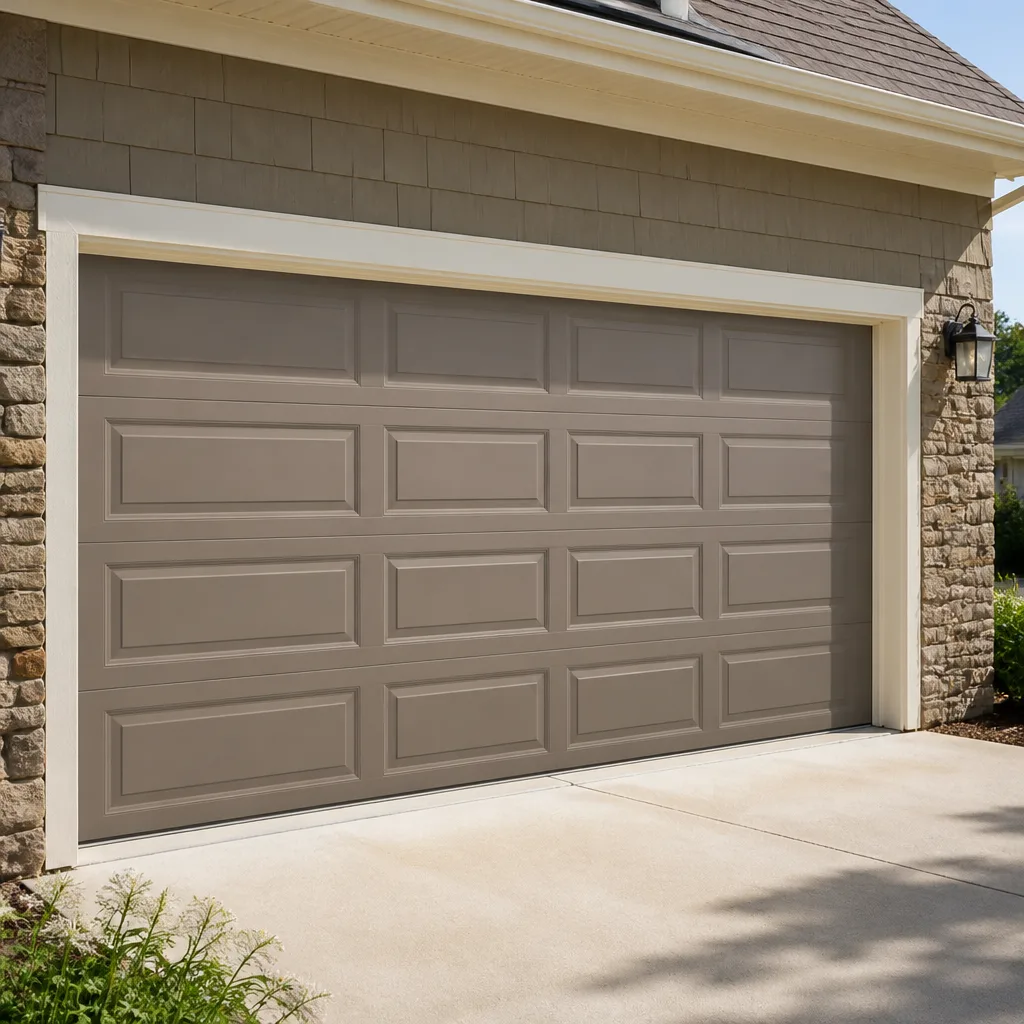 Raised-panel steel
 Carriage house
 Modern flush
 Full-view glass
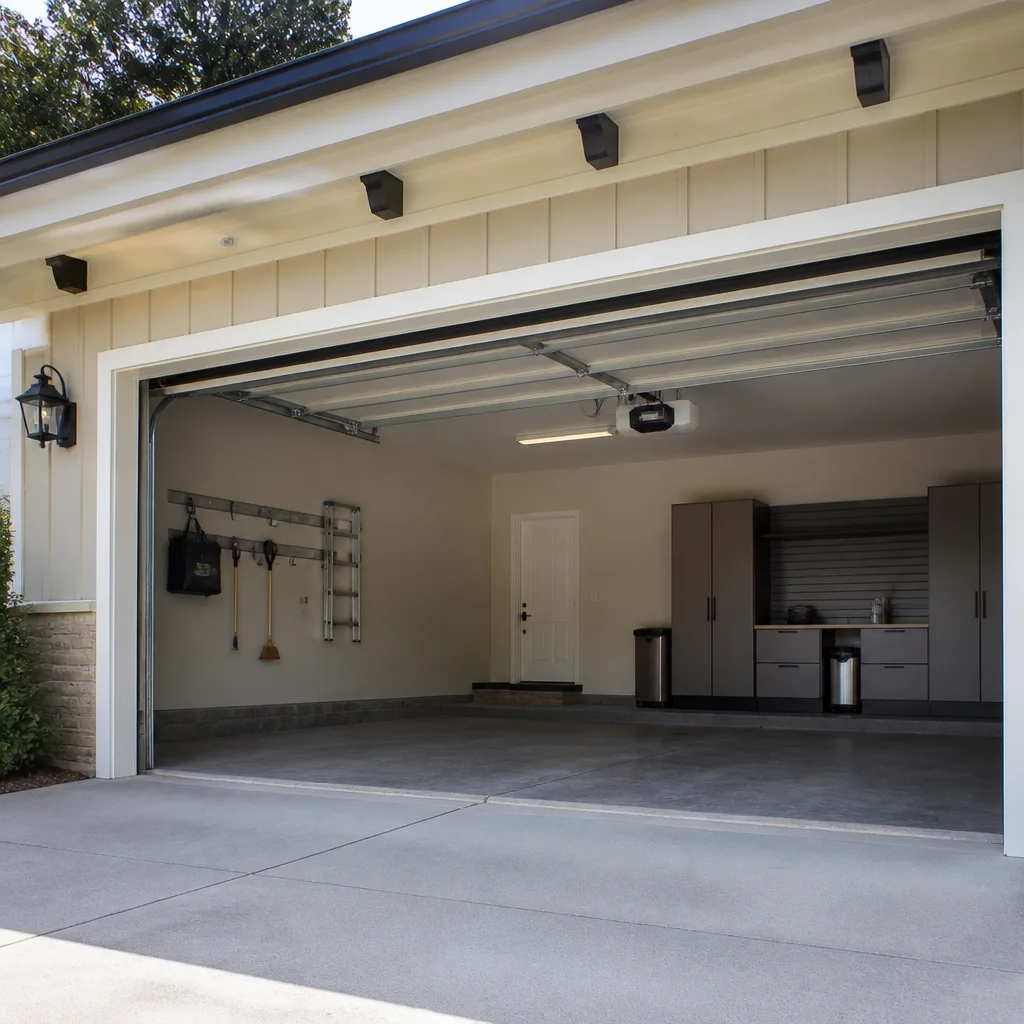 LiftMaster openers
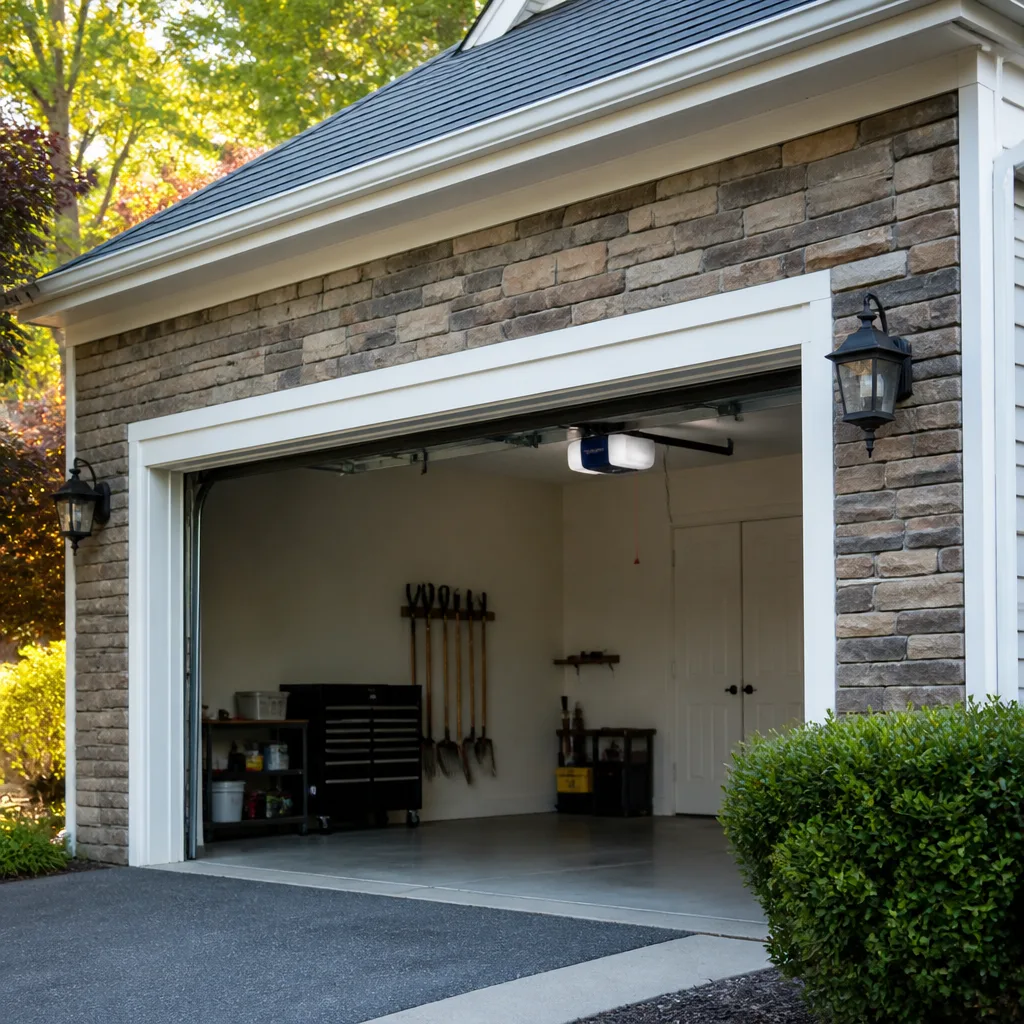 Chamberlain openers
Full 25-point door and opener safety check with every visit - springs, cables, rollers, tracks, and your LiftMaster or Chamberlain opener included
You get a price before we start. It does not change when the pro arrives.
Get your free estimateGarage Door Spring Repair Maintenance Schedule: What to Do and When
The most expensive garage door spring repair is an emergency call on a Sunday when the car is trapped inside, and the condition that caused it was visible and correctable three months earlier during a two-minute check. That’s the part most homeowners never hear: torsion and extension springs almost never fail without warning. They stretch, they lose tension, they grind against dry bearings, and they give you weeks of quiet signals before they let go. What they don’t give you is a reminder on your phone. This guide gives you the calendar instead, a month-by-month schedule calibrated to Mesquite’s heat, wind, and cold snaps, so you can catch the wear while it’s still a cheap fix.
Quick Answer
Check your garage door springs four times a year, roughly in March, June, September, and December. Each check takes two to ten minutes and covers four things: listen for noise, look at the spring for gaps or stretch, test the door balance by hand, and lubricate the torsion springs and hinges with a garage-door-specific lubricant. In Mesquite, the two checks that matter most are the spring check in late May (before the summer heat pushes metal past 140°F on a west-facing door) and the balance test in November (after the peak expansion season and before the first cold snap).
Styles & brands we work with
- Raised-panel steel
- Carriage house
- Modern flush
- Full-view glass
- LiftMaster openers
- Chamberlain openers
Table of Contents
- Why Spring Maintenance Works Better in Quarters Than in One Annual Visit
- The Mesquite Month-by-Month Spring Schedule
- What “Lubricate the Springs” Actually Means
- The Balance Test as a Maintenance Tool, Not Just a Diagnosis
- How Your Opener Tells You the Springs Are Tired
- Visual Signs a Spring Is Approaching End of Life
- Common Mistakes to Avoid
- When to Call a Professional
Why Spring Maintenance Works Better in Quarters Than in One Annual Visit
A single yearly tune-up sounds tidy, but springs don’t fail on a yearly cycle. They fail on a thermal cycle, and Mesquite runs a brutal one. A garage door facing west in the Highland Hills area bakes through July afternoons where the metal in direct sun can hit 150°F or more, then cools off 40 degrees overnight. That expansion and contraction happens roughly 90 times in a summer. Multiply that across the twelve months and you’ve got thousands of stress cycles before anyone opens the door. A schedule that checks once a year misses the entire buildup.
Quarterly checks are shorter than one big visit, and they catch wear in the exact season it accelerates. A spring that’s still within tolerance in March can be visibly stretched by late June if the door was binding all spring. When we see a spring in late spring that’s already showing a gap, we know it weathered a hard winter and won’t survive a hard summer, and that’s the moment a planned replacement is a twenty-minute appointment instead of a Saturday emergency.
One structural point that trips people up: garage door springs are under extreme tension, either at rest (torsion) or fully stretched (extension). Touching them with a wrench is how people get hurt. Everything in this guide is observation and lubrication, never adjustment. Winding, unwinding, or swapping a spring is a job for a trained technician, full stop. What you can do, and what this schedule is built around, is spot the signs early enough that the technician visit happens on your terms.
The Mesquite Month-by-Month Spring Schedule
Here’s the calendar we’d hand a family in Mesquite if they asked. It’s built for our climate: hot dry summers, windy spring afternoons, and occasional hard freezes in December and January that most of the country doesn’t associate with Nevada. The whole year of checks adds up to under 40 minutes of your time.
- March: pre-summer inspection. Walk up to the closed door and look at the torsion spring above the door (or the two extension springs above the tracks if you have a Wayne Dalton-style door). You’re looking for an even coil with no gaps between the windings, no rust blooms, and no powder or flaking paint. Then run the door and listen from inside the garage. A dull thud, a pop, or a grinding metal-on-metal sound all mean something needs attention before summer.
- Late May: the heat check. This is the most important check of the year in Mesquite. Test the balance (see the section below), inspect the spring for any newly widened gap that wasn’t there in March, and listen again. If the door has gotten noticeably harder to lift since spring, the springs have lost tension, and the July and August heat will finish them off.
- June through August: lubrication only. Do your monthly light lubrication and listen. Don’t make adjustments. Metal expands in this heat and a door that’s tight in the morning can drag in the afternoon. Note the behavior and describe it to a technician when they come out. Our technicians have up to 24 years of experience with this seasonal swing.
- September: post-summer inspection. This is the moment the season of internal damage reveals itself. A spring that survived the summer may have cracks, rust, or stretch that appeared over the past three months. Check the same things you checked in March. Compare notes if you wrote them down.
- November: pre-cold-snap balance test and lubrication. Desert cold snaps are short and sharp, and the contraction that comes with a 25°F night strains a spring that just spent three months at 140°F. Re-test balance and lubricate everything. Clean the photo-eye sensors while you’re at it.
- December through February: monthly quick listens and yearly visual. Do the two-minute listen once a month. Once, during this window, do a full visual (springs, cables, rollers, hinges) and a full lubrication cycle. If you haven’t had a professional inspection this year, this is the time to schedule one.
What “Lubricate the Springs” Actually Means
Most articles say “lubricate your springs once a year” and stop. That advice is why so many homeowners spray WD-40 on them, or worse, use a heavy grease that attracts dust and turns into grinding paste. Here’s what we tell Mesquite families who ask, and it’s a five-minute job.
The product. Use a garage-door-specific spray lubricant or a white lithium grease. Not WD-40 (that’s a solvent, not a lubricant), not silicone spray alone (too thin to stay on a high-friction spring), and not a glob of axle grease. A can of proper garage door lube costs under $15 and lasts years.
Where it goes. Spray a short burst along the full length of each torsion spring coil (or each extension spring) and let it work in. Then apply the same lubricant to the hinges at each joint connection, the rollers (the stems, not the wheel), and the pivot points on the tracks. The spring is the priority, but noisy hinges and rollers make the door feel heavier and accelerate wear.
How much. A short puff is enough. You want a visible thin film, not drips. Two or three passes of a two-second spray is more than sufficient for one torsion spring.
When. Every four to six months, plus after any long heat wave. In the Mesquite climate that means March, September, and December as your anchor points, with an extra pass in July if you notice noise. Skip the tracks themselves for grease (use a clean cloth on the tracks, not lubricant, since grease on the tracks attracts the very grit that wears rollers).
The Balance Test as a Maintenance Tool, Not Just a Diagnosis
Almost every guide treats the balance test like a doctor’s office test you run only when the door is failing. We’d rather you run it every three months as a maintenance ritual. It’s the single best early-warning signal you have, and it costs you 30 seconds.
Here’s the test. Close the door fully. Then disconnect the opener with the manual release cord (there’s a lever on the rail with a red handle; pull it toward the door until it clicks). Now lift the door by hand to about halfway and let go. A well-balanced door with healthy springs will hold its position, maybe drifting slightly. A door whose springs have lost tension will struggle to lift, then fall, and a door that races upward or drops fast has springs or cable tension out of spec.
Run that test in March, June, September, and December. Write down what you see each time: does it hold? does it drift? does it feel heavy at the start? The result that prompts a technician call is any change. A door that held perfectly in September and now drifts down in December is telling you something changed. In our experience, that change is often the spring. Reconnect the opener before you drive the car out.
While you’re at it, do a manual lift test (door disconnected) and note how much effort it takes. It should be smooth from bottom to top. If it binds at one height, that height points at a track issue, a bent roller, or a hinge that’s working loose, not just a spring issue. If you want the walkthrough version with visuals, our Garage Door Spring Repair in Mesquite page covers what we check on a diagnostic visit.
How Your Opener Tells You the Springs Are Tired
An opener working harder than it should is often the first sign that springs need attention, not replacement. The opener is a witness, not the cause. If the springs carry the door’s weight the way they’re supposed to, the opener only has to lift a light load. When springs lose tension, the opener carries the door. It does that gladly for a while, and then it doesn’t.
Watch for these signals:
- The opener sounds louder. A strained opener hums and groans. Compare it to what it sounded like six months ago. A noticeable rise in noise is a loud signal that the load has shifted onto the motor.
- The up/down travel feels slower near the top or bottom. The opener is working through a stretch of extra resistance.
- The safety reverse engages more often than it used to. If the door hits something small and reverses, or if it reverses on the way down with nothing in the way, it’s usually a symptom of force settings or door resistance, and door resistance usually traces back to the springs.
- The opener’s force adjustment has been turned up. If someone (or a previous handyman) increased the force setting to compensate for a harder-to-lift door, that’s a workaround, not a fix. You want to know why the door got heavy.
If you have a LiftMaster or Chamberlain opener, you can usually watch the LED light behavior and motor sound together when the door runs. If the light on the back panel blinks a pattern when the door reverses, that’s the opener reporting, not a fault of the opener itself. Describing that pattern to a technician over the phone saves you a diagnostic visit.
Visual Signs a Spring Is Approaching End of Life
The goal is to replace a spring on a planned visit, not on a Sunday. That comes down to reading the spring before it fails. Here’s the checklist we run through, and it’s the same one you can run in two minutes.
- A visible gap in the coil. A healthy torsion spring has tight, even windings. A stretched spring shows a gap between the coils, usually starting from the middle. If you can push a pencil between two coils, it’s tired.
- Rust blooms or flaking paint. Corner rust spots are stress points, and they matter more in a dry climate where people don’t expect rust. This is a common sight in Mesquite, and it’s usually cosmetic on the surface and a sign underneath.
- Discoloration or dark streaks. Black or greasy-looking streaks along the spring usually mean metal-on-metal contact has begun.
- A gap between the spring’s end plate and the center bearing plate. It’s not normal and means the spring has stretched beyond its original length.
- Cable slack or a tilted door. A door that closes unevenly from corner to corner, or a cable hanging slack on one side, is a failing spring or cable. Both are stop signs.
- Aging colors on the spring end. Manufacturer paint marks (a small dab of color at each end) fade as the spring ages. Faded marks mean the spring is old, even if it still looks fine.
If you see two or more of these, don’t wait for the failure. Call for a free estimate and let a technician with the right tools assess whether it’s a spring, a cable, or both. Our technicians carry and install LiftMaster, Craftsman, Raynor, and other major brands, so on most calls they can fix it on the visit if the parts allow.
Common Mistakes to Avoid
- Spraying WD-40 on the springs and calling it maintenance. It’s a solvent that temporarily quiets a noise and leaves the metal dry. Use a garage door lubricant instead.
- Skipping the balance test because the door “still opens.” A door that opens is the bare minimum. A door whose springs have lost tension opens and then strains the opener, the cables, and the tracks. Test it in March, June, September, and December.
- Adjusting the opener force setting to “fix” a heavy door. That masks the symptom and pushes wear into the opener motor and the springs themselves. Find the cause before you turn the dial.
- Waiting for a snap before calling. In Mesquite, the heat wave in June and July is when we get the most emergency calls, and most of those springs had visible stretch in May. A planned replacement in May costs the same as the emergency call and doesn’t come with a car trapped in the garage.
- Lubricating the tracks with grease. Grease on the tracks gathers grit and wears rollers faster. Wipe the tracks with a clean, dry cloth and leave the lubricant for the springs, hinges, and roller stems.
- Doing a slow “test” that involves manually winding or checking spring tension with a wrench. That’s the one maintenance task with real injury risk. The spring is under extreme stored energy. Observe it, don’t touch it.
- Ignoring a door that slams down hard on close. A door that closes with a thud instead of settling softly is telling you the spring tension no longer matches the door weight. Don’t keep running it that way, especially not while the kids and pets are in the garage.
When to Call a Professional
Call a professional when you see a visible gap in the spring coil, when you hear a snap or see a broken spring, when the door hangs crooked, or when the balance test has changed from one quarter to the next. Call when there’s slack cable anywhere, because cables are under the same extreme tension as springs and can cause serious injury. Call if the door closes unevenly, and call if you’ve turned up the opener force and the door still feels heavy. In our experience, most of these are caught by a five-minute professional inspection, and Mesquite homeowners who call for a Garage Door Repair in Mesquite visit for a small issue often discover the fix is simpler and cheaper than they feared. Fernbrook Garage Door Repair Mesquite offers free estimates in Mesquite, no-hassle upfront pricing with a written price before any work starts, and a live person answering calls 24/7. Call (888) 255-7680.
See the difference
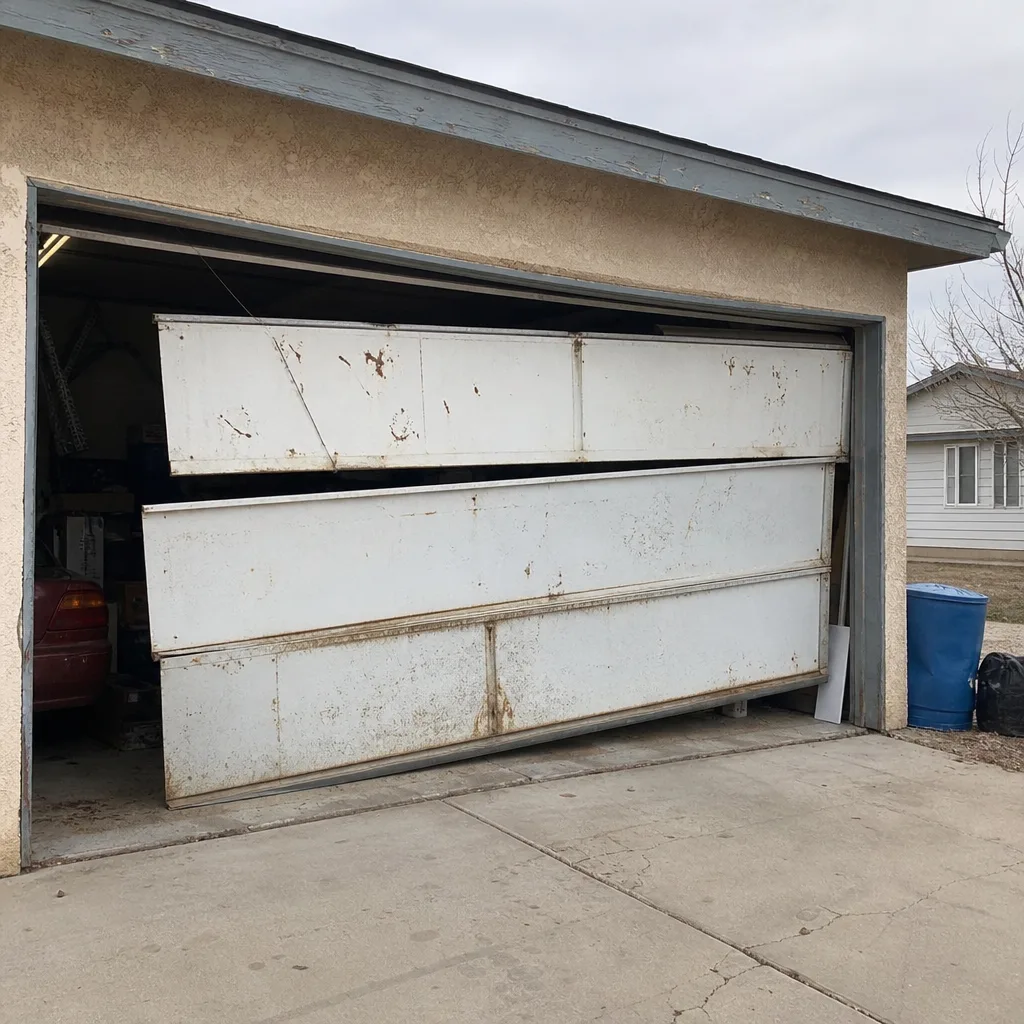 Before
 After
 Before
 After
 Before
 After
Frequently Asked Questions
Four times a year: March, June, September, and December. The late-May and late-November checks matter most in Mesquite because the summer heat and the short cold snaps are the two seasons where spring wear accelerates fastest, and those are when you want eyes on the door before the failure.
No. Garage door springs are under extreme stored tension, and improper handling can cause serious injury. In our experience, the only spring-related work homeowners should do is checking for visual signs and lubricating the coil with a proper garage door lubricant. Winding, unwinding, and replacement are jobs for a trained technician with the right tools. Call (888) 255-7680 for a free estimate.
Whether your springs are still carrying the door’s weight. A healthy door holds its position at roughly halfway up when you disconnect the opener and let go. A door that struggles to lift, drifts down, or drops fast has springs or cables that need attention, which means it’s time to schedule a check. Run the test every quarter and note any change.
Either is possible, but in our experience the louder opener is often the second symptom of worn springs, not the cause. The springs carry the door, so when they tire, the opener takes the extra weight and gets loud. Have both checked. A diagnostic visit usually gives you the answer in under 15 minutes.
Common spring repairs in the Mesquite market generally run in the low-to-mid hundreds of dollars for a single torsion spring, and somewhat higher for a pair or for heavier doors. Prices vary by door size and spring type. We give you a written price before any work starts so you know the exact number for your door. Call (888) 255-7680 for your free estimate.
Yes. Every visit from Fernbrook includes shoe covers on hardwood, drop cloths on tile, quiet tools when the kids are asleep, pet-safe products where there’s a choice, a written price before work begins, and a photo of the clean-up before the technician leaves. The 365-Day Done Right Promise covers the work itself. If it isn’t done right, we make it right.
The Bottom Line
Spring maintenance isn’t one annual appointment. It’s four short checks spread across the year that together catch the conditions that cause sudden failure. In Mesquite, that means a heat-season balance check in late May, a post-summer inspection in September, a cold-snap check in November, and a March tune-up before the summer push. Lubricate with a garage door-specific product, not WD-40. Run the balance test every quarter and note changes. Watch your opener for signs it’s working harder than it should. When you see a gap in the coil, a crooked door, or a door that suddenly feels heavy, call a technician before the failure and save yourself the Sunday emergency. For installation questions, see our Garage Door Installation in Mesquite page. Start with the Fernbrook Garage Door Repair Mesquite home page if you’re new here.
Call Fernbrook Garage Door Repair Mesquite at (888) 255-7680 for a free estimate. A live person answers, every time, and your written price comes before any work starts.
Written by the team at Fernbrook Garage Door Repair Mesquite.