
Last updated November 17, 2026
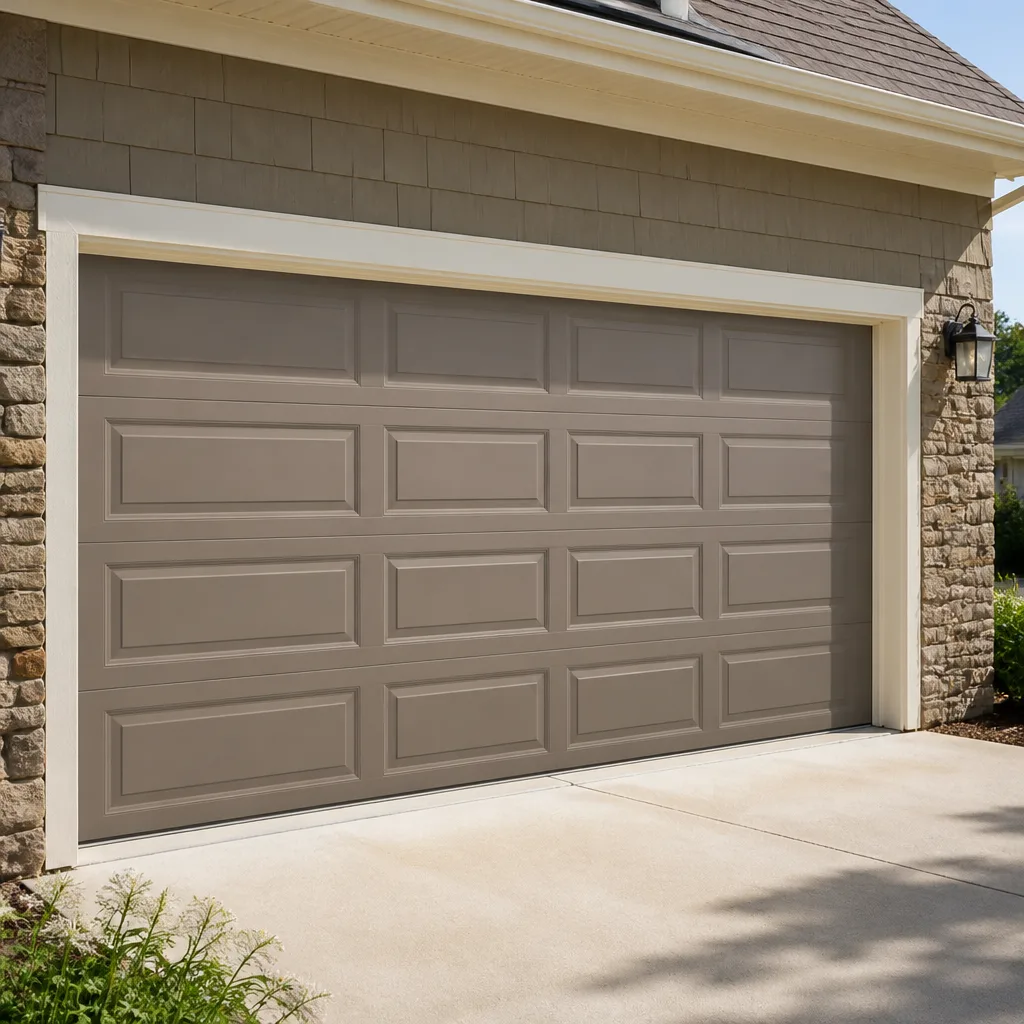 Raised-panel steel
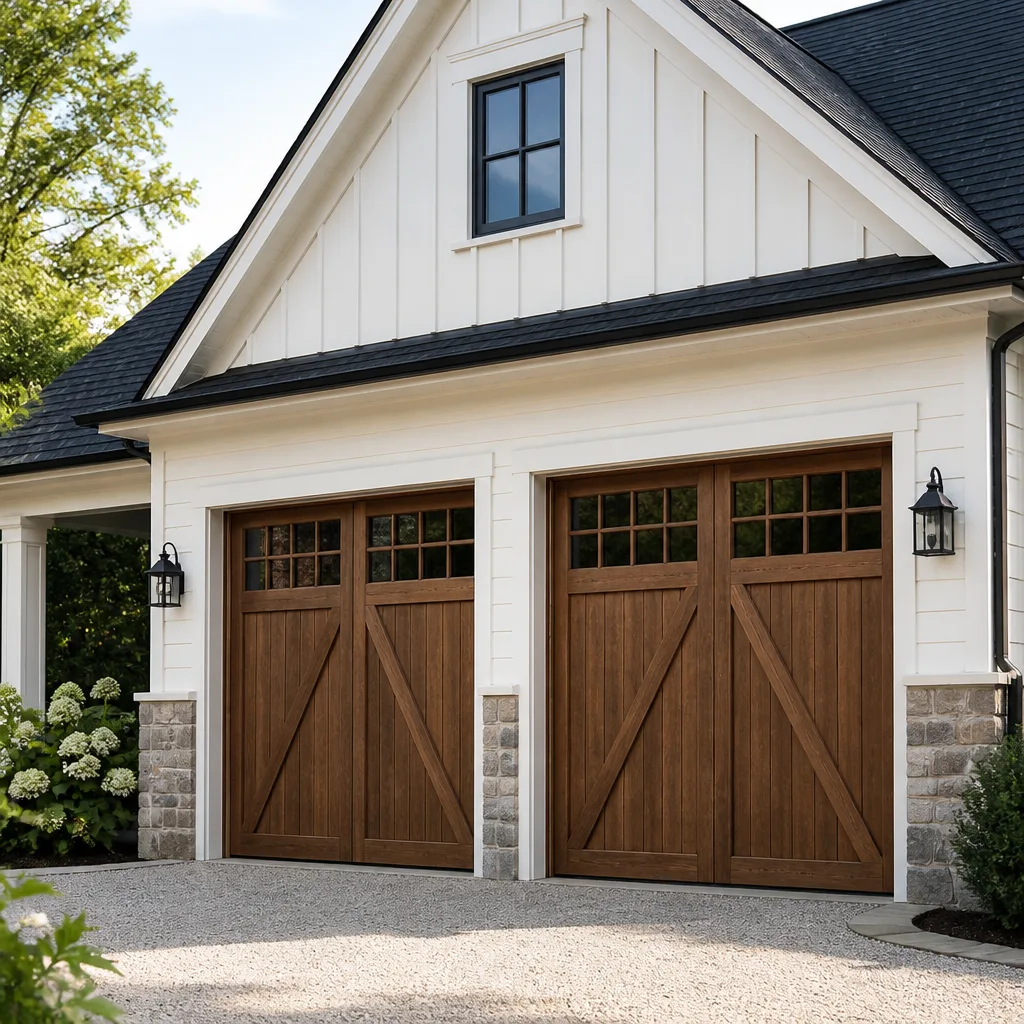 Carriage house
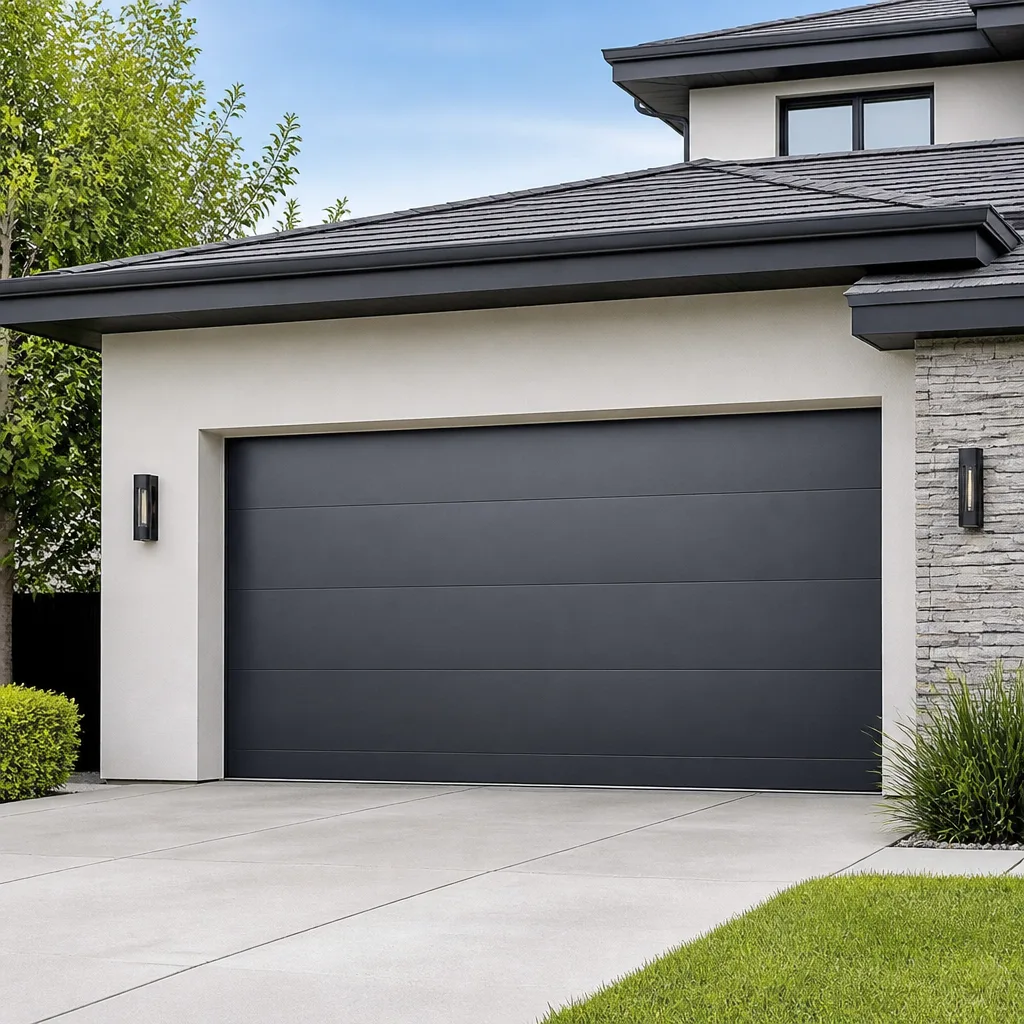 Modern flush
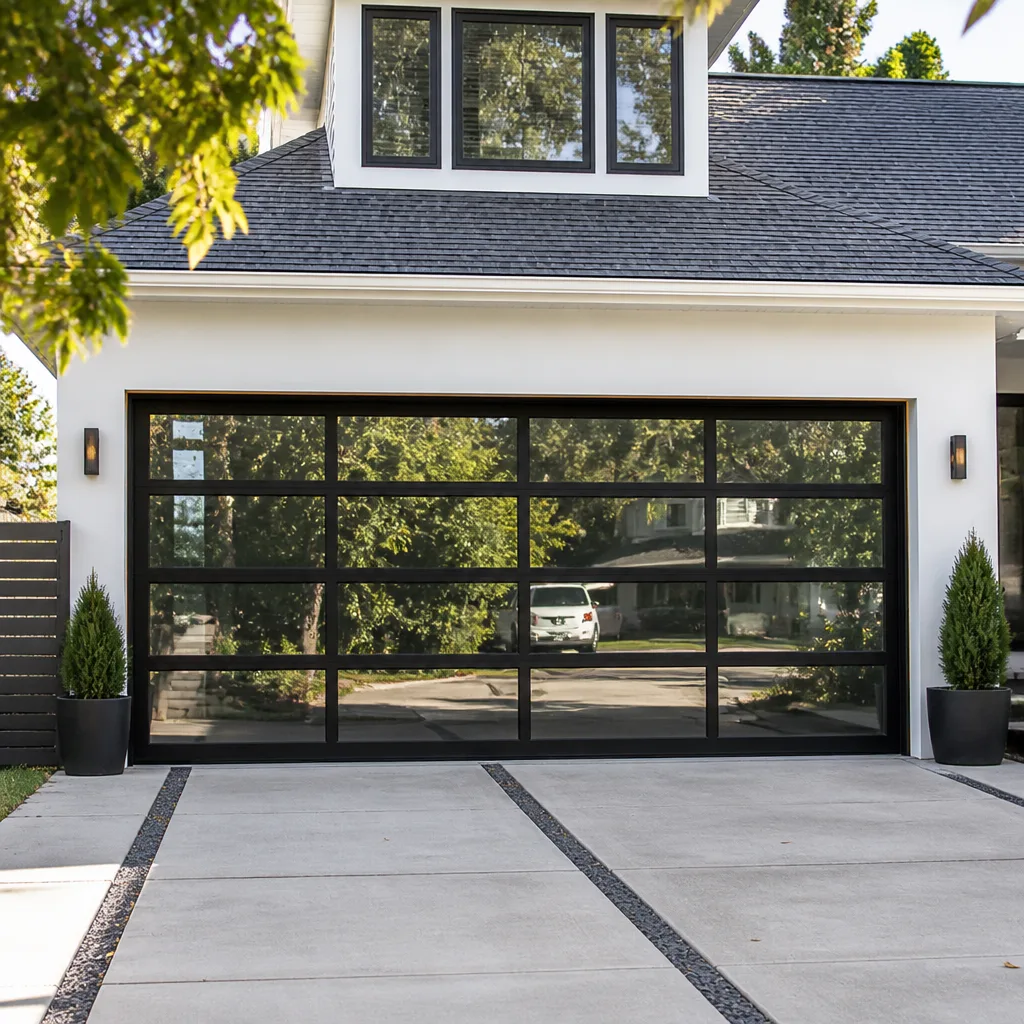 Full-view glass
 LiftMaster openers
 Chamberlain openers
Full 25-point door and opener safety check with every visit - springs, cables, rollers, tracks, and your LiftMaster or Chamberlain opener included
You get a price before we start. It does not change when the pro arrives.
Get your free estimateGarage Door Warning Signs: A Mesquite Homeowner’s Reference Guide
A garage door that hesitates for half a second before it moves is not “just getting old.” In our experience across Mesquite, that hesitation almost always traces back to one of three specific mechanical issues – a tired opener motor, a door that’s out of balance, or worn rollers binding in the track. Each has a different repair cost and a different level of urgency, and you can tell which one you’re dealing with before you ever pick up the phone. This guide is built around what you actually notice from the driveway: what you hear, what you see moving, and what the door looks like after another summer of desert sun. By the end, you’ll know which signs are safe to watch for a week and which ones need a technician today.
Quick Answer
Most failing garage doors in Mesquite show warning signs weeks before they stop working entirely – unusual sounds, jerky or uneven movement, and visible wear on weatherstripping or panels. If you notice grinding, a door that reverses without warning, a visibly sagging section, or a broken spring, treat it as urgent and have it looked at the same day. Slower, quieter signs like a slightly noisy opener or a drafty seal can usually be scheduled within a few weeks.
Styles & brands we work with
- Raised-panel steel
- Carriage house
- Modern flush
- Full-view glass
- LiftMaster openers
- Chamberlain openers
Table of Contents
- What the Sounds Are Telling You
- Motion Cues: How the Door Moves
- Appearance Signs: Panels, Seals and Sun Damage
- “Slow” Door or Balance Problem? Why the Difference Matters
- Safe to Monitor vs. Same-Day Attention
- Desert-Specific Warning Signs Most Guides Miss
- How to Describe the Problem When You Call
- What Common Repairs Cost in Mesquite
What the Sounds Are Telling You
Your ears are your best diagnostic tool, and most Mesquite homeowners can sort garage door sounds into a short list once they know what to listen for. A door that has run quietly for years and then suddenly announces every cycle is giving you information. Here’s how to translate what you’re hearing.
- Grinding or scraping: Usually dry or worn rollers, a track that’s gone out of alignment, or a bearing that’s lost its lubrication. Desert dust accelerates this – the dry air here dries out lubricant faster than in humid climates.
- A single loud bang from inside the mechanism: Often a torsion spring breaking. Stop using the door and call for same-day service – do not try to open it manually.
- Rattling that gets worse over months: Loose hardware, worn hinges, or a panel that’s coming loose from the stile. Usually a minor adjustment but worth catching before it loosens further.
- A high-pitched whine from the opener housing: A sign of the opener motor struggling, often the gear or sprocket wearing on an older Genie or Chamberlain unit. Sometimes it’s the motor itself nearing end of life.
- Repeated clicking without movement: The opener is trying to engage but the door isn’t responding – could be a stripped gear, a broken spring, or a safety sensor issue.
If the sound appeared suddenly and is loud, treat it as urgent. If it’s a gradual rattle or squeal that’s been building for weeks, you have a little more room to schedule. Either way, note what you hear and when – that detail alone saves a technician time on the first visit.
Motion Cues: How the Door Moves
Watch the door while it opens and closes. A healthy door moves at a steady pace with no wobble, no uneven gap between the door edge and the frame, and no hesitation at the start. The motion tells you almost as much as the sound.
- Hesitation at the start or a stutter mid-travel. Often a sign the opener motor is losing torque, or the door is binding somewhere in the track.
- A door that closes unevenly – one side lower than the other. This points to a balance problem. Torsion or extension springs have lost tension, or one has stretched further than the other. A door that’s out of balance puts strain on the opener, which leads to premature motor failure if left alone.
- A door that reverses for no apparent reason. Safety sensor misalignment is the most common cause, but it can also be a sign of a binding door registering resistance. Don’t ignore repeated reversals.
- Visible wobble or sway during travel. Worn rollers, a bent track, or a loosening hinge. Usually fixable before it becomes a bigger problem.
- A door that stops partway through travel. Often the opener’s travel limits are out of adjustment, but it can also indicate a binding track or a failing motor.
Motion problems that repeat in the same spot every cycle are usually mechanical and worth a professional look. If the door moves normally most days and hesitates only occasionally, it may be a sensor or remote issue you can resolve without a repair.
Appearance Signs: Panels, Seals and Sun Damage
In Mesquite, the sun does more visible damage to garage doors than almost anything else. Between summer highs that regularly push past 110°F and the UV intensity at this elevation, weatherstripping cracks faster than in milder climates, and paint on steel panels fades unevenly. General garage door guides written for the rest of the country miss these desert-specific signs.
- Cracked or brittle weatherstripping along the bottom seal. In our experience, this is the most overlooked warning sign in Mesquite. A failed bottom seal lets in dust, hot air, and the occasional scorpion or mouse. Replacing it is one of the least expensive maintenance items on a garage door.
- Sun-bleached or chalky panels. Fading is cosmetic, but chalky paint can indicate the panel’s surface is breaking down – often the first sign a steel door will start rusting at the seams. Amarr and Clopay steel doors hold up well here but still benefit from periodic inspection.
- Rust at the bottom rail or hinges. Rare in dry climates except where irrigation sprinklers hit the door regularly. Worth checking every spring.
- Small dents or dings from bikes, cars, and basketballs. Cosmetic in most cases, but a dent that’s creased the panel can affect the door’s structural integrity over time.
- Gaps at the sides or top of the door. Worn side seals or a door that’s shifted on its tracks. These become obvious in the summer when you notice the garage is hotter than usual, or in winter when you feel a draft.
None of these appearance signs are emergencies on their own, but together they tell you the door is aging and warrants a scheduled inspection before something mechanical fails.
“Slow” Door or Balance Problem? Why the Difference Matters
This is the distinction that most homeowners get wrong, and it’s the one that leads to the most unnecessary repairs. A slow door and a door with a balance problem both look “tired,” but they’re completely different mechanical issues with very different repair costs.
A genuinely slow door comes from a dying opener motor, usually on a unit more than ten years old. The motor’s internal gears have worn, or the capacitor is failing, and it takes longer to move the door through its cycle. If your LiftMaster or Chamberlain opener is 12+ years old and the door sounds normal but moves slowly, the opener is often the culprit.
A balance problem comes from springs that have lost tension. The door moves slowly because the opener is working against gravity, not because the motor is weak. The tell is different: the door is hard to lift by hand (with the opener disengaged), it may open fine on some cycles and struggle on others, or it drops more suddenly on the way down.
The mistake is diagnosing a balance problem as an opener problem. If a technician replaces the opener without addressing the springs, the new opener will wear out within a year or two. Conversely, replacing springs when the opener is dying gets you a smoothly balanced door that still moves slowly. The right diagnosis requires checking both. That’s why a technician should test the door manually before recommending a repair.
If you can lift the door about halfway by hand (with the opener disconnected – and only if you can do so safely without touching the springs or cables) and it stays put, the balance is likely fine. If it drops or feels heavy, the springs need attention. Do not attempt to adjust or replace springs or cables yourself – those components are under high tension and can cause serious injury. That’s a job for a trained technician.
Safe to Monitor vs. Same-Day Attention
Not every warning sign is an emergency. Here’s an honest breakdown of what can wait a week and what shouldn’t.
Safe to monitor for a week (schedule a repair soon):
- Rattling hinges or hardware
- Slightly slower opener travel on an older unit that still works reliably
- Cosmetic panel fading or minor dents
- A drafty garage in summer or winter (worn weatherstripping)
- Occasional sensor false-triggers that reset on their own
Call today (same-day attention):
- Loud bang followed by the door not opening or not staying up
- A visible break in the torsion spring or a stretched extension spring
- Door hanging unevenly with a visible gap on one side
- Door reverses repeatedly on close without an obvious obstruction
- Cable visibly off its drum or hanging loose
- Opener motor smoking, buzzing without movement, or repeatedly tripping a breaker
The reasoning is mechanical: the bottom list involves components under heavy tension or a door that could fall. Every cycle on a broken spring or a misaligned cable puts more stress on the rest of the system and can turn a repair into a replacement. The top list is normal wear – a week of scheduling gives you time to get a proper written quote rather than an emergency call.
Desert-Specific Warning Signs Most Guides Miss
Garage doors in Mesquite live in a tougher environment than the ones covered in most national guides. The dry heat, dust, and UV exposure create specific warning signs that homeowners here notice but often don’t connect to their door.
- The garage is noticeably hotter than it used to be. Failed weatherstripping lets hot air in during the summer. It’s often the first sign of a bottom seal that’s cracked, not a sign your garage fan is broken.
- More dust inside the garage. Small gaps at the sides or bottom let dust in during our windy months. Worth checking seals before assuming the door itself is fine.
- Squealing on the first few cycles after a cold snap. Desert cold snaps (yes, Mesquite gets them in January) harden lubricant and make worn rollers squeal. If the noise disappears after a few cycles and the door runs fine otherwise, it’s usually just lubrication. If it stays noisy all week, worn hardware is more likely.
- Paint that chalks or fades unevenly on one panel. Sun exposure on a west-facing door is uneven. When one panel breaks down faster than the others, that panel is aging out ahead of the rest.
- Opener housing hot to the touch after a cycle. Attic-mounted openers in Mesquite run hotter than they do in cooler climates. A motor that’s overheating can indicate it’s working harder than it should – usually a sign of a balancing or binding issue.
Each of these signs points to a small repair that keeps the whole system healthy, and none of them are emergencies. Catching them early is the difference between a $200 seal replacement and a $1,200 panel replacement.
How to Describe the Problem When You Call
The most useful thing you can do before calling a technician is to write down what you observe. A clear description turns a diagnostic visit into a repair visit, which means faster service and often a more accurate quote up front. Here’s what to have ready.
- What the door does, not what you think is wrong. Instead of “the opener is broken,” say “the opener clicks but the door doesn’t move” or “the door starts to open and stops about a foot up.” Technicians diagnose from behavior, not guesses.
- When it started and whether it’s getting worse. A problem that’s been intermittent for a month is different from one that started this morning after a loud noise.
- Any sounds, and roughly where they come from. Grinding from the top of the door, clicking from the opener, rattling from a specific side.
- The opener brand and approximate age, if visible. Brands matter – LiftMaster, Chamberlain, Genie, and Craftsman openers respond to different repair protocols, and a technician who knows eight major brands can usually bring the right parts on the first visit.
- The door material and number of panels. Clopay steel doors, Amarr steel doors, Wayne Dalton wood-look, and Raynor insulated doors all have different repair considerations.
- Whether the door is safe to use. If the door is hanging, off its tracks, or has a broken spring, describe that first – it changes how the technician approaches the visit.
The more of this you have ready, the less time the first visit spends figuring out what’s wrong and the more time it spends fixing it. Our technicians are trained to ask these questions when you call anyway, so any detail you can add helps.
What Common Repairs Cost in Mesquite
Every repair we schedule starts with a written price delivered before any work begins – no exceptions. Here are the ranges we typically see in Mesquite, so you know what to expect before you call. The final price depends on the specific door, the parts needed, and the access to the mechanism.
- Weatherstripping replacement (bottom seal): $80 – $180 depending on door width and seal type
- Roller and hinge replacement: $120 – $260 for a full set on a standard two-car door
- Spring replacement (torsion, per spring): $180 – $320
- Opener repair (gear, capacitor, sensor): $150 – $350 depending on the issue
- Full opener replacement (unit plus labor): $350 – $650 depending on brand and features
- Track realignment or roller track repair: $140 – $280
- Cable replacement (per side): $150 – $300
- Panel replacement (per panel, steel): $250 – $600 depending on brand and finish
We quote in ranges because a standard door and a reinforced hurricane-rated door take different parts and different time. What we commit to is this: once we’ve seen the door, the price we write down is the price on the invoice. If it changes, it’s because you approved the change before we continue. Call (888) 255-7680 for a free estimate and a written price before any work starts.
Common Mistakes to Avoid
- Assuming a slow door needs a new opener. As covered above, a balance problem mimics a dying opener. Replacing the opener first usually means replacing it again within two years. Test the door manually before recommending the opener.
- Ignoring a small weatherstripping crack through a whole summer. In Mesquite, a cracked bottom seal lets in 110°F air and dust all summer, making the garage hotter and the AC work harder. It’s an $80 – $180 fix that gets much more expensive when the panel behind it starts to rust.
- Trying to fix a torsion spring yourself. This is the single most dangerous DIY garage door repair. Torsion springs are under extreme tension and can cause serious injury. Please don’t attempt this – call a technician.
- Running the door on a broken cable. A loose or off-drum cable can cause the door to fall or twist the panels. It’s a same-day call, not something to “watch.”
- Diagnosing a door over the phone. We can help you decide urgent vs. not urgent, but the diagnosis itself needs a technician to see the door in person. Describing what you observe gets you a faster visit; describing what you think is broken gets you the wrong visit.
- Ignoring UV damage on a west-facing door. In Mesquite, west-facing doors take the harshest sun. Fading and chalking are early signs the panel is aging out. A $300 panel replacement caught early is often less expensive than a full door replacement later.
- Skipping annual lubrication because it’s dry here. Dry air and dust actually dry out garage door lubricant faster than humid air. A yearly lubrication on the rollers, hinges, and track is the single easiest thing you can do to prevent premature wear.
See the difference
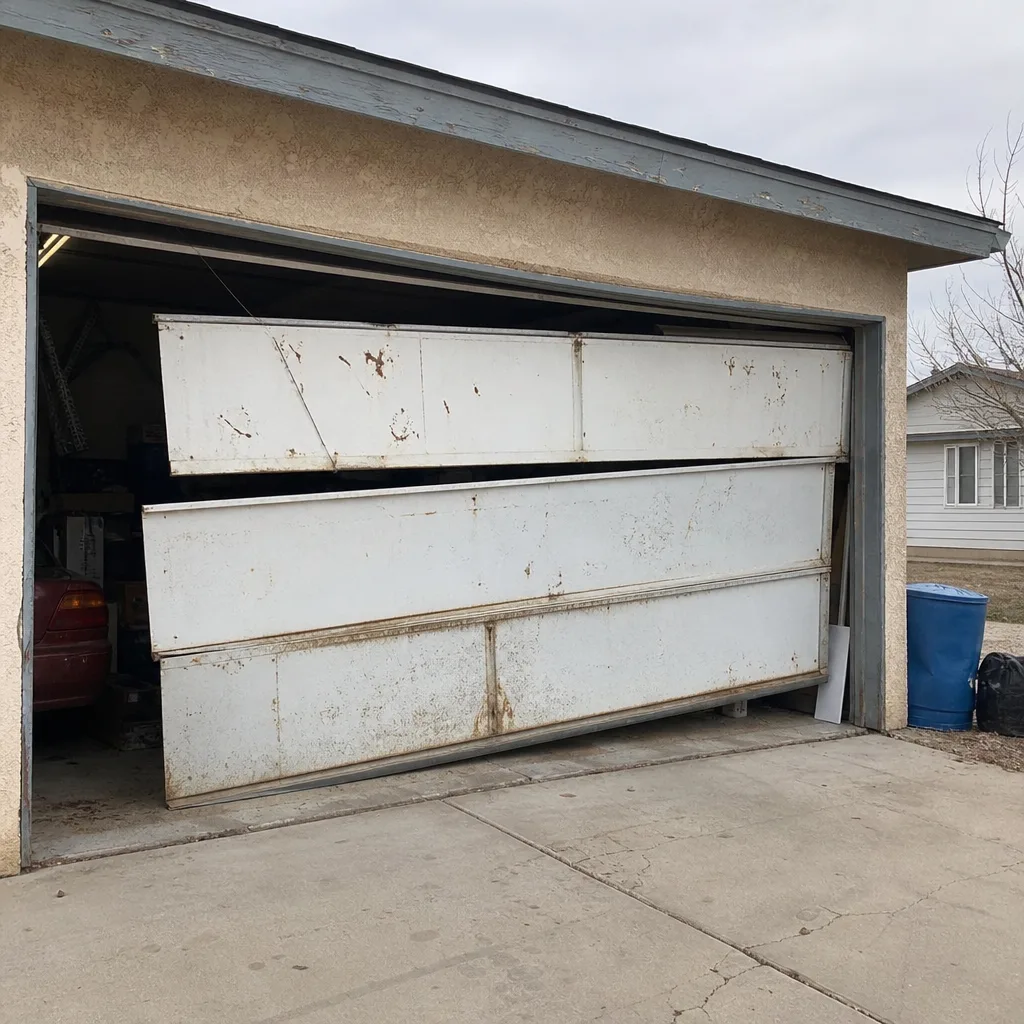 Before
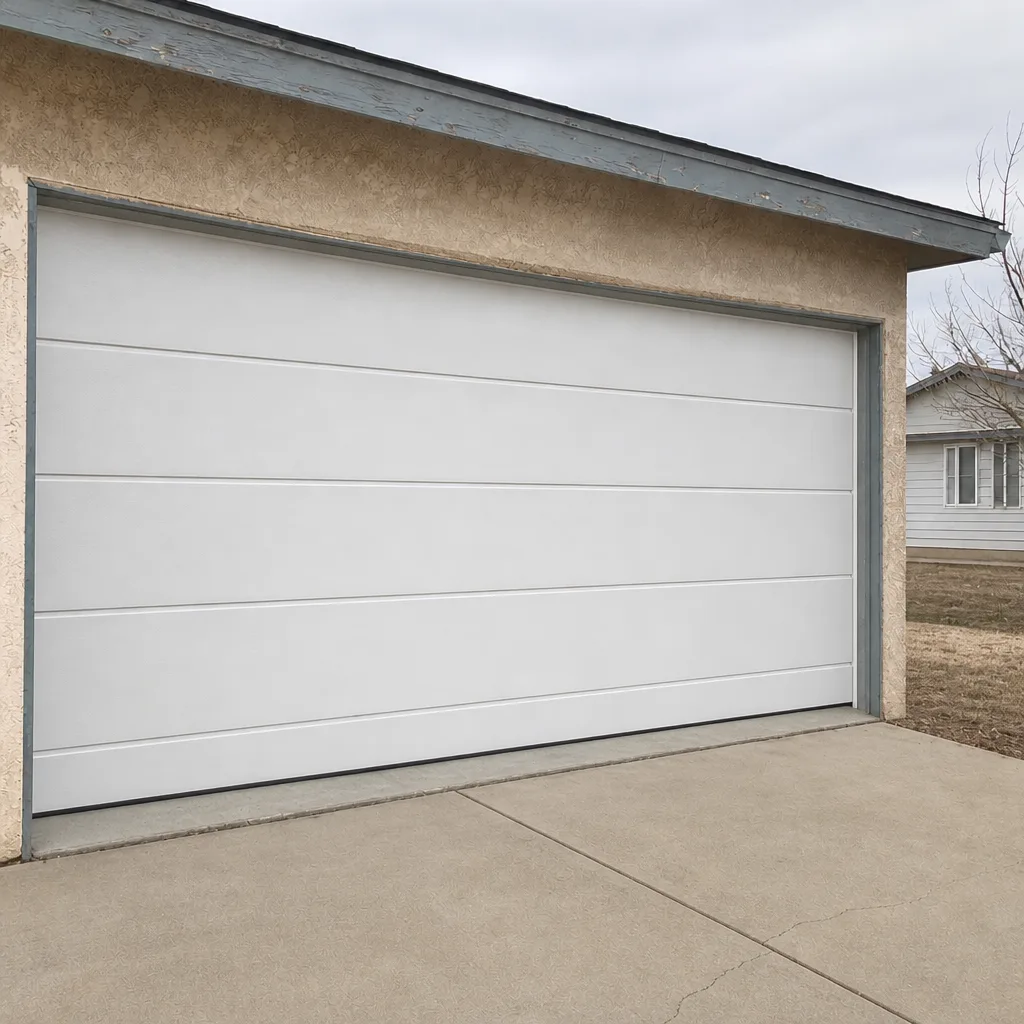 After
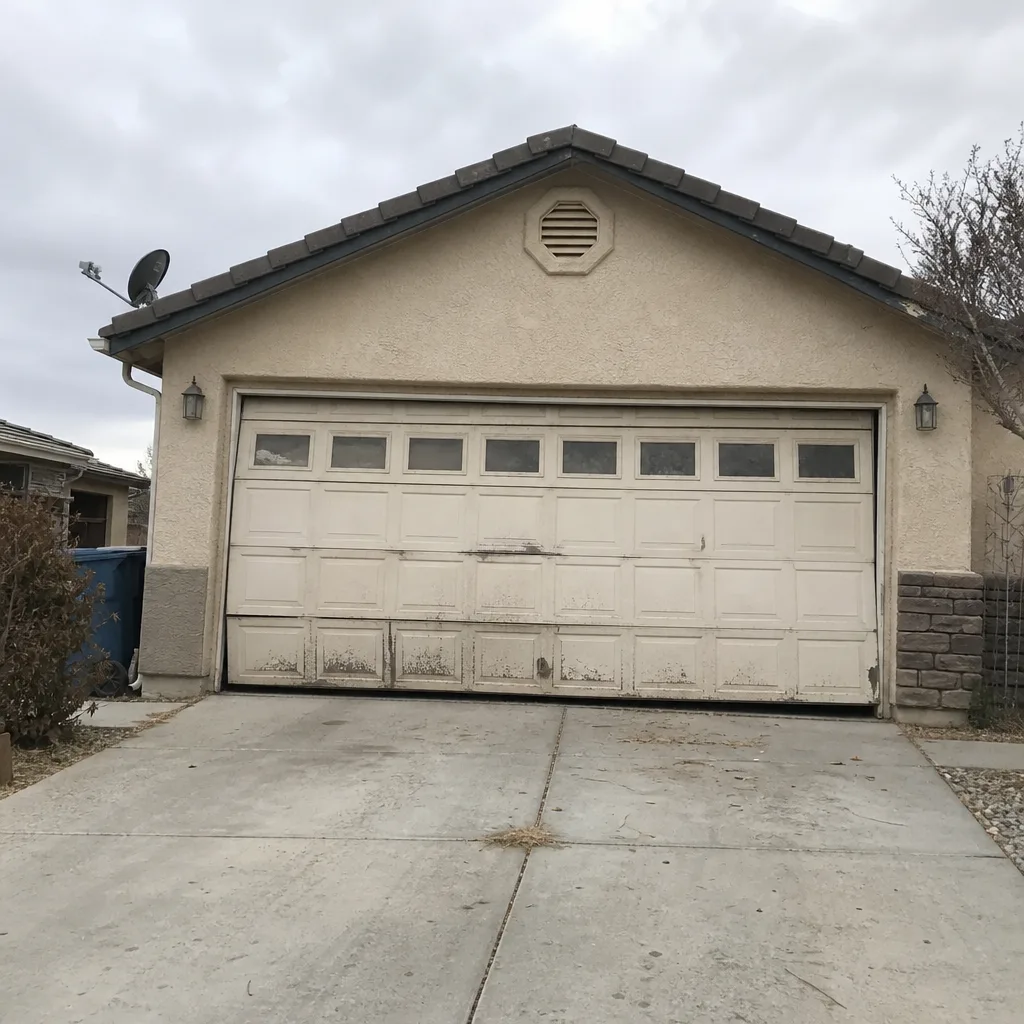 Before
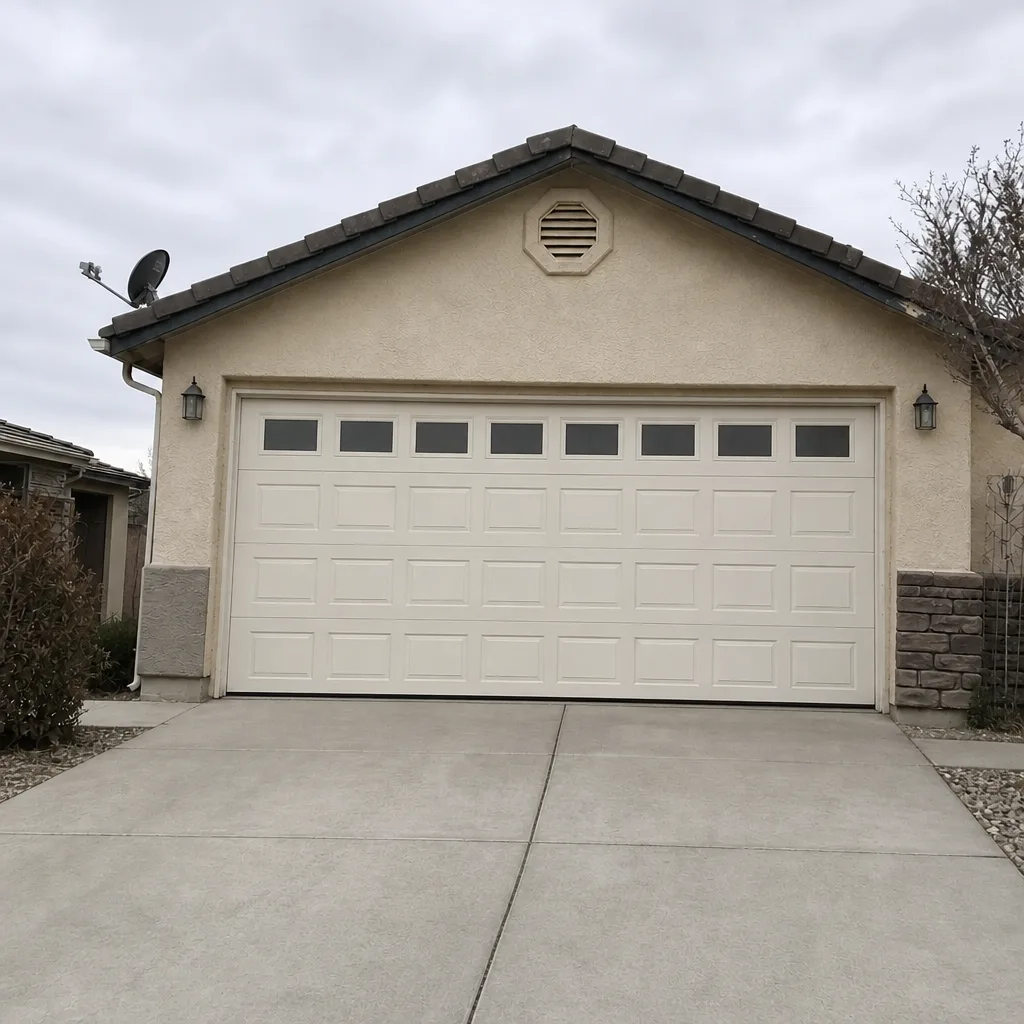 After
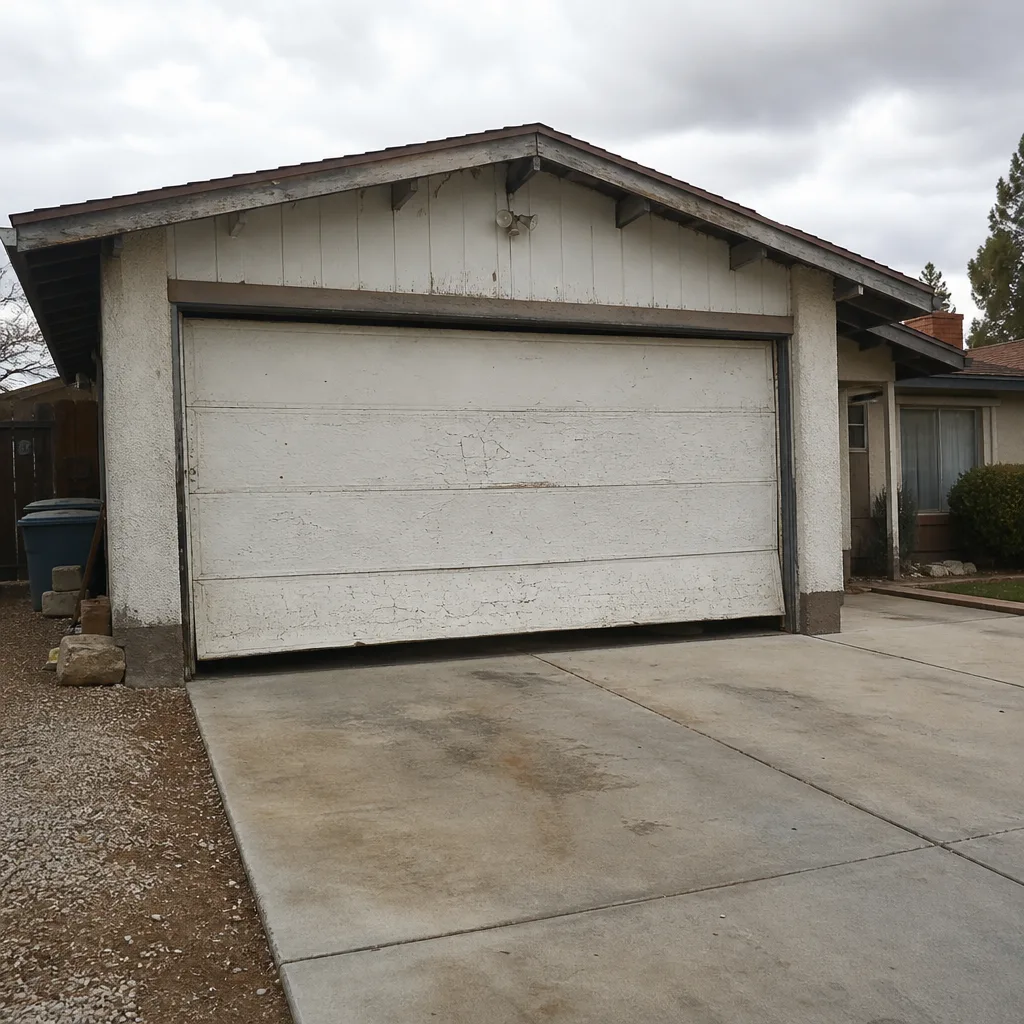 Before
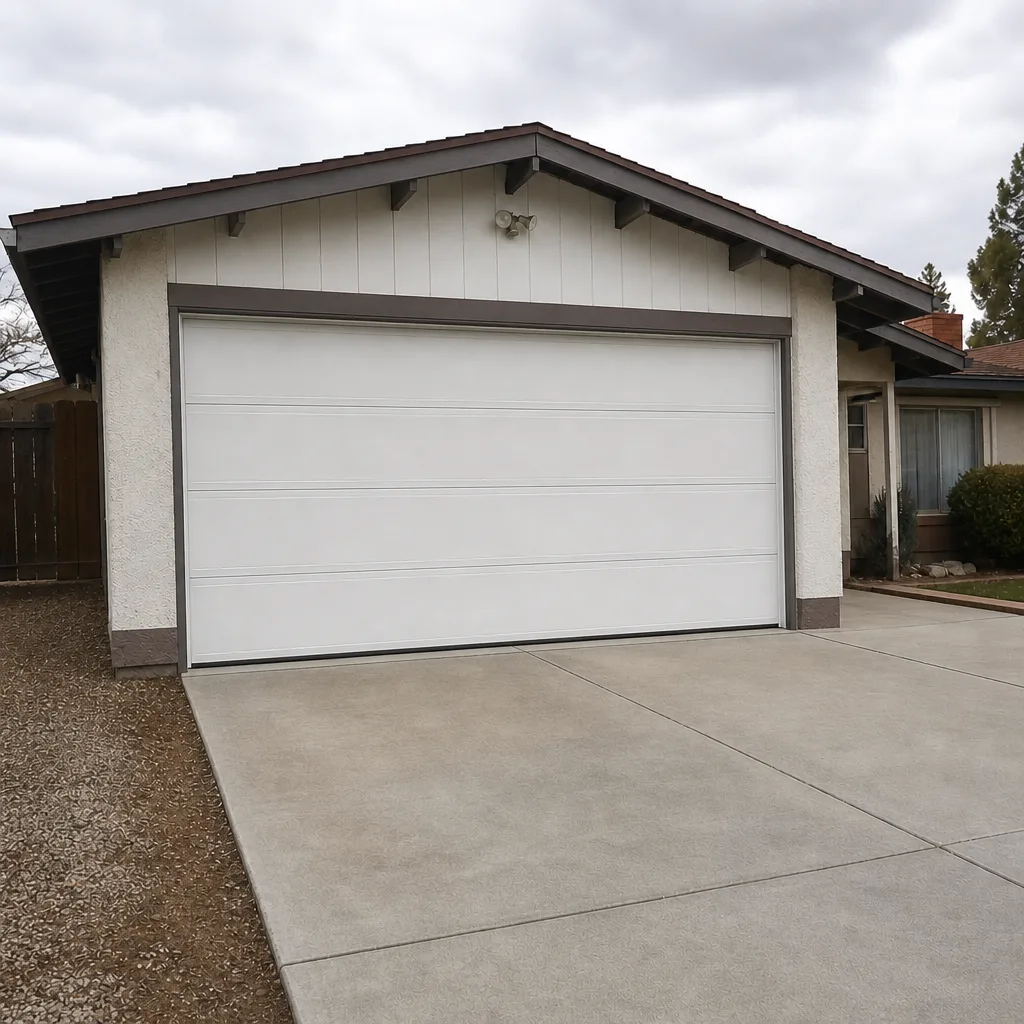 After
When to Call a Professional
Call a professional today if the door has stopped opening, if you hear a loud bang and the door won’t stay up, if the door is visibly hanging unevenly, if a cable has come off its drum, or if you see a broken spring. These are safety issues, not scheduling issues – a door under strain can fall or cause injury, and the earlier a technician sees it, the smaller the repair. For older doors with no clear problem but a growing list of small signs (rattling, harder to lift, draftier than usual), schedule a routine inspection – most of those turn into a single adjustment or lubrication, not a major repair.
Fernbrook Garage Door Repair Mesquite offers free estimates in Mesquite – call (888) 255-7680 and a live person answers, day or night, with no voicemail tree. We’ll help you sort urgent from not urgent over the phone, then deliver a written price before any work begins when we come out. For anyone wanting to see our full range of services, start with Fernbrook Garage Door Repair Mesquite home, or dive straight into Garage Door Repair in Mesquite or Garage Door Spring Repair in Mesquite.
Frequently Asked Questions
A broken torsion spring usually makes a loud bang and the door won’t open at all, while a worn spring makes the door feel heavy and hard to lift by hand with the opener disengaged. If the door won’t stay up and you can see a gap in the spring coil, it’s broken and should be treated as same-day. Call (888) 255-7680 for a free estimate – estimates are free and we’ll quote before we start.
Grinding usually means dry rollers, worn bearings, or a track out of alignment – not an emergency, but not something to ignore for months either. Stop using the door if the grinding is loud, paired with visible wobble, or if the door is hanging unevenly. Otherwise it can usually be scheduled within a week. Call us for an exact quote – estimates are free.
Cracked or brittle weatherstripping along the bottom seal is the most common warning sign we see in Mesquite, thanks to the UV intensity and summer heat. It’s easy to miss because it doesn’t affect the door’s operation until the dust and heat build up – but it’s also one of the cheapest fixes ($80 – $180). Call for a free estimate and we’ll take a look.
Lubrication, replacing the bottom weatherstripping on some door styles, and cleaning the safety sensors are all reasonable homeowner maintenance. Springs, cables, and anything involving the torsion assembly are not – those components are under dangerous tension and require a trained technician. For anything that involves the mechanism, call (888) 255-7680.
No. We deliver a written price before any work begins, on every visit – no exceptions. If we discover something that changes the scope (a hidden second problem, a part that needs a special order), we stop and talk to you before continuing, so you never get an invoice bigger than the quote. That’s the standard every Cedarwell-family business operates under.
Once a year for a door in normal use, and twice a year for a west-facing door or a heavier wood-look door that takes more sun exposure. A yearly inspection catches the small stuff – worn rollers, dry hinges, thinning weatherstripping – before it becomes a bigger repair. Call for a free estimate whenever you’d like a professional look.
The Bottom Line
Garage door warning signs give you weeks of notice before a failure – if you know what to look for. Sounds, motion, and appearance each tells a different part of the story, and the desert environment in Mesquite adds a few signs (cracked weatherstripping, uneven panel fading, hot opener housings) that most general guides miss. The slow-vs-balance distinction matters more than any other diagnosis: it’s the difference between a right repair and an unnecessary one. Schedule the small things before they become emergencies, call same-day for anything involving springs, cables, loud bangs, or a hanging door, and when you call, describe what you observe rather than what you guess. That’s the fastest path to a written price and a door that works again.
Fernbrook Garage Door Repair Mesquite offers free estimates across Mesquite – call (888) 255-7680 and a live person answers. Every job comes with a written price before work begins, shoe covers and drop cloths inside your home, and a photo of the clean-up before we leave. Our technicians have up to 24 years of experience, they’re trained on eight major brands including Chamberlain, Genie, Clopay, and Amarr, and they’re background-checked and uniformed on every visit. When you’re ready to talk about a new door instead of a repair, see Garage Door Installation in Mesquite. Whatever the door needs, the 365-Day Done Right Promise backs it – if it’s not done right, we make it right.
Written by the team at Fernbrook Garage Door Repair Mesquite.