
Last updated November 17, 2026
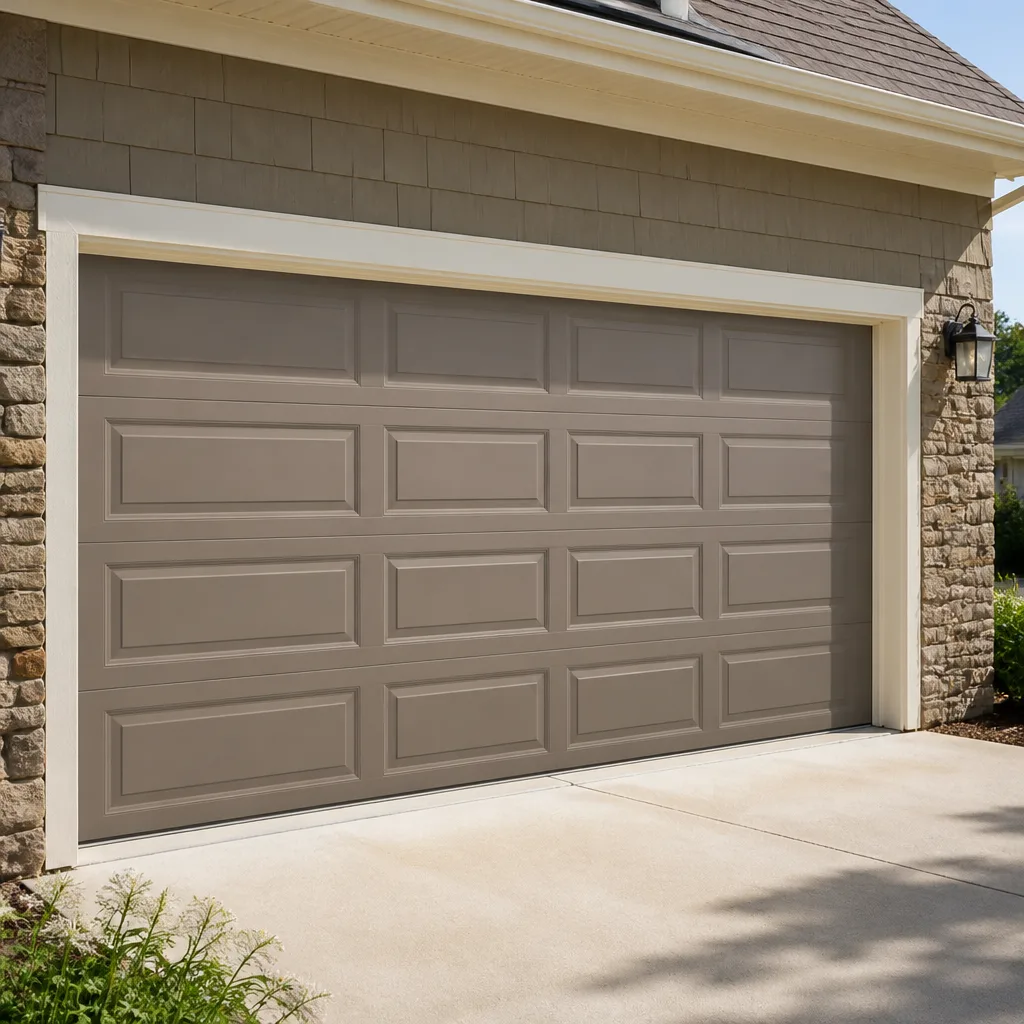 Raised-panel steel
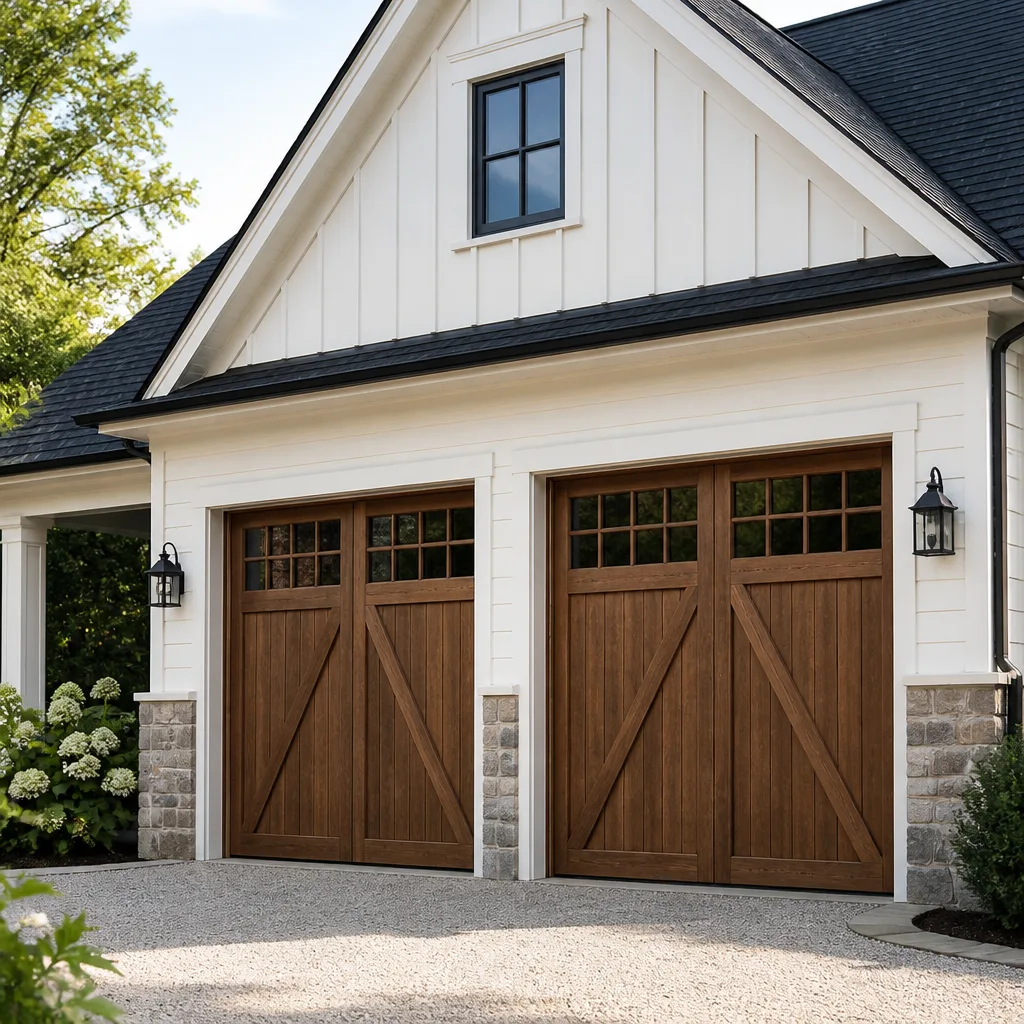 Carriage house
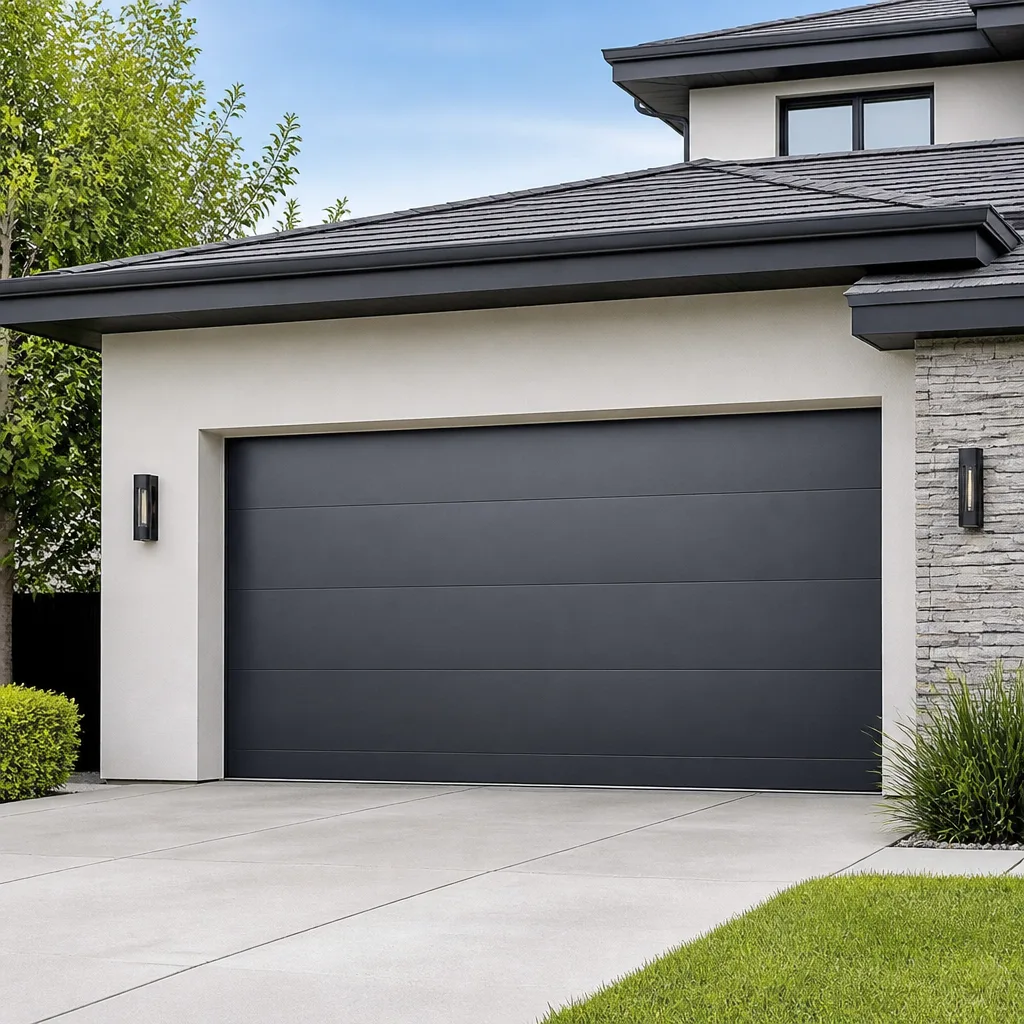 Modern flush
 Full-view glass
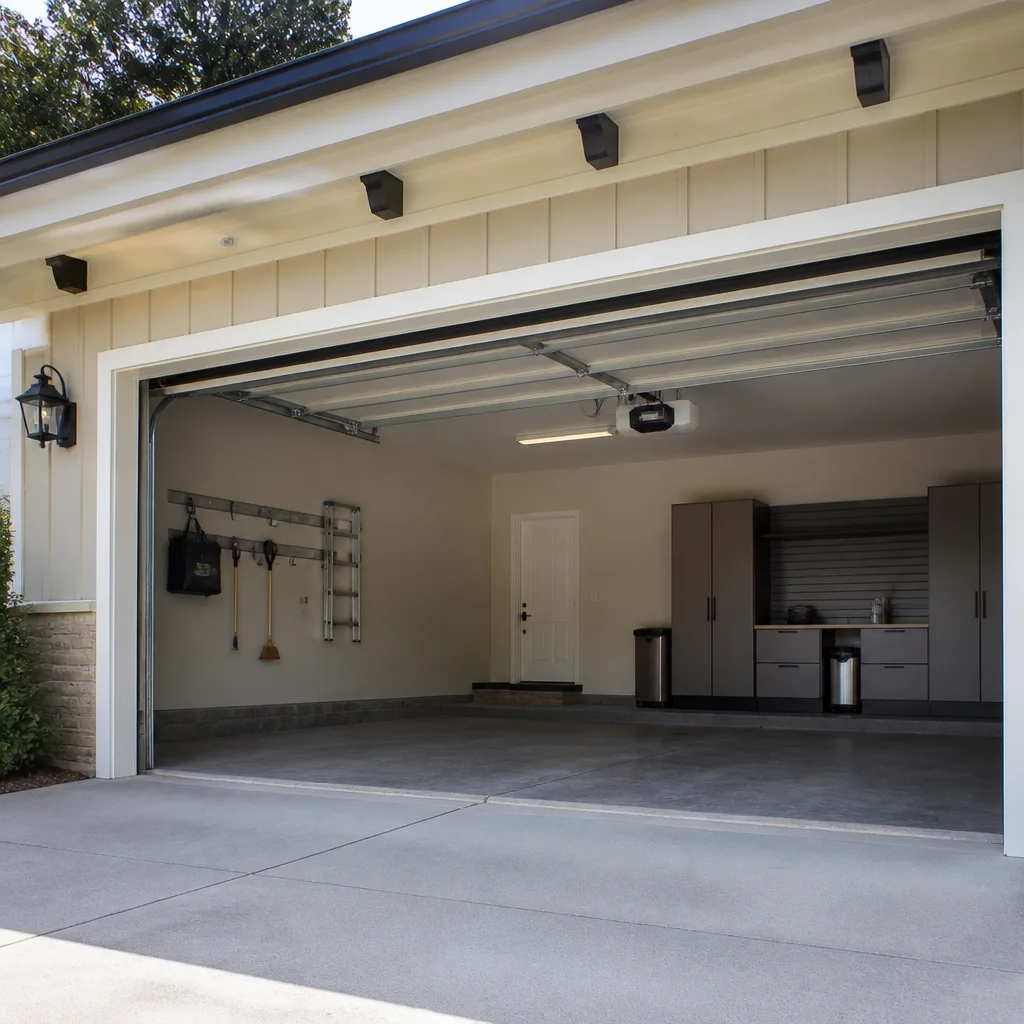 LiftMaster openers
 Chamberlain openers
Full 25-point door and opener safety check with every visit - springs, cables, rollers, tracks, and your LiftMaster or Chamberlain opener included
You get a price before we start. It does not change when the pro arrives.
Get your free estimateGarage Door Repair Troubleshooting: Common Problems and How to Fix Them
The most expensive words in a garage door repair are “we’ll need to look at the whole system.” That phrase usually arrives right after a homeowner says, “it’s just not working right,” and it hands the diagnosis – and the invoice – to whoever shows up at the door. In our experience, most garage door failures fall into one of four mechanical categories, and a homeowner standing in the driveway can usually tell which one before making a single call. This guide teaches that diagnostic logic for Mesquite homes: no tools, no ladders, no touching the springs. Five minutes of listening and watching will sharpen your description, narrow the work, and often shrink the bill.
Quick Answer
Before calling for service, narrow the problem to one of four categories: spring, track, opener, or seal. A door that won’t lift at all, or that slams down, usually points to a spring. A door that lifts crookedly or grinds points to a track. A door that hums but doesn’t move points to the opener. A door that opens fine but lets desert dust and heat into the garage points to the seal or weatherstripping. Naming the right category before the call is the single best way to avoid paying for a broad repair when only one part has failed.
Styles & brands we work with
- Raised-panel steel
- Carriage house
- Modern flush
- Full-view glass
- LiftMaster openers
- Chamberlain openers
Table of Contents
- The Four-Category Diagnostic Tree
- Spring or Opener? Listening for the Difference
- The Balanced Door Test: Two Minutes, Safely Done
- Three Symptoms That Look Like Opener Problems (But Aren’t)
- Track, Roller, and Alignment Checks From the Driveway
- Seals and Weatherstripping in Mesquite Heat
- What to Have Ready Before You Call
- Common Mistakes to Avoid
The Four-Category Diagnostic Tree You Can Run From the Driveway
Every garage door problem starts with one of four components. You don’t need to open a panel or reach over your head to sort them out. You need to watch, listen, and answer three questions: Does the door move at all? Does it move evenly? Does the motor run? Here’s the tree we’d walk through with a neighbor.
- Press the wall button and watch from outside. If the door doesn’t move and you hear nothing, suspect power, a dead remote, or a tripped opener. If you hear a hum but no motion, the opener is trying but a mechanical part (often a spring) isn’t cooperating.
- Look at the gap between the door and the floor as it lifts. A door that rises higher on one side than the other is a track or cable symptom, not an opener symptom.
- Look up at the springs over the door. If you can see a clear gap in a coiled torsion spring, or a stretched, dangling extension spring, stop. That’s a spring failure, and the door should stay down until a technician arrives.
- Look at the bottom seal. If the door opens cleanly but dust, heat, or a small light gap is coming through, that’s a seal job – usually the least costly of the four.
In Mesquite, this tree tends to sort problems quickly because the climate leaves such clear fingerprints. Desert heat bakes rubber seals and works springs harder than they’d work in a cooler town, so seal and spring calls make up a large share of what our technicians see here. For more on the repair side of things, our Garage Door Repair in Mesquite page covers the usual parts and turnaround times.
Spring or Opener? Listening for the Difference
The single most useful skill in garage door troubleshooting is telling a broken spring from a stripped opener gear. The two sound completely different once you know what to listen for. A broken torsion spring makes a sharp, sudden crack – many homeowners describe it as a gunshot or a car backfire from inside the garage, followed by a door that won’t budge. It usually happens while the door is moving and often when the door is opening after a cold night. A stripped opener gear, on the other hand, produces a steady, rhythmic grinding or whining from the motor housing – the door may creep a few inches and then stall, or not move at all while the motor runs loudly.
Here’s the practical difference. If you heard a bang, it’s almost certainly a spring. If you heard nothing unusual and just found a door that hums, it’s likely the opener. If the door moves a foot or two and then reverses, you may be looking at a force-setting or safety-sensor issue on a LiftMaster or Craftsman unit, which is a much smaller repair.
This distinction matters because a broken spring is genuinely dangerous and should be treated as an emergency stop – not a DIY project. Torsion springs are under extreme tension and can cause serious injury. Keep the door closed, keep kids and pets out of the garage, and call a trained professional. Our Garage Door Spring Repair in Mesquite page explains what the repair involves and how we handle it safely.
The Balanced Door Test: Two Minutes, Safely Done
A balanced door is one where the springs carry most of the door’s weight, leaving the opener with only a light push. An unbalanced door wears down the opener, strains the springs, and often masquerades as an opener failure. You can check the balance without tools in about two minutes.
- Disconnect the opener first. Pull the manual release cord hanging from the opener carriage. The door is now hand-operated. Never skip this step.
- Raise the door to waist height by hand. Lift slowly with both hands and stop halfway.
- Let go and step back. A balanced door will stay put or drift only slightly. A door that slams back down is spring-tired, and a door that wants to keep rising on its own is over-tensioned.
- Reconnect the opener by pressing the wall button – the carriage should re-engage as the door runs. If it doesn’t catch, call for service.
In our years working in Mesquite, we’ve seen this test catch plenty of doors where the opener got blamed for what was really a worn spring nearing the end of its service life. Heat and constant use take a steady toll on springs, so an unbalanced door in a Mesquite home is worth checking every season. If the door won’t stay at waist height, don’t keep cycling it. Call a professional to look at the springs – that’s a tension job, not a homeowner one.
Three Symptoms That Look Like Opener Problems (But Aren’t)
Opener repair is one of the most common calls we get in Mesquite, and a fair share of those turn out to be track or spring problems wearing an opener disguise. Here are the three repeat offenders, and why misreading them leads to callbacks.
1. Door reverses immediately after starting
Homeowners often assume the opener is faulty when the door bounces back down. The real culprit is frequently a track obstruction, a misaligned safety sensor, or a blocked photo-eye. Check whether anything is in the door’s path and whether the little LED on each sensor is solid (not blinking). If both are clear and the door still reverses, that’s worth a professional look.
2. Door opens a few inches, then stops
This reads as a motor issue, but it’s often a track that has been knocked slightly out of alignment or a roller that’s come loose. On a Wayne Dalton or Raynor door, the rollers ride inside a fairly tight track, and a small nudge out of true will bind the travel. The opener then hits its force limit and shuts off.
3. Grinding, scraping, or shuddering when the door moves
If the sound comes from the door itself rather than the motor, suspect rollers, hinges, or a track problem – not the opener. Lubricating rollers with a pet-safe silicone spray helps, but a scraped or gapped track needs a technician to realign. Misdiagnosing this as an opener failure is exactly how a homeowner ends up paying for a repair that doesn’t fix the noise, then paying again for the real one.
Pinning down which category you’re facing before the call keeps the first quote accurate. Our garage door repair team in Mesquite asks those same questions on the phone so the estimate covers the right work.
Track, Roller, and Alignment Checks From the Driveway
Track problems are usually visible from a step back. Stand at the driveway and look at the two vertical tracks that guide the door. They should be straight, parallel, and firmly bolted to the wall.
- Look for dents or bends in the vertical or horizontal track. A single dented section can bind a roller and force the opener to stall.
- Check the rollers – those small wheels that ride inside the track – for cracks, flat spots, or wobble. Nylon rollers wear quietly; steel ones can get noisy before they fail.
- Look at the gap between the door and the wall on both sides. A door that’s been bumped (say, by a bike or a car in a narrow Mesquite two-car garage) can shift a track just enough to cause trouble.
- Wipe the track clean with a dry cloth. Desert dust collects in the track channels in Mesquite, and it can cause grinding that has nothing to do with the opener.
What not to do: don’t try to bend a track back into position by hand. Track realignment is a precision job, and forcing it can damage the door panel or the rollers. If a track is visibly out of true, keep the door closed and call a technician.
Seals and Weatherstripping in Mesquite Heat
Not every garage door problem is mechanical. In Mesquite, our summers regularly push past 110°F, and that heat is hard on the rubber seal that runs along the bottom of the door and around the frame. A failing seal shows up as dust blowing in, a visible gap of light under the door, or a garage that stays noticeably hotter than it should.
The bottom seal – often called the astragal – is the flap that meets the floor. When it hardens and cracks, you’ll see daylight underneath or find sand and grit on the garage floor after a windy day. The perimeter weatherstripping around the frame has the same problem. This is one of the lowest-cost repairs on a garage door, and one of the easiest things to delay too long. A hardened seal also lets cool air out of the garage, which matters more here than in most towns.
You can check the seal yourself: close the door, then look along the floor from inside the garage. Light gaps mean the seal needs attention. Replacing it is a fifteen-minute job for a technician and doesn’t require any work on the springs or opener. New seals are usually best paired with a fresh lube on the rollers so the door runs smoothly on the new rubber. For full replacement (door and all, not just the seal), our Garage Door Installation in Mesquite page explains the measurement and ordering process.
What to Have Ready Before You Call
You’ll get the sharpest quote when the person on the other end of the line can picture your door. Here’s the short list we ask for on every call, and having these answers before you dial makes the whole conversation faster.
- The category you’ve narrowed it to – spring, track, opener, or seal. Even a best guess helps.
- What you heard and when. “A loud bang last night” is very different from “a grinding noise for a week.”
- Whether the door moves at all and whether it moves evenly on both sides.
- The brand and rough age of the door and opener. LiftMaster, Chamberlain, Genie, Wayne Dalton, Raynor, Amarr, Clopay, and Craftsman are the eight we know best, and knowing the brand helps the technician bring the right parts.
- Whether kids or pets are in the home so we can plan for quiet tools and pet-safe lubricants.
- Your address and any access notes – a narrow driveway, a dog in the side yard, a gate combination.
With those six answers, we can usually give you a written price range before the visit and confirm what the technician will do when they arrive. The price is quoted and agreed before any work starts, every visit. That’s part of our standard visit: a written price before work begins.
Common Mistakes to Avoid
- Agreeing to a “whole system” repair without a diagnosis. If a technician starts with “we’ll need to look at everything,” ask which part failed and what the evidence is. A repair should target one component, not the entire door.
- Cycling a door with a broken spring. Running the opener on a door with a snapped spring can damage the opener and pulls on a part that’s genuinely dangerous. Keep the door closed until a pro has looked at it.
- Bending a track back by hand. It looks easy, but forcing the metal can crack a door panel or damage a roller. Realignment is a technician’s job.
- Ignoring a hard, cracked seal through a Mesquite summer. Once the rubber has baked through 110°F days, it stops sealing. The repair is small; the delayed version sometimes involves peeling paint and a hotter garage than you’d like.
- Using a random household lubricant on the tracks. Grease attracts dust in the desert and turns the track into a grit trap. A dry silicone spray is the right answer – and pet-safe silicone where a dog noses around the garage.
- Disconnecting the opener and never reconnecting it. After the balanced door test, press the wall button to re-engage the carriage. If the door won’t re-engage, call for service – a door running on manual can slam if it’s released.
- Calling an emergency line for a scheduled repair. If the door is safe and closed, a scheduled repair is fine. Only a broken spring or a door stuck open on a pile of stored items needs the call-at-once treatment.
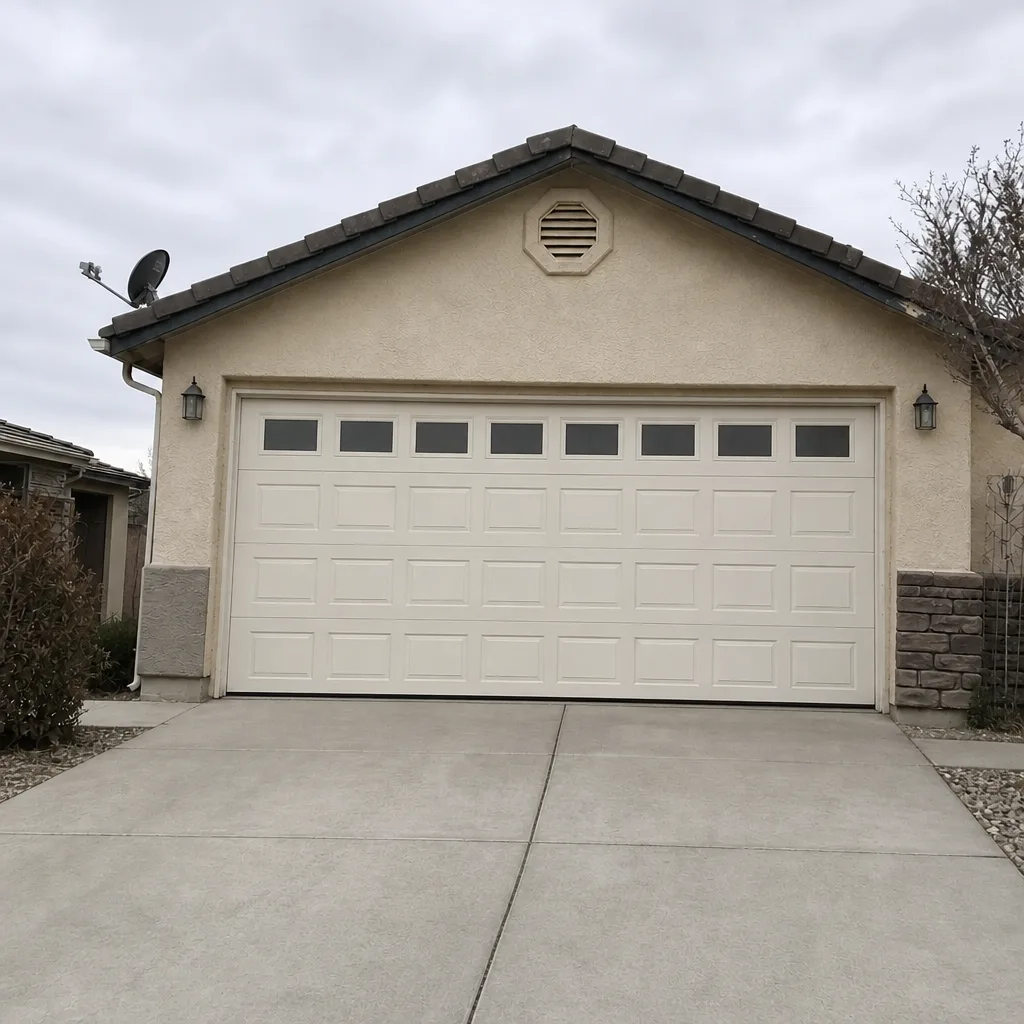
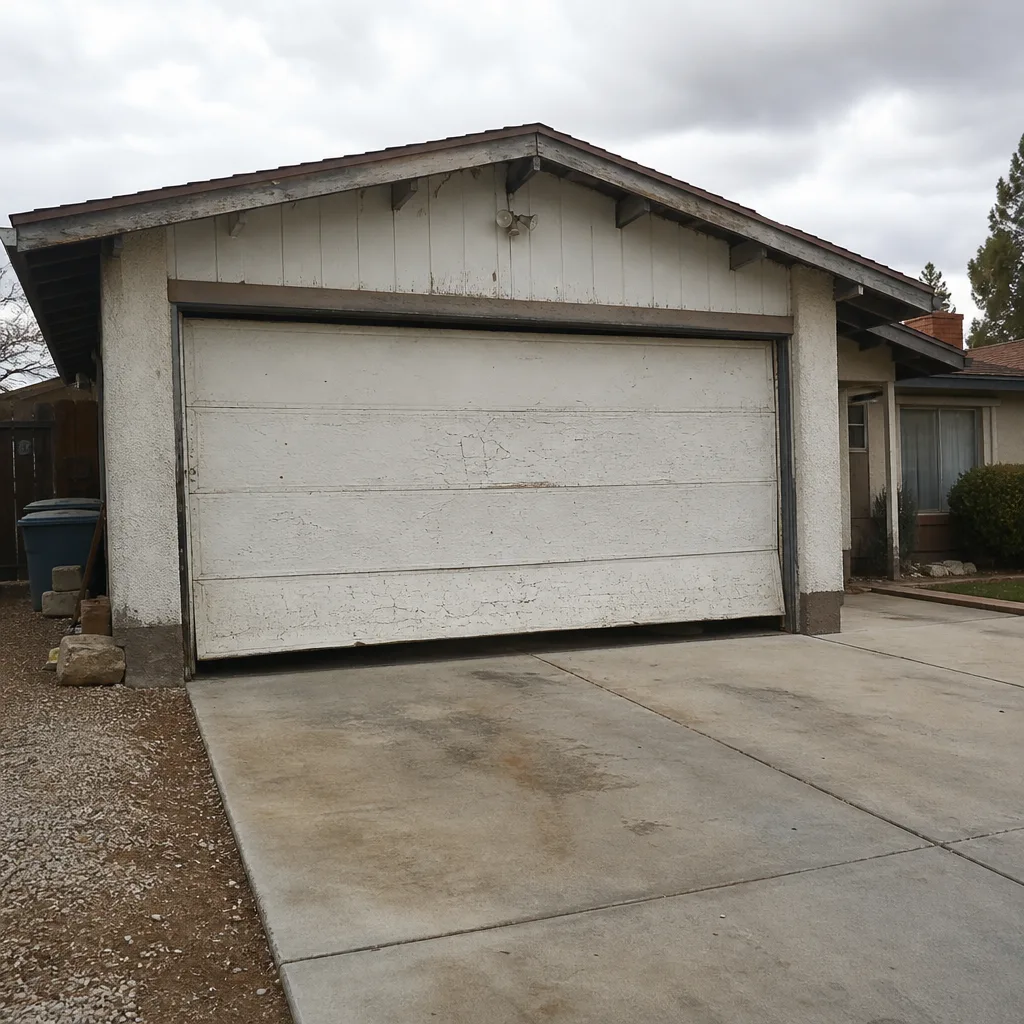
See the difference
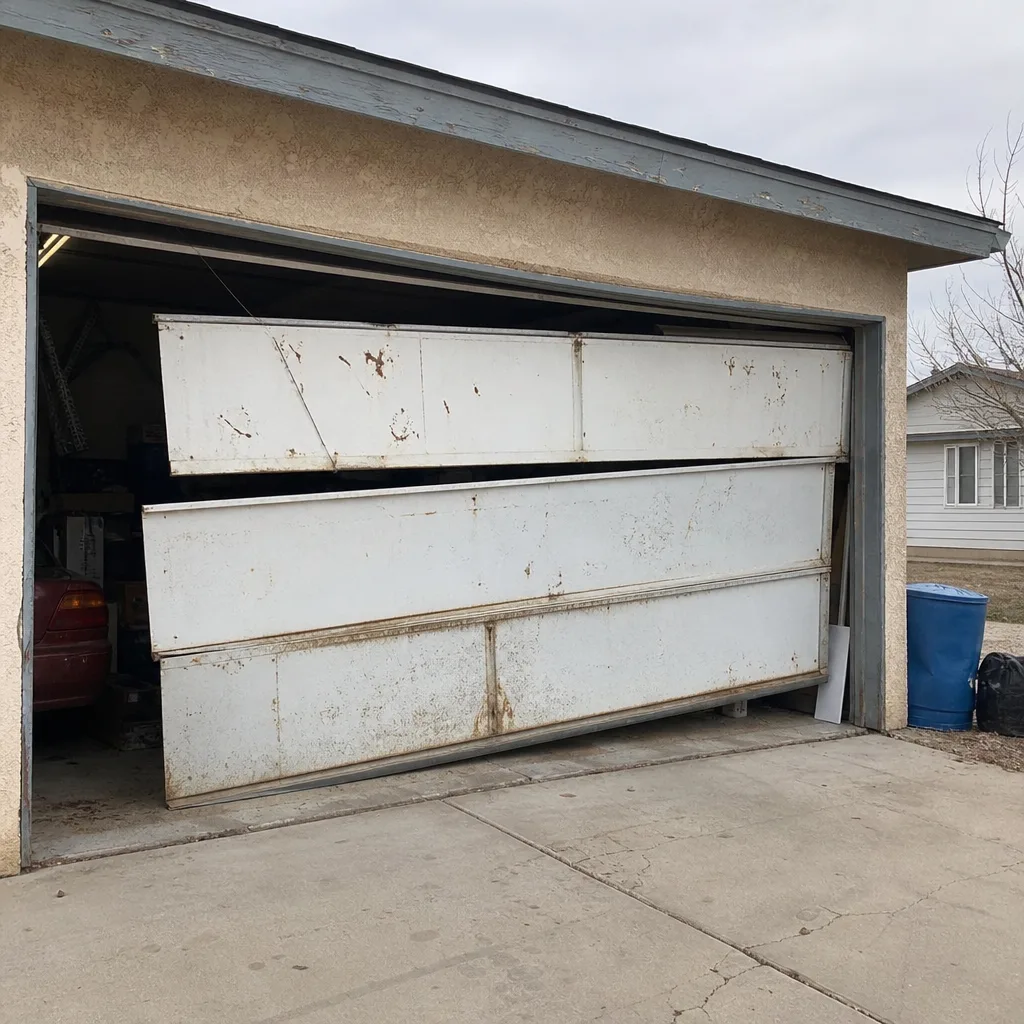 Before
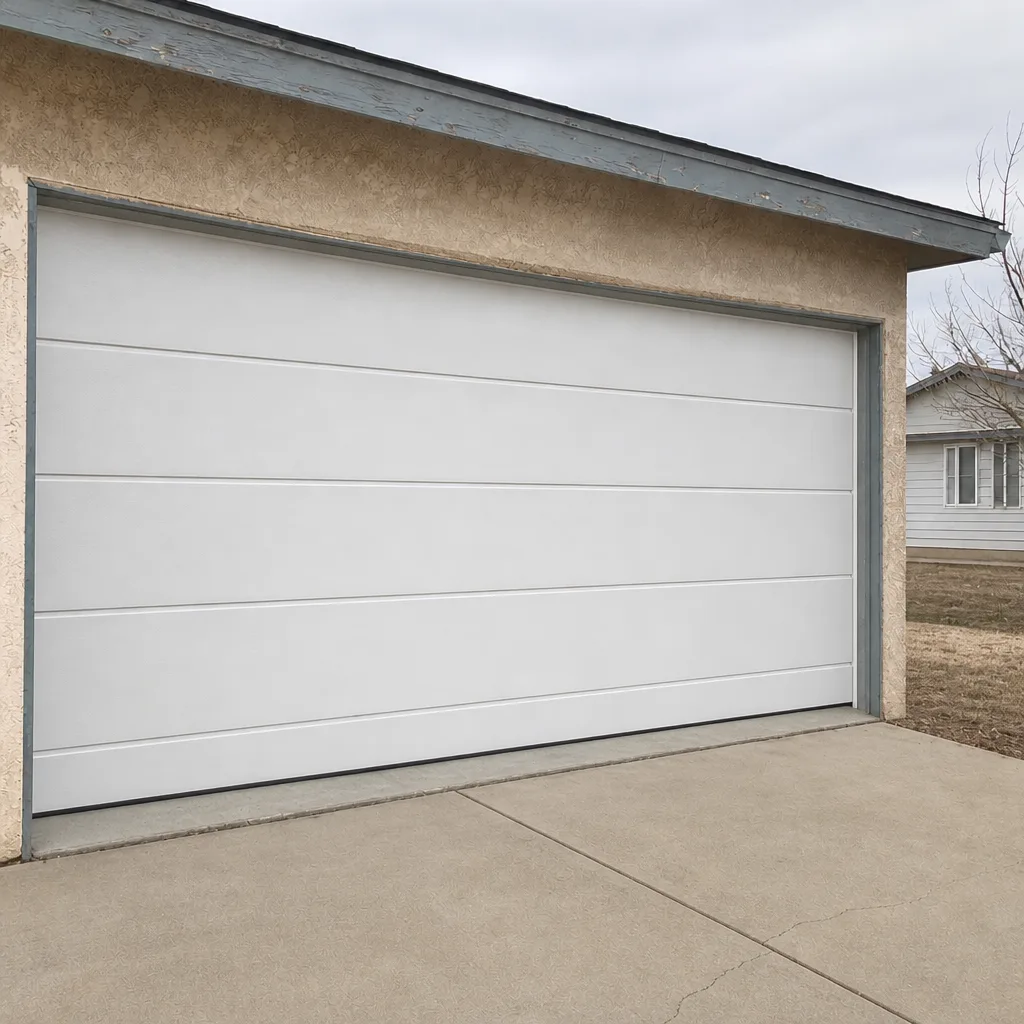 After
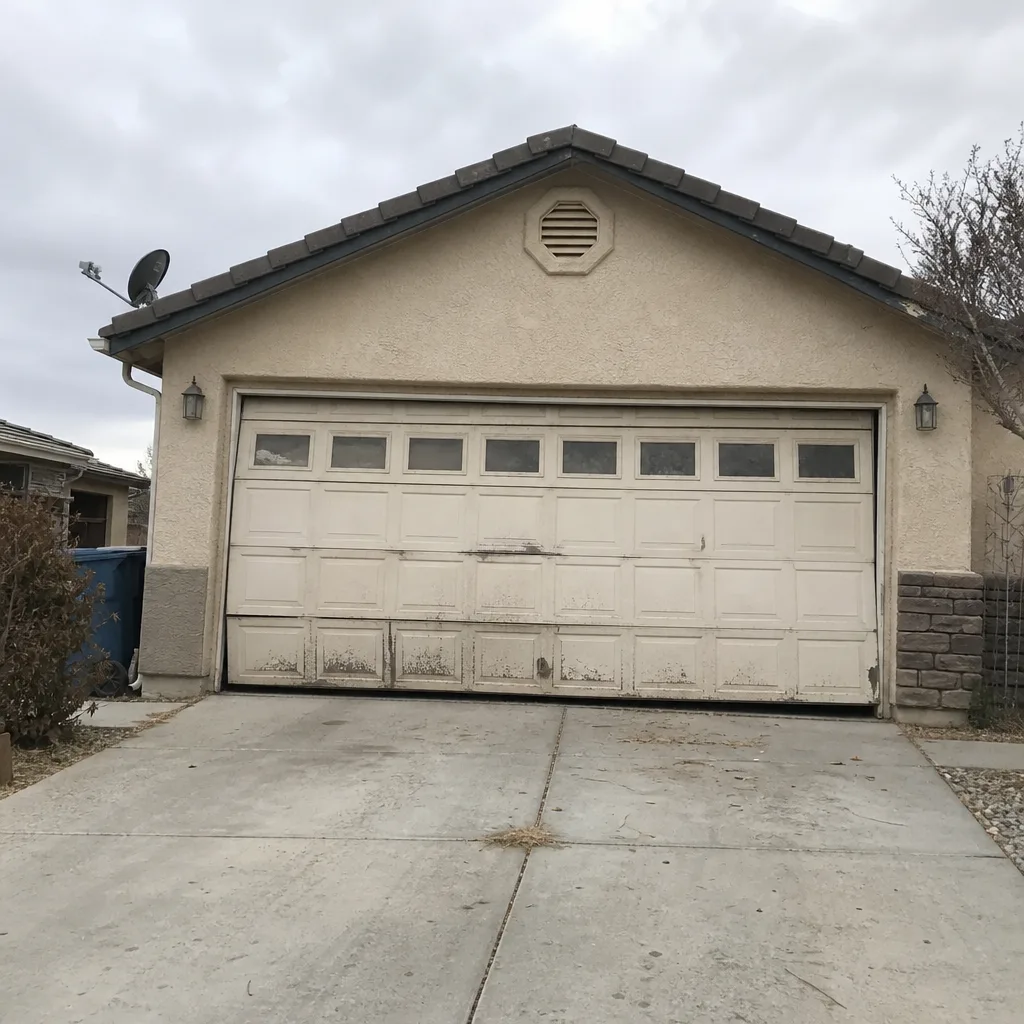 Before
 After
 Before
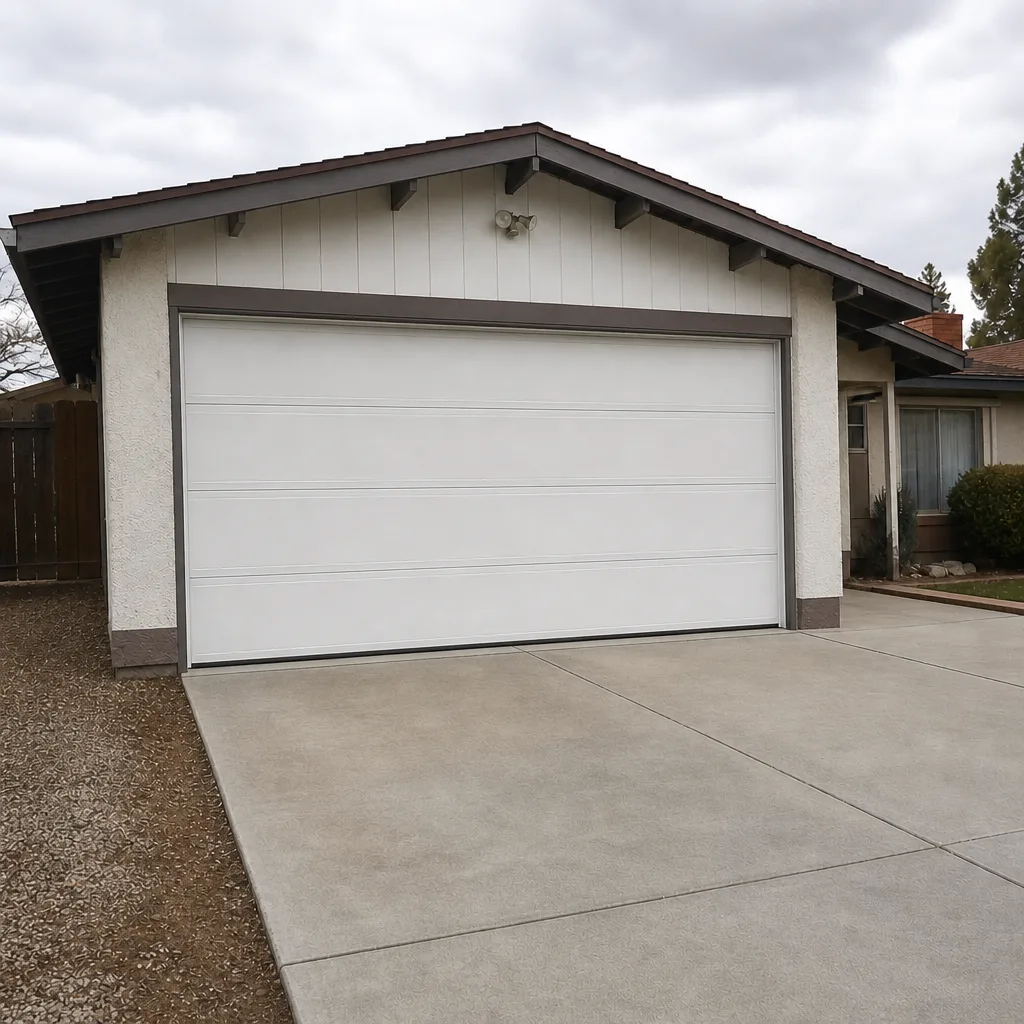 After
When to Call a Professional
Some garage door problems are homeowner-fixable – a dead remote battery, a dirty safety sensor lens, a loose track bolt. Others aren’t, and pretending otherwise is how people get hurt. Call a professional for any broken spring, any snapped or frayed cable, a door that has come off one track, a torsion bar that’s come loose, or a door that has fallen or is at risk of falling. Those components are under extreme tension, and no amount of YouTube preparation makes that a safe homeowner job. We also recommend a professional call for opener failures you can’t trace to the battery or sensor, and for any track that’s visibly bent. Fernbrook Garage Door Repair Mesquite offers free estimates in Mesquite – call (888) 255-7680. Technicians are background-checked, insured and bonded, and arrive in uniform with shoe covers and drop cloths for the inside of your home.
Frequently Asked Questions
Typical garage door repairs in Mesquite run roughly $150 to $650 depending on the part – a seal or roller job sits at the low end, while a spring or opener repair sits in the middle and a track realignment can land at the top. You’ll get a written price before any work starts, and it won’t change once the technician is on site unless the work changes and you agree to it. Call (888) 255-7680 for an exact quote – estimates are free.
Yes – a broken spring counts as an urgent call, and we take same-day bookings whenever the schedule allows. Keep the door closed, keep kids and pets out of the garage, and call (888) 255-7680. Our phones are answered by a live person 24/7, so you won’t hit a voicemail tree at 9 pm.
No – the price you agree to before work starts is the price on the invoice. If the diagnosis changes once the technician is on site, they’ll explain what’s different and give you a revised written price before touching anything. You’ll never be looking at a surprise invoice after the work is done. Call (888) 255-7680 with your symptoms and we’ll quote from what you describe.
Yes – Fernbrook technicians are background-checked, insured and bonded, and arrive in uniform for every visit. They’re trained on eight major brands, including LiftMaster, Chamberlain, Genie, Clopay, Amarr, Wayne Dalton, Craftsman, and Raynor, so they’re familiar with the parts most Mesquite homes are running. Every job is backed by our 365-Day Done Right Promise – if it isn’t done right, we make it right. Call (888) 255-7680 for a free estimate.
On most doors that reverse shortly after starting, the cause is a misaligned track, a stuck roller, or a blocked safety sensor – not the opener itself. Check the photo-eye sensor LEDs and clear the door’s path first. If the door still reverses, that’s worth a professional inspection. Call (888) 255-7680 to book a repair visit; the price is quoted and agreed before any work starts.
Listen for the failure sound. A sharp bang followed by a door that won’t lift almost always means a broken spring. A steady hum or grind from the motor with no door motion usually points to the opener. Springs are under dangerously high tension and should only be worked on by a trained technician. Call (888) 255-7680 and describe what you heard – we can usually narrow it down on the call.
The Bottom Line
Most garage door problems fall into four categories – spring, track, opener, seal – and a homeowner who can name the right one before picking up the phone is already ahead. Listen for the failure sound, run the balanced door test, check the tracks and seal from the driveway, and keep the dangerous parts (springs, cables, torsion bars) strictly in the professional column. That five-minute habit is what separates a targeted repair from a broad one, and it’s the difference between a small invoice and a big one. If you’re in Mesquite and want a second set of eyes, our team is glad to help.
Fernbrook Garage Door Repair Mesquite is the locally owned, independently operated Mesquite member of the Cedarwell family of businesses. Our technicians bring up to 24 years of experience, we’ve worked on doors from every major brand – LiftMaster, Chamberlain, Genie, Clopay, Amarr, Wayne Dalton, Craftsman, and Raynor – and every visit includes shoe covers and drop cloths, quiet tools around sleeping kids, pet-safe products where we have the choice, and a photo of the clean-up before we leave. The written price comes before the work, every time. Call (888) 255-7680 for a free estimate or to ask about the four-category diagnosis for your own door.
Written by the team at Fernbrook Garage Door Repair Mesquite.